Feb 9, 2011
This hearing of the Committee on Agriculture to review the implementation of Title VII of the Dodd-Frank Wall Street Reform and Consumer Protection Act will come to order.
The Public Record
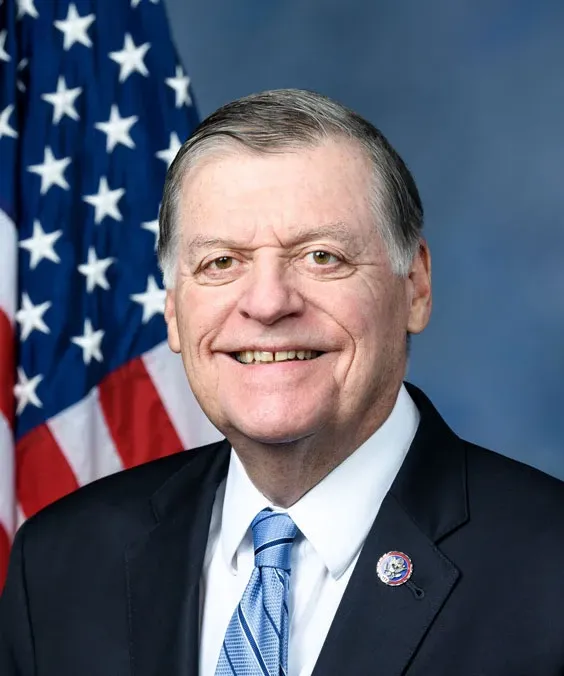
Frank Dean Lucas is an American politician serving as the U.S. Representative for Oklahoma's 3rd congressional district since 2003. A member of the Republican Party, Lucas has focused on agricultural issues, energy policy, and rural development during his tenure in Congress. He has played a significant role in shaping legislation related to farming and energy production, reflecting the interests of his constituents in a predominantly rural district. Lucas has been involved in various committees, including the House Committee on Agriculture, where he has worked on policies affecting the agricultural sector.
This hearing of the Committee on Agriculture to review the implementation of Title VII of the Dodd-Frank Wall Street Reform and Consumer Protection Act will come to order.
The complexity of Title VII shouldn't be underestimated, but neither should the far-reaching impact it will have on our economy.
Today, this Committee begins what will be a long series of hearings to review the implementation of the derivatives provisions included in the Dodd-Frank Wall Street Reform Act.
Title VII isn't just about financial firms; it has the potential to impact every segment of our economy, from farmers and ranchers to manufacturers, energy companies, to healthcare and technology.
As we work to revive the economy and create new jobs, we simply cannot afford sweeping new regulations that are poorly vetted that impose substantial costs that outweigh the benefits for our financial system and our economy.
Although it may not have been perfect, Congress included an exemption in Dodd-Frank for end-users from the margin, clearing and exchange trading requirements.
A margin requirement imposed upon end-users would subject them to significant cash burdens, cash that might otherwise be used to put to work in the economy.
I believe the law of unintended consequences is the hallmark of hastily considered rules and ill-conceived regulation.
I would simply observe, I think, that we all realize that the Fed's, in effect, running the printing presses perhaps is the best policy alternative they have there right now in this situation.
I rise again in opposition to H.R. 2751, originally dealing with the Cash for Clunkers and now containing the Senate language S. 510, the Food Safety and Modernization Act. As I've stated repeatedly, I believe our Nation has the safest…
Once again I must rise in opposition to this rule to reconsider the Senate language from S. 510, the Food Safety Modernization Act--now contained in H.R. 2751, a bill related to the Cash for Clunkers program. As I have stated before, I…
I must rise in opposition to this bill. This bill includes more than $1 billion to settle the Pigford discrimination suit against USDA, in addition to the billion dollars we have already spent. While I want to see a resolution to the…
This amendment would simply direct the Secretary of Agriculture to provide assistance and technical advice to electric cooperatives who have been approved as qualified entities in an effort to improve the outreach to the rural communities…
While I claim the time in opposition, I would state for the Record that I support my good friend from Pennsylvania's amendment. I support his efforts to import more integrity into this. What I am afraid of is a duplicative program. More…
Madam Speaker, S. 3656, the Mandatory Price Reporting Act of 2010, is a straightforward, 5-year reauthorization of a program that began with passage of the original legislation in 1999. The original act came as a result of many months of…
Simply to close by thanking my colleagues Mr. Cardoza, Mr. Hastings, and Mr. Johnson for their work on this important issue. It does make a tremendous difference in our ecology, and certainly with a $15 billion tag, the effect of losing…
Article I, section 5 of the United States Constitution states, ``the yeas and nays of the Members of either House on any question shall, at the desire of one-fifth of those present, be entered on the Journal.'' This is to ensure that…
[W]e were able to improve areas most important to end-users--the manufacturers, the energy companies and food processors that use swap agreements to manage price risk so they can provide consumers the lowest cost products.
This bill, if nothing else, certainly needs more consideration not less, and I congratulate you on moving with haste to expose the shortcomings.
I am concerned about the Administration's OTC derivatives proposal which would, seemingly, force non-financial dealers to meet certain capital requirements.
Are you concerned that such a requirement could unintentionally create a bank monopoly in the OTC commodity derivatives market?
My concern is that we don't, in the effort to be so protective and to avoid the tier-one, the tremendous institutions, that we strangle out the whole industry, the whole series of products that fall at that lower tier where a failure would…
I look forward to working with both Chairmen here today, as well as Ranking Member Lucas and other committees of jurisdiction to make sure that we don't lose sight of what is at stake.
Politicians like Frank Lucas