Feb 28, 2022
We still have the most talented workforce in the world, but I'm concerned that we're missing the rest of those variables.
The Public Record
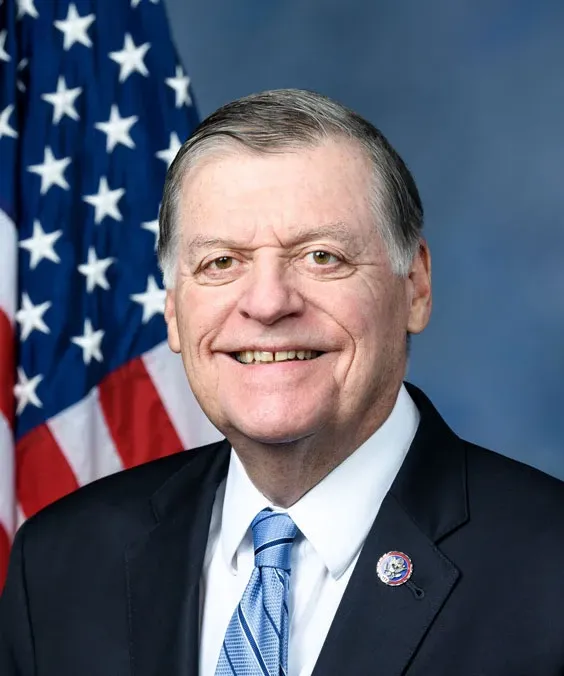
Frank Dean Lucas is an American politician serving as the U.S. Representative for Oklahoma's 3rd congressional district since 2003. A member of the Republican Party, Lucas has focused on agricultural issues, energy policy, and rural development during his tenure in Congress. He has played a significant role in shaping legislation related to farming and energy production, reflecting the interests of his constituents in a predominantly rural district. Lucas has been involved in various committees, including the House Committee on Agriculture, where he has worked on policies affecting the agricultural sector.
We still have the most talented workforce in the world, but I'm concerned that we're missing the rest of those variables.
This mission is the most complex and most important that NASA has undertaken to date.
As the congressional Committee with jurisdiction over NASA, it's our responsibility to maintain a strong space program.
We still have the most talented work force in the world, but I'm concerned we're missing the rest of those variables.
This mission is the most complex, most important that NASA has undertaken to date.
It's our job on the Science Committee to monitor and guide these kinds of investments.
But today, many challenges remain on the path to their commercial success, and we must address these through strategic investment in both public-private partnerships and fundamental research programs.
Today, we have an opportunity to examine the status of hydrogen energy research in the United States, a key technology area that could leverage and strengthen many aspects of this diverse energy portfolio.
As Ranking Member of the Science Committee, I've long emphasized the importance of investing in American innovation to advance the next generation of clean energy.
Human trafficking is a global problem and it affects every state, making it difficult to address.
In my home State of Oklahoma, the increase in crime has become particularly problematic, including among Oklahoma's Indigenous populations.
Human trafficking is a crime that is often described as 'hidden in plain sight' as it can be difficult to detect the warning signs.
Thank you, Chairwoman Johnson, for holding today's hearing to explore the role of science and technology in disrupting human trafficking.
We need to act now because I can tell you that our competitors aren't waiting.
It's time for leadership to move forward on a bipartisan conference of all of the Committees of jurisdiction.
I appreciate Chairwoman Johnson's and Chairman Bowman's commitment to our shared goal of strengthening our investment in fusion energy.
I'm a strong advocate for investing in U.S.--the U.S. contributions to ITER, the world's leading international research collaboration on fusion energy.
We can't afford to accept--let's just be blunt about it--the Senate's half-baked proposal.
This landmark legislation includes more than $5.6 billion for Fusion Energy Sciences.
Our bill, H.R. 3593, the Department of Energy Science for the Future Act, will build on the success of the Energy Act.
To realize the promise of fusion energy, we must take an all-of-the-above approach.
Fusion R&D has long enjoyed bipartisan support on the Science Committee and for good reason.
Politicians like Frank Lucas