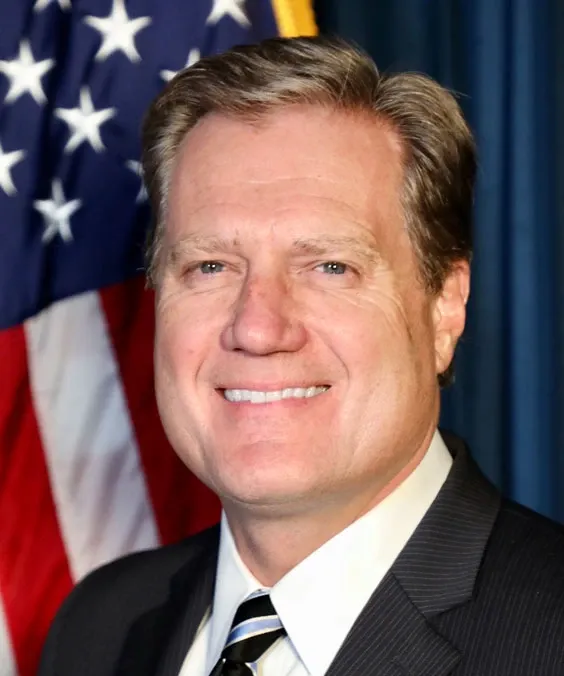
I am very confident that the United States has the power to relieve from the payment of tolls any part of our shipping that Congress deems wise.
Bill Taft
The Public Record
William Howard Taft was the 27th President of the United States, serving from 1909 to 1913. A member of the Republican Party, he was known for his trust-busting policies and efforts to promote international trade. After his presidency, Taft continued to serve the nation as the 10th Chief Justice of the United States from 1921 until his death in 1930, making him the only person to have held both the presidency and the chief justiceship. His tenure as Chief Justice was marked by a commitment to judicial restraint and the rule of law.
gutenberg.org
With a few fundamental laws of Congress, the zone should be governed by the orders of the President, issued through the War Department, as it is today.
Since that time the government has continued, under the advice of the Attorney General that in the absence of action by Congress, there is necessarily an implied authority on the part of the Executive to maintain a government in a…
The fact is that to-day there is no statutory law by authority of which the President is maintaining the government of the zone.
We are now near enough the completion of the canal to make it imperatively necessary that legislation should be enacted to fix the method by which the canal shall be maintained and controlled and the zone governed.
The very satisfactory progress made on the Panama Canal last year has continued, and there is every reason to believe that the canal will be completed as early as the 1st of July, 1913, unless something unforeseen occurs.
Another feature of the bill which I believe to be a mistake is the proposed increase in the term of enlistment from three to five ears I believe it would be better to enlist men for six years, release them at the end of three years from…
I have in the past recommended an increase in the number of officers by 600 in order to provide sufficient officers to perform all classes of staff duty and to reduce the number of line officers detached from their commands.
In making the consolidations no reduction should be made in the total number of officers of the Army, of whom there are now too few to perform the duties imposed by law.
In commending the question to the favorable consideration of Congress, I speak for, and in the spirit of, the great number of my fellow citizens who without any thought of party or partisanship feel with remarkable earnestness that this…
The exceeding amount of consideration it has received from the people of the Nation has been wholly nonpartisan; and the Congress set its nonpartisan seal upon it when the Monetary Commission was appointed.
With the present prospects of this long-awaited reform encouraging us, it would be singularly unfortunate if this monetary question should by any chance become a party issue.
And I trust also that the new legislation will carefully and completely protect and assure the individuality and the independence of each bank, to the end that any tendency there may ever be toward a consolidation of the money or banking…
But such evolution can not develop impartially if the banks of one system are given or permitted any advantages of opportunity over those of the other system.
But there must be some form of Government supervision and ultimate control, and I favor a reasonable representation of the Government in the management.
And ingenious and novel as the proposed National Reserve Association appears, it simply is a logical outgrowth of what is best in our present system, and is, in fact, the fulfillment of that system.
A matter of first importance that will come before Congress for action at this session is monetary reform.
The findings of fact by the board show ample reason for the revision downward of Schedule K, in accord with the protective principle, and present the data as to relative costs and prices from which may be determined what rates will fairly…
It is a monument to the thoroughness, industry, impartiality, and accuracy of the men engaged in its making.
I venture to say that no legislative body has ever had presented to it a more complete and exhaustive report than this on so difficult and complicated a subject as the relative costs of wool and woolens the world over.
I therefore recommend that in any revision the importance of a graduated scale of ad valorem duties on cloths be carefully considered and applied.
Conversely, a rate only adequate to equalize this difference on cheaper goods would remove protection from the fine-goods manufacture, the increase in which has been one of the striking features of the trade's development in recent years.
Any single rate which is high enough to equalize the difference in manufacturing cost at home and abroad on highly finished goods involving such labor would be prohibitory on cheaper goods, in which the labor cost is a smaller proportion…
It is important to realize, however, that no flat ad valorem rate on such fabrics can be made to work fairly and effectively.
In recommending revision and reduction, I therefore urge that action be taken with these facts in mind, to the end that an important and established industry may not be jeopardized.
Politicians like Bill Taft