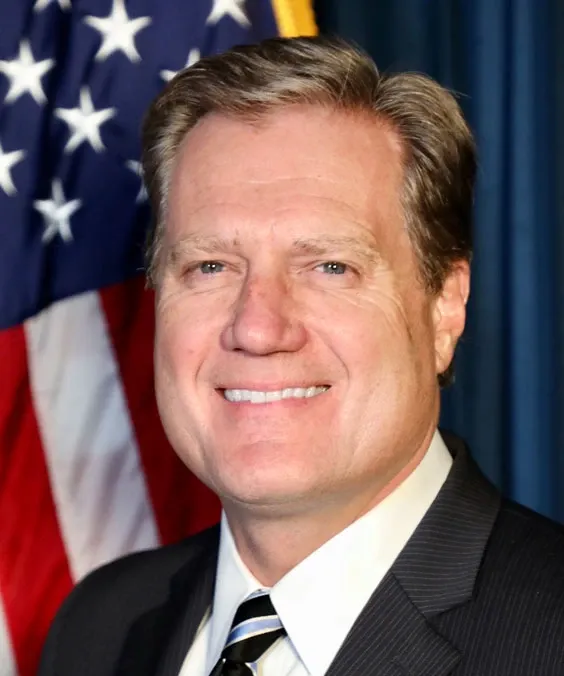
Jim Jordan
The Public Record
Jim Jordan is an American politician and attorney serving as the U.S. Representative for Ohio's 4th congressional district since 2007. A member of the Republican Party, he is known for his strong conservative stance and is a founding member of the House Freedom Caucus, which advocates for limited government and fiscal responsibility. Throughout his tenure, Jordan has been involved in various legislative efforts and has gained prominence for his role in high-profile investigations and oversight hearings.
Feb 10, 2015
Lois Lerner told this committee staff that there was no targeting going on. Turned out to be a lie, of course.
Feb 2, 2015
This is a pattern. The executive branch agencies, first they drag their feet, they don't comply with things Congress wants.
Feb 2, 2015
The U.S. House of Representatives voted, with 26 Democrats I might add, voted to call for a special prosecutor
Feb 2, 2015
Two of those were while he was candidate Obama. The other 20 were while he was President Obama.
Jan 26, 2015
You should have a file already, with everything nicely and neatly organized.
Jan 26, 2015
The subpoena was August 2013. We are not talking a couple months ago. We are talking a year and a half ago.
Jan 26, 2015
You can't claim, oh, this was the independent, be-all, end-all, definitive statement that the ARB made on Benghazi, and then not let us see the record.
Jan 26, 2015
I don't know anywhere else in life where a potential subject of an investigation gets to pick their investigators.
Jan 26, 2015
Now, the one thing they have said that makes some sense is the pace is way too slow.
Jan 26, 2015
Democrats asked for no hearings in August and October, and now they complain.
Jan 26, 2015
It will be a meaningless failure. Because if we don't produce a bipartisan report at the end of the day, it will have no credibility.
Dec 9, 2014
Many point to violence in Central America as the reason for the surge. Unfortunately, as we all know, there has always been violence in Central America.
Dec 9, 2014
The President's November 20 actions to grant deferred action on work permits to up to 5 million illegal aliens continued a long pattern of Executive overreach.
Dec 9, 2014
The President's policies to grant deferred action and not remove newly arriving undocumented aliens led to a surge of illegal immigration that reached its height earlier this year.
Dec 9, 2014
In our constitutional system, however, it is Congress that has plenary constitutional authority to establish U.S. immigration policy.
Politicians like Jim Jordan