Jan 13, 2020
I introduced what we call the INFO Act, which established a dashboard through HHS.
The Public Record
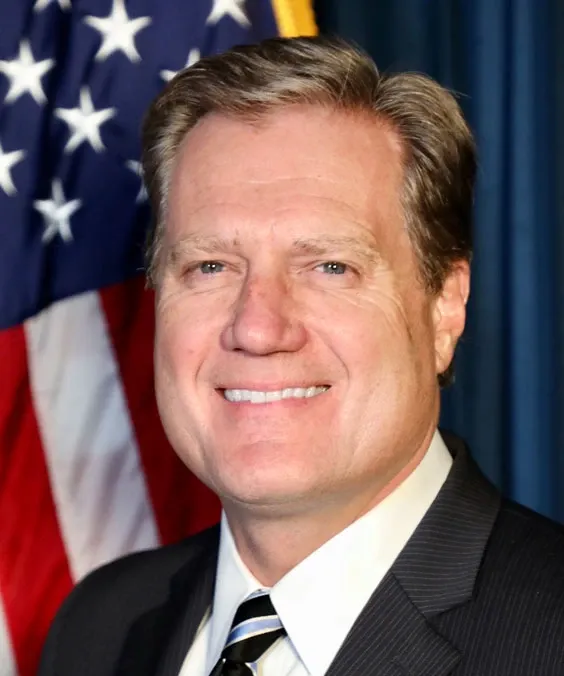
Bob Edward Latta is an American politician serving as a member of the United States House of Representatives from Ohio's 5th congressional district since January 4, 2007. A member of the Republican Party, Latta has been involved in various legislative efforts during his tenure, focusing on issues such as energy policy, healthcare, and agriculture. He has served on several committees, contributing to discussions on national security and economic development.
I introduced what we call the INFO Act, which established a dashboard through HHS.
One of the things they were telling me for several years is we can't find help.
Again, I thank my colleague, the gentleman from Pennsylvania (Mr. Michael F. Doyle), the chairman of the subcommittee, for making sure this bill came to the floor today, because we have to win this race for 5G as a Nation, because we have…
I am prepared to close. Madam Speaker, from the comments that we have heard on the floor today, it is so important that we pass this piece of legislation. It is a good piece of bipartisan legislation, and I urge its support from this…
I continue to be concerned with the ability of scammers to evolve and adapt to changes in the law.
Congress recognized that many of these scams were carried out through the use of manipulative and illegal robocalls.
I introduced the STOP Robocalls Act, which was recently signed into law as part of the tray stack.
It is absolutely important that we have rural broadband access. It is not only to help our citizens but our students. We have to make sure that our businesses and our farmers all have the access they need to survive in this world that we…
I applaud the work you and the Commission are doing to make 6 gigahertz available for unlicensed use, but I am concerned about how it might impact the utilities in my district who rely on that band for fixed wireless services.
It is great to see you all. I also appreciate that you are all so willing to be accessible and travel across the country to see how the FCC's regulations are affecting companies and consumers.
I appreciate that you're always accessible and willing to travel across the country to see how the FCC's regulations are affecting companies and consumers.
I'm pleased to have worked with Chairman Doyle on the SHARE Act, to facilitate a system for Federal users on how to better share their spectrum and thus optimize its use.
The FCC has signaled an intent to show progress on C-band in the near future, which will make critical mid-band spectrum available to 5G.
Well, Mr. Chairman, thank you very much for holding today's hearing, and thank you very much to our witnesses for being here for our second hearing on C-band spectrum.
While bipartisan, market-based principles have led us well over the last two decades, it is important not to rest as other countries continue to feel free to continue adding additional spectrum for commercial use.
Welcome to today's hearing on content moderation and a review of Section 230 of the Communications Decency Act.
Let me be clear: I am not advocating that Congress repeal the law, nor am I advocating that Congress consider niche carveouts...
We are not talking about the dark web. We are not talking about things buried on page 20. It is on the first page. And in my opinion, there is no excuse for that.
My understanding is tech companies are only legally required to report images of child abuse only when they discover it.
I am especially pleased to have worked with our subcommittee chairman, the gentleman from Pennsylvania, on H.R. 4462, the SHARE Act.
I also want to thank our witnesses for being with us today as we discuss legislation on our network supply chain security and management of our spectrum resources.
Today's hearing also features several bills to address vulnerabilities in our nation's communications networks, such as the inclusion of unsecure equipment.
The FCC has also voiced concerns about network security and proposed prohibiting USF recipients from using controversial equipment.
I'm especially pleased to have worked with Chairman Doyle on H.R. 4462, the SHARE Act, to empower our agencies to facilitate innovative spectrum sharing strategies.
However, H.R. 3 isn't that answer. Under the Pelosi plan, you know, this went against the bipartisan nature of this committee.
Politicians like Bob Latta