Jan 1, 1900
In private life there are few beings more obnoxious than the man who is always loudly boasting; and if the boaster is not prepared to back up his words his position becomes absolutely contemptible.
The Public Record
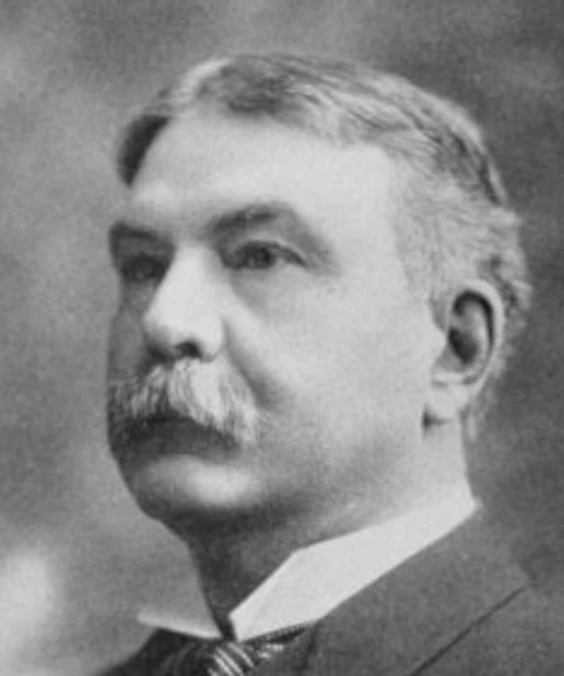
Theodore Roosevelt was the 26th President of the United States, serving from 1901 to 1909. A member of the Republican Party, he was born on October 27, 1858, in New York. Roosevelt was a prominent leader of the Progressive Movement, advocating for domestic policies that included trust-busting, regulation of corporations, and conservation of natural resources. His administration is noted for significant reforms and the establishment of national parks and forests.
In private life there are few beings more obnoxious than the man who is always loudly boasting; and if the boaster is not prepared to back up his words his position becomes absolutely contemptible.
Right here let me make as vigorous a plea as I know how in favor of saying nothing that we do not mean, and of acting without hesitation up to whatever we say.
But we may be certain of one thing: whether we wish it or not, we can not avoid hereafter having duties to do in the face of other nations.
We must ever keep the core of our national being sound, and see to it that not only our citizens in private life, but, above all, our statesmen in public life, practice the old, commonplace virtues which from time immemorial have lain at…
We admit with all sincerity that our first duty is within our own household; that we must not merely talk, but act, in favor of cleanliness and decency and righteousness, in all political, social, and civic matters.
The man who works, the man who does great deeds, in the end dies as surely as the veriest idler who cumbers the earth’s surface; but he leaves behind him the great fact that he has done his work well.
There are excellent people who believe that we can shirk these duties and yet retain our self-respect; but these good people are in error.
But our country, as it strides forward with ever-increasing rapidity to a foremost place among the world powers, must necessarily find, more and more, that it has world duties also.
Our interests are at bottom common; in the long run we go up or go down together.
It is probably true that the large majority of the fortunes that now exist in this country have been amassed not by injuring our people, but as an incident to the conferring of great benefits upon the community; and this, no matter what…
The vast individual and corporate fortunes, the vast combinations of capital, which have marked the development of our industrial system, create new conditions and necessitate a change from the old attitude of the State and the nation…
All that can be said is that it is highly undesirable, on the one hand, to weaken individual initiative, and, on the other hand, that in a constantly increasing number of cases we shall find it necessary in the future to shackle cunning as…
Something for good can be done by law, and a bad law can do an infinity of mischief; but, after all, the best law can only prevent wrong and injustice, and give to the thrifty, the far-seeing, and the hard-working a chance to exercise to…
We can not possibly do our best work as a nation unless all of us know how to act in combination as well as how to act each individually for himself.
Besides each one of us working individually, all of us have got to work together.
As regards internal affairs, it should teach us the prime need of remembering that, after all has been said and done, the chief factor in any man’s success or failure must be his own character—that is, the sum of his common-sense, his…
It seems to me that the simple acceptance of this fundamental fact of American life, this acknowledgment that the law of work is the fundamental law of our being, will help us to start aright in facing not a few of the problems that…
You, the sons of the pioneers, if you are true to your ancestry, must make your lives as worthy as they made theirs.
The work may be done in a thousand different ways—with the brain or the hands, in the study, the field, or the workshop—if it is honest work, honestly done and well worth doing, that is all we have a right to ask.
Exactly as infinitely the happiest woman is she who has borne and brought up many healthy children, so infinitely the happiest man is he who has toiled hard and successfully in his life-work.
The wilfully idle man, like the wilfully barren woman, has no place in a sane, healthy, and vigorous community.
Politicians like Teddy Roosevelt