Jan 1, 1900
In the Philippines let us remember that the spirit and not the mere form of government is the essential matter.
The Public Record
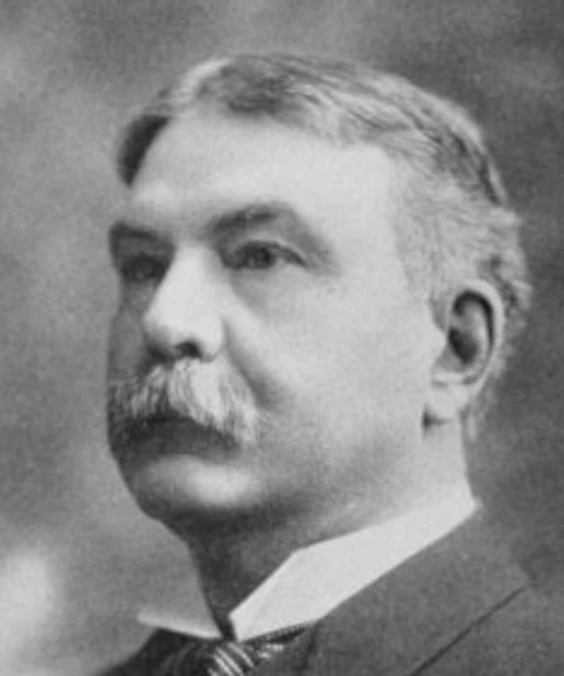
Theodore Roosevelt was the 26th President of the United States, serving from 1901 to 1909. A member of the Republican Party, he was born on October 27, 1858, in New York. Roosevelt was a prominent leader of the Progressive Movement, advocating for domestic policies that included trust-busting, regulation of corporations, and conservation of natural resources. His administration is noted for significant reforms and the establishment of national parks and forests.
In the Philippines let us remember that the spirit and not the mere form of government is the essential matter.
We shall make mistakes; and if we let these mistakes frighten us from our work we shall show ourselves weaklings.
Not only in our own land, but throughout the world, throughout all history, the advance of civilization has been of incalculable benefit to mankind, and those through whom it has advanced deserve the highest honor.
But shame, thrice shame to us, if we are so foolish as to make such occasional wrongdoing an excuse for failing to perform a great and righteous task.
Exactly as it is the duty of a civilized power scrupulously to respect the rights of all weaker civilized powers and gladly to help those who are struggling toward civilization, so it is its duty to put down savagery and barbarism.
It is our duty toward the people living in barbarism to see that they are freed from their chains, and we can free them only by destroying barbarism itself.
There can be no weakening of the law-abiding spirit here at home, if we are permanently to succeed; and just as little can we afford to show weakness abroad.
Without the habit of orderly obedience to the law, without the stern enforcement of the laws at the expense of those who defiantly resist them, there can be no possible progress, moral or material, in civilization.
Law must be based upon justice, else it can not stand, and it must be enforced with resolute firmness, because weakness in enforcing it means in the end that there is no justice and no law, nothing but the rule of disorderly and…
Law and order enforced with justice and by strength lie at the foundations of civilization.
We have done our duty ourselves, and we have done the higher duty of promoting the civilization of mankind.
The bare recital of the facts is sufficient to show that we did our duty; and what prouder title to honor can a nation have than to have done its duty?
No nation capable of self-government, and of developing by its own efforts a sane and orderly civilization, no matter how small it may be, has anything to fear from us.
The true American has never feared to run risks when the prize to be won was of sufficient value.
It is vain to tell a people as masterful as ours that the spirit of enterprise is not safe.
Here again we must remember that our first duty is to our own people, and yet that we can best get justice by doing justice.
We do not by this doctrine intend to sanction any policy of aggression by one American commonwealth at the expense of any other, nor any policy of commercial discrimination against any foreign power whatsoever.
All that is needful is that it should continue to be a cardinal feature of American policy on this continent; and the Spanish-American states should, in their own interests, champion it as strongly as we do.
Such an attitude will be the surest possible guarantee of that self-respecting peace, the attainment of which is and must ever be the prime aim of a self-governing people.
Let us further make it evident that we use no words which we are not prepared to back up with deeds, and that while our speech is always moderate, we are ready and willing to make it good.
Then let us make it equally evident that we will not tolerate injustice being done to us in return.
It is both foolish and undignified to indulge in undue self-glorification, and, above all, in loose-tongued denunciation of other peoples.
Politicians like Teddy Roosevelt