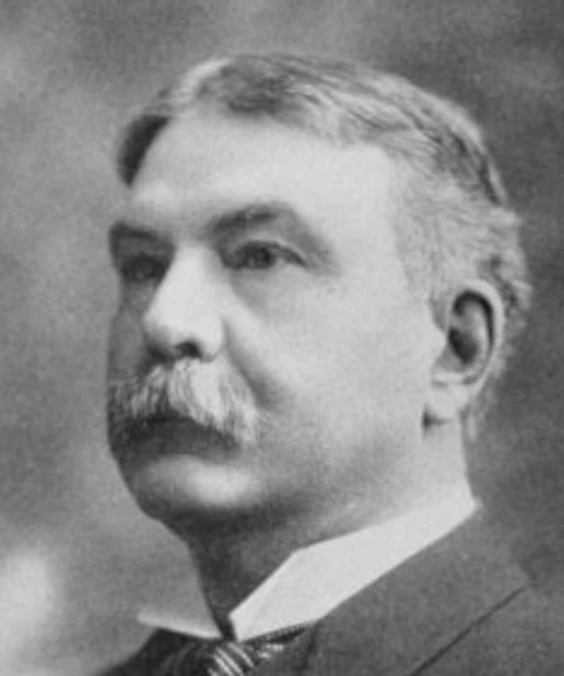
Above all else, we must strive to keep the highways of commerce open to all on equal terms; and to do this it is necessary to put a complete stop to all rebates.
Teddy Roosevelt
The Public Record
Theodore Roosevelt was the 26th President of the United States, serving from 1901 to 1909. A member of the Republican Party, he was born on October 27, 1858, in New York. Roosevelt was a prominent leader of the Progressive Movement, advocating for domestic policies that included trust-busting, regulation of corporations, and conservation of natural resources. His administration is noted for significant reforms and the establishment of national parks and forests.
gutenberg.org
Publicity, and not secrecy, will win hereafter, and laws be construed by their intent and not by their letter, otherwise public utilities will be owned and operated by the public which created them, even though the service be less…
If corporations are to continue to do the world's work, as they are best fitted to, these qualities in their representatives that have resulted in the present prejudice against them must be relegated to the background.
Violent prejudice exists towards corporate activity and capital today, much of it founded in reason, more in apprehension, and a large measure is due to the personal traits of arbitrary, unreasonable, incompetent, and offensive men in…
A public may be led, but not driven, and I prefer to go with it and shape or modify, in a measure, its opinion, rather than be swept from my bearings, with loss to myself and the interests in my charge.
The day has gone by when a corporation can be handled successfully in defiance of the public will, even though that will be unreasonable and wrong.
It is my belief we can better serve each other, better understand the man as well as his business, when meeting face to face, exchanging views, and realizing from personal contact we serve but one interest, that of our mutual prosperity.
Yet we must never forget the determining factor in every kind of work, of head or hand, must be the man's own good sense, courage, and kindliness.
But these corporations should be managed with due regard to the interest of the public as a whole.
Great corporations are necessary, and only men of great and singular mental power can manage such corporations successfully, and such men must have great rewards.
On the contrary, they are friendly alike toward rich man and toward poor man, provided only that each acts in a spirit of justice and decency toward his fellows.
To try to deal with them in an intemperate, destructive, or demagogic spirit would, in all probability, mean that nothing whatever would be accomplished, and, with absolute certainty, that if anything were accomplished it would be of a…
It is difficult to be patient with an argument that such matters should be left to the States because more than one State pursues the policy of creating on easy terms corporations which are never operated within that State at all, but in…
When we come to deal with great corporations the need for the Government to act directly is far greater than in the case of labor, because great corporations can become such only by engaging in interstate commerce, and interstate commerce…
Such investigation and publication by the National Government would tend toward the securing of approximately uniform legislation of the proper character among the several States.
For this reason, it would be well for the Nation at least to endeavor to secure comprehensive information as to the conditions of labor of children in the different States.
In this investigation especial attention should be paid to the conditions of child labor and child-labor legislation in the several States.
But their payment must be obtained by arguing their claims fairly and honorably before the Congress, and not by banding together for the defeat of those Congressmen who refuse to give promises which they can not in conscience give.
Of course nothing can ever prevent accidents caused by human weakness or misconduct; and there should be drastic punishment for any railroad employee, whether officer or man, who by issuance of wrong orders or by disobedience of orders…
Many of our leading roads have been foremost in the adoption of the most approved safeguards for the protection of travelers and employees, yet the list of clearly avoidable accidents continues unduly large.
The ever-increasing casualty list upon our railroads is a matter of grave public concern, and urgently calls for action by the Congress.
I now renew that recommendation, and further recommend that the Congress appoint a commission to make a comprehensive study of employer's liability with the view of extending the provisions of a great and constitutional law to all…
Wherever the National Government has power there should be a stringent employer's liability law, which should apply to the Government itself where the Government is an employer of labor.
From the very nature of their occupation railroad men, for instance, are liable to be maimed in doing the legitimate work of their profession, unless the railroad companies are required by law to make ample provision for their safety.
The wage-workers are peculiarly entitled to the protection and the encouragement of the law.
Politicians like Teddy Roosevelt