Wheat and other grains have been imported from light-rainfall countries to our lands in the West and Southwest that have not grown crops because of light precipitation, resulting in an extensive addition to our cropping area and our…
Teddy Roosevelt
The Public Record
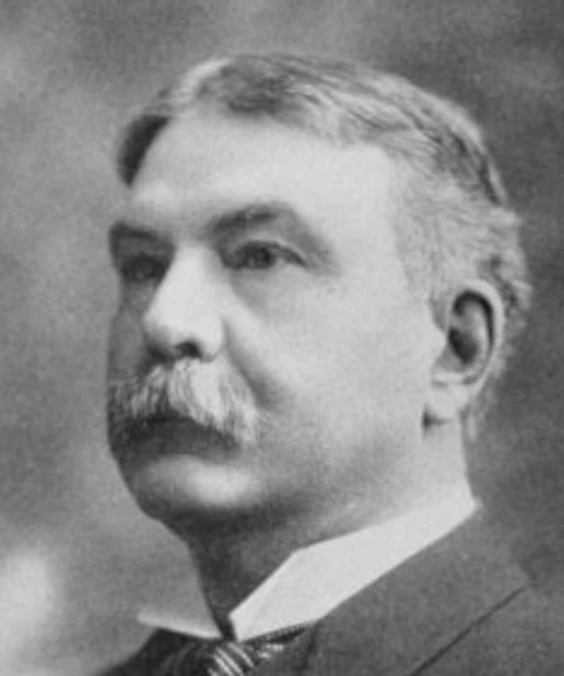
Theodore Roosevelt was the 26th President of the United States, serving from 1901 to 1909. A member of the Republican Party, he was born on October 27, 1858, in New York. Roosevelt was a prominent leader of the Progressive Movement, advocating for domestic policies that included trust-busting, regulation of corporations, and conservation of natural resources. His administration is noted for significant reforms and the establishment of national parks and forests.
gutenberg.org
Seven years ago we bought three-fourths of our rice; by helping the rice growers on the Gulf coast to secure seeds from the Orient suited to their conditions, and by giving them adequate protection, they now supply home demand and export…
The Department of Agriculture, by careful inspection of meats, guards the health of our people and gives clean bills of health to deserving exports; it is prepared to deal promptly with imported diseases of animals, and maintain the…
Successful manufacturing depends primarily on cheap food, which accounts to a considerable extent for our growth in this direction.
We sell two hundred and fifty million dollars' worth of animals and animal products to foreign countries every year, in addition to supplying our own people more cheaply and abundantly than any other nation is able to provide for its…
The activities of our age in lines of research have reached the tillers of the soil and inspired them with ambition to know more of the principles that govern the forces of nature with which they have to deal.
The world is carefully searched for new varieties of grains, fruits, grasses, vegetables, trees, and shrubs, suitable to various localities in our country; and marked benefit to our producers has resulted.
The wife-beater, for example, is inadequately punished by imprisonment; for imprisonment may often mean nothing to him, while it may cause hunger and want to the wife and children who have been the victims of his brutality.
There are certain offenders, whose criminality takes the shape of brutality and cruelty towards the weak, who need a special type of punishment.
Public play grounds are necessary means for the development of wholesome citizenship in modern cities.
It is mortifying to remember that Washington has no compulsory school attendance law and that careful inquiries indicate the habitual absence from school of some twenty per cent of all children between the ages of eight and fourteen.
The local death rates, especially from preventable diseases, are so unduly high as to suggest that the exceptional wholesomeness of Washington's better sections is offset by bad conditions in her poorer neighborhoods.
The hidden residential alleys are breeding grounds of vice and disease, and should be opened into minor streets.
It is now generally recognized that young boys and young girls who go wrong should not be treated as criminals, not even necessarily as needing reformation, but rather as needing to have their characters formed, and for this end to have…
The work of the juvenile court is really a work of character building.
If a race does not have plenty of children, or if the children do not grow up, or if when they grow up they are unhealthy in body and stunted or vicious in mind, then that race is decadent, and no heaping up of wealth, no splendor of…
All questions of tariff and finance sink into utter insignificance when compared with the tremendous, the vital importance of trying to shape conditions so that these two duties of the man and of the woman can be fulfilled under reasonably…
No Christian and civilized community can afford to show a happy-go-lucky lack of concern for the youth of to-day; for, if so, the community will have to pay a terrible penalty of financial burden and social degradation in the to-morrow.
The slum exacts a heavy total of death from those who dwell therein; and this is the case not merely in the great crowded slums of high buildings in New York and Chicago, but in the alley slums of Washington.
The over-crowding of cities and the draining of country districts are unhealthy and even dangerous symptoms in our modern life.
Rapid development in wealth and industrial leadership is a good thing, but only if it goes hand in hand with improvement, and not deterioration, physical and moral.
The farmers, the mechanics, the skilled and unskilled laborers, the small shop keepers, make up the bulk of the population of any country; and upon their well-being, generation after generation, the well-being of the country and the race…
In the first place, the people of this country should clearly understand that no amount of industrial prosperity, and above all no leadership in international industrial competition, can in any way atone for the sapping of the vitality of…
In my judgment the most important legislative act now needed as regards the regulation of corporations is this act to confer on the Interstate Commerce Commission the power to revise rates and regulations, the revised rate to at once go…
The Government must in increasing degree supervise and regulate the workings of the railways engaged in interstate commerce; and such increased supervision is the only alternative to an increase of the present evils on the one hand or a…
Politicians like Teddy Roosevelt