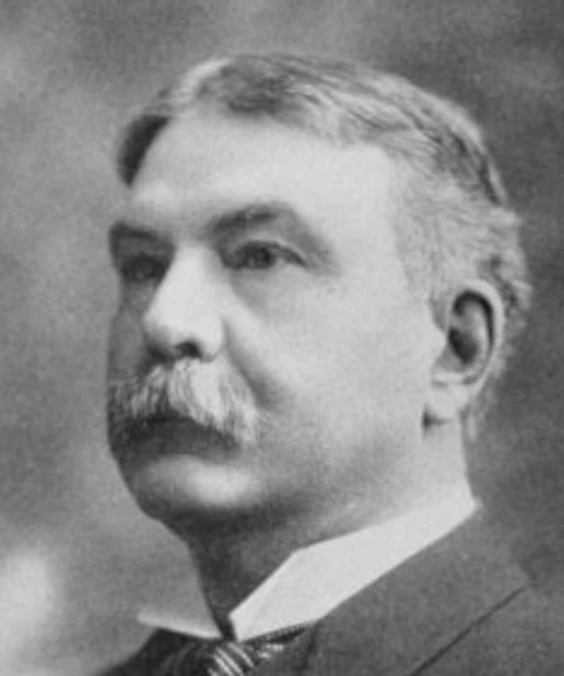
It was one of the few wars which mean, in their successful outcome, a lift toward better things for the nations of mankind.
Teddy Roosevelt
The Public Record
Theodore Roosevelt was the 26th President of the United States, serving from 1901 to 1909. A member of the Republican Party, he was born on October 27, 1858, in New York. Roosevelt was a prominent leader of the Progressive Movement, advocating for domestic policies that included trust-busting, regulation of corporations, and conservation of natural resources. His administration is noted for significant reforms and the establishment of national parks and forests.
gutenberg.org
You had to have the ideals, but if you had not been able to march and shoot you could not have put them into practice.
That is why you won then—because you had the ideals, because you had the lift of soul in you, and because also you had the right stuff in you to make those ideals count in actual life.
The Civil War was a great war for righteousness; a war waged for the noblest ideals, but waged also in thoroughgoing, practical fashion.
As long as this Republic endures or its history is known, so long shall the memory of the Battle of Gettysburg likewise endure and be known; and as long as the English tongue is understood, so long shall Abraham Lincoln’s Gettysburg speech…
Every man has it in him, unless fate is indeed hard upon him, to win out that measure of success if he will honestly try.
But as a rule in the long run each of us comes pretty near to getting what he deserves.
We sometimes see the good man, the honest man, the strong man, broken down by forces over which he had no control.
Our public life depends upon men who take an active interest in that public life; who are bound to see public affairs honestly and competently managed; but who have the good sense to know what honesty and competency actually mean.
Our public life depends primarily not upon the men who occupy public positions for the moment, because they are but an infinitesimal fraction of the whole.
In every walk of life, in business, politics; if the need comes, in war; in literature, science, art, in everything, what we need is a sufficient number of men who can work well and who will work with a high ideal.
It shall profit us nothing if our people are decent and ineffective.
You have the gulf of inefficiency on one side and the gulf of wickedness on the other, and it helps not to have avoided one gulf if you fall into the other.
The salvation of the Republic depends—the salvation of our whole social system depends—upon the production year by year of a sufficient number of citizens who possess high ideals combined with the practical power to realize them in actual…
Be honest, and remember that honesty counts for nothing unless back of it lie courage and efficiency.
Be truthful; a lie implies fear, vanity or malevolence; and be frank; furtiveness and insincerity are faults incompatible with true manliness.
Keep your eyes on the stars, but remember to keep your feet on the ground.
Be practical as well as generous in your ideals.
The ideal that it is impossible for a man to strive after in practical life is not the type of ideal that you wish to hold up and follow.
If you have an ideal only good while you sit at home, an ideal that nobody can live up to in outside life, then I advise you strongly to take that ideal, examine it closely, and then cast it away.
You need a great many qualities to make a successful man on a nine or an eleven; and just so you need a great many different qualities to make a good citizen.
Happiness can not come to any man capable of enjoying true happiness unless it comes as the sequel to duty well and honestly done.
If there ever was a pursuit which stultified itself by its very conditions, it is the pursuit of pleasure as the all-sufficing end of life.
Incidentally, of all the miserable people that I know I should put high in the top rank those who reach middle age having steadfastly striven only to amuse themselves as they went through life.
The life that is worth living, and the only life that is worth living, is the life of effort, the life of effort to attain what is worth striving for.
Politicians like Teddy Roosevelt