I want our people to feel that in assuming to dig the Isthmian canal, in assuming the position we have assumed as regards this Western Hemisphere and in the Oriental seas, we bind ourselves to keep our navy at such a point of efficiency…
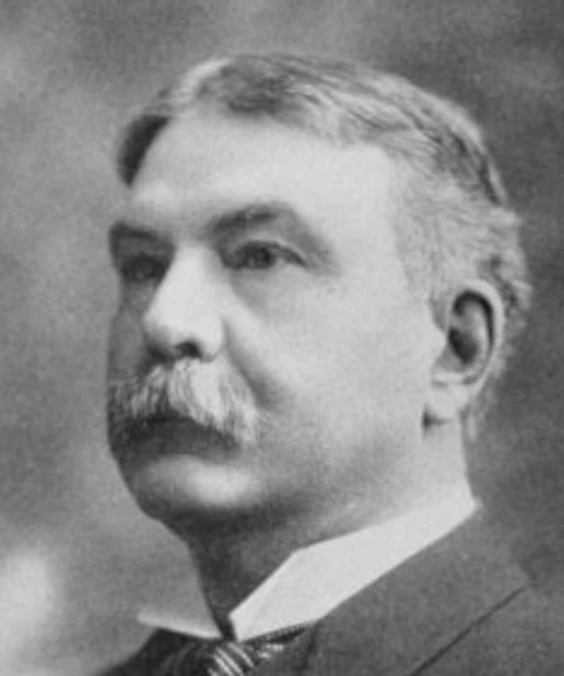
Teddy Roosevelt
The Public Record
Theodore Roosevelt was the 26th President of the United States, serving from 1901 to 1909. A member of the Republican Party, he was born on October 27, 1858, in New York. Roosevelt was a prominent leader of the Progressive Movement, advocating for domestic policies that included trust-busting, regulation of corporations, and conservation of natural resources. His administration is noted for significant reforms and the establishment of national parks and forests.
gutenberg.org
But try to make the other fellow’s ship go down first!
In battle the shots that count are the shots that hit.
It is not necessary to have a very large navy; but it is necessary that ship for ship it should be just a little the most efficient navy in the world.
At sea the battle has to be fought with the ships and the crews that have been prepared before the war begins; and we wish to profit by the lessons of history by seeing that our navy is always kept adequate to our needs.
But while it is a comparatively simple task to turn a man of the proper character, physique and intelligence into a good soldier, you can not improvise either a battleship or the crew of a battleship.
We can afford to have a small army; although we must insist upon its being kept up to the high point of efficiency that I am glad to say our regular army in its individual units has now attained.
We must therefore bring up and keep up our navy to the highest point of efficiency.
We undertook to build the Panama Canal because we said that owing to our position and interest and standing we were the only nation that could or should do it.
I know that an audience composed as this audience is of men who either themselves fought or whose fathers fought in the Civil War, appreciate to the full the sound national policy (if I may use the vernacular) of never bluffing unless you…
If we had not acted as we have, all chance of building that canal would have vanished for half a century to come; and as it is we now are assured of having that canal within a comparatively short time.
Every man who is a good farmer, a thrifty, progressive, saving mechanic, who owns his own house, who is free from debt, and able to bring up his children well, and to keep his wife as she should be kept, is not only a first-class citizen…
The bulk have got to be men engaged in the trades, as mechanics, as wage-workers, as farmers.
All honor to the teacher, to the doctor, to the preacher; but remember that it is impossible that the bulk of any people shall be teachers, or doctors, or lawyers, or preachers.
It is perfectly true that education in mind alone won’t make a good citizen; but it is equally true that you can not get the best citizen without education.
The costliest crop for any community is the crop of ignorance.
We need education, morality, industry; we need intelligence, clean living, and the power to work hard and effectively.
What I say to this body of my colored fellow-citizens is just exactly what I would say to any body of my white fellow-citizens.
If we do our duties faithfully in spite of all difficulties, then sooner or later the rights will take care of themselves.
It seems to me that it is true of all of us that our duties are even more important than our rights.
Every good American must be interested in seeing every other American citizen rise, help himself upward, so as to be better able to do his duty by himself and those dependent upon him and by the State at large.
My friends, let me say what a pleasure it has been in driving along the streets to have the Governor and the Mayor point out to me house after house owned by colored citizens, who by their own industry, energy, and thrift had accumulated a…
In the last resort, and only in the last resort, it may occasionally be necessary to interfere by exercising what is virtually an international police power, if only to avoid seeing some European power forced to exercise it.
It is an ungenerous thing for us to refuse such aid; and it is foolish not to give it in a way that will make it really effective, and therefore of direct benefit to the people concerned—and of indirect benefit to us, simply because it is…
Wherever possible we should gladly give any aid we can to a weaker sister republic which is endeavoring to achieve stability and prosperity.
Politicians like Teddy Roosevelt