You are in honor bound to join hands in favor of law and order and to war against all crime, and especially against all crime by men of your own race; for the heaviest wrong done by the criminal is the wrong to his own race.
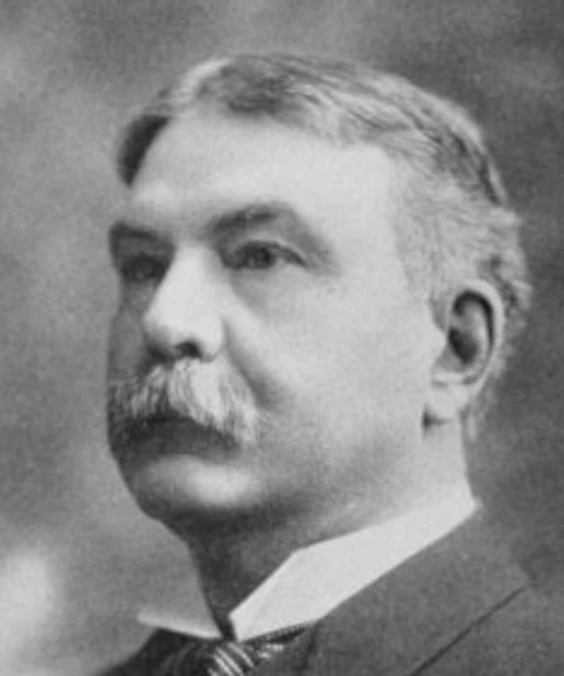
Teddy Roosevelt
The Public Record
Theodore Roosevelt was the 26th President of the United States, serving from 1901 to 1909. A member of the Republican Party, he was born on October 27, 1858, in New York. Roosevelt was a prominent leader of the Progressive Movement, advocating for domestic policies that included trust-busting, regulation of corporations, and conservation of natural resources. His administration is noted for significant reforms and the establishment of national parks and forests.
gutenberg.org
You young colored men and women educated at Tuskegee must by precept and example lead your fellows toward sober, industrious, law-abiding lives.
Now let you remember on the other hand that no help can permanently avail you save as you yourselves develop capacity for self-help.
And when any body of men in any community stands bravely for what is right, these men not merely serve a useful purpose in doing the particular task to which they set themselves, but give a lift to the cause of good citizenship throughout…
Every time a law is broken, every individual in the community has the moral tone of his life lowered.
It is not only the duty of the white man, but it is to his interest, to see that the negro is protected in property, in life, and in all his legal rights.
It is in the interest and for the protection of the white man to see that the negro is educated.
Merely from the economic standpoint it is of the utmost consequence to all our citizens that institutions such as this at Tuskegee should be a success.
The professional and mercantile avenues to success are overcrowded; for the present the best chance of success awaits the intelligent worker at some mechanical trade or on a farm; for this man will almost certainly achieve industrial…
Every black man who leaves this institute better able to do mechanical or industrial work adds by so much to the wealth of the whole community and benefits all people in the community.
Hence the work of the Tuskegee Normal and Industrial Institute is a matter of the highest practical importance to both the white man and the black man, and well worth the support of both races alike in the South and in the North.
Therefore in view of the scarcity not only of common labor, but of skilled labor, it becomes doubly important to train every available man to be of the utmost use, by developing his intelligence, his skill, and his capacity for…
The boy or girl won’t turn out that kind of a man or woman if not brought up in that spirit from the beginning.
Do not bring up your boys and girls to be useless, to avoid trouble, to get around trouble, to shirk work.
We all of us know an occasional foolish mother who says, “I have had to work hard; I have had a pretty hard time, my daughter shall not have to work.” That is not kindness to the daughter.
Each of you boys here should remember that the way to fit yourself to be of the utmost possible use is so to act that your family likes to have you at home, instead of feeling a relief when you are gone; and it is the same way with the…
Speaking broadly, the man who does that is the man whom you can trust if the need for heroism arises.
What we need is not merely desire to perform heroic feats under altogether exceptional circumstances; but the steadfast determination to perform the rather commonplace duties of every day, day by day, as they arise.
If the woman is a good wife and mother, she is a good citizen; and not merely a good citizen, but she is the very best kind of citizen that this country can produce.
If the man is a good father, a good husband; if he is decent and clean in his domestic life; if he does his duty by his neighbor; if he is the kind of a man whom we are glad to have as a neighbor and to do business with, that man is a good…
If there is any one thing that I respect more than a good man it is a good woman.
The Nation of the future will rise higher or not just as the boys and girls of the present are or are not trained to do their duty as men and as women.
Those qualities and others like them go to the root of the whole question of citizenship.
We can perfectly well afford to differ about the currency or the tariff; but we can not afford to differ about such questions as honesty in public life, decency and cleanliness in private life.
Whether President, Governor, Mayor, Congressman, or State Legislator, there are certain basic principles to which we must prove true if we are to make this country what it shall be made.
Politicians like Teddy Roosevelt