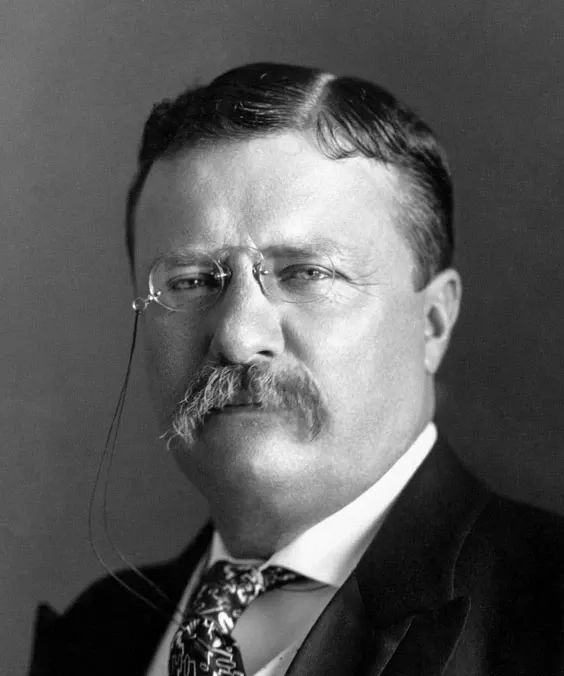
His decisions of questions regardless of men and of the next election excited popular confidence, and the power of public opinion had forced his renomination by acclamation.
De Alexander
The Public Record
De Alva Stanwood Alexander was an American journalist, lawyer, historian, and member of the United States House of Representatives, serving seven terms from 1897 to 1911 as a representative of New York state.
gutenberg.org
It demanded the payment of the public debt in coin, the resumption of specie payment, taxation for revenue only, local self-government, and State supervision of corporations.
If nominated, he wrote, you must expect the martyr's crown.
As a powerful reasoner it was admitted that he had few equals at the bar.
Besides he was capable, notwithstanding his infirmity, of making a forceful speech, full of fire, logic and facts, his quick, retentive memory enabling him to enter easily into political controversy.
Tilden was able, rich, and known to everybody as the foe of the Tweed ring.
He believed the failure of the Republicans to associate themselves intimately with reformers and to manifest a loathing for all corrupt alliances, had added greatly to their burden, and early in the summer of 1874 he determined to run for…
On the question of electing or appointing judges, the people by an overwhelming vote pronounced in favour of election.
The pledge is the price of the nomination, and when the election is determined, the pledges must be redeemed.
Political candidates for the lowest or highest positions are directly or indirectly pledged.
Political caucuses, primary meetings, and conventions are controlled by the promise and expectation of patronage.
And the manufacturers have expended millions to defeat me.
This amicable and dignified adjustment of differences between England and the United States, leading to new rules for the future government of Anglo-American relations, and making impossible other than a friendly rivalry between the two…
The reduction of the public debt at the rate of one hundred millions a year, as well as large annual reductions in the rate of taxation, also inspired confidence, while to the President and his Secretary of State belonged great credit for…
The South's endorsement of the Thirteenth, Fourteenth, and Fifteenth Amendments, its declaration that the public credit must be sacredly maintained, and its denunciation of repudiation in every form and guise, created the belief that the…
Although prudent in utterance and somewhat cautious in entering upon a course of action, his indefatigable pursuit of an object, coupled with conspicuous ability and long experience, marked him as one of the strong men of New York…
The people expected the shameless Erie ring and its legislation to be wiped out, corrupt judges to be impeached, a new charter for New York City created, the purity of the ballot-box better protected, canal management reformed, and a…
The election in 1871, carried by the inspiration of a great popular uprising in the interest of reform, had given them control of the Legislature, and when it assembled honest men rejoiced, rogues trembled, and Tweed failed to take his…
They had encouraged the revolt, expecting the selection of Adams, or Trumbull, or David Davis, whom they could readily adopt, but Greeley, a lifelong antagonist, plunged them into trouble.
Although its influence had materially suffered during and since the war, it still controlled a great constituency throughout the North, and the longer its chief hesitated to join the new party the more earnest and eloquent did the appeals…
From the first it was apparent that the Republican schism, to be successful, needed the support of the Tribune.
There was undoubtedly great corruption and maladministration in the country in the time of President Grant.
This act created a corps of journalistic critics whose unflagging satire and unswerving severity entertained the President's opponents and amazed his friends.
A statesman so pronounced in his views and in control of abundant patronage was not likely to change a contest for personal advantage into a choice of public policies.
More disturbing because more irritating in its effects was the Administration's disposition to permit the control of its patronage by a coterie of senators, who preferred to strengthen faction regardless of its influence.
Politicians like De Alexander