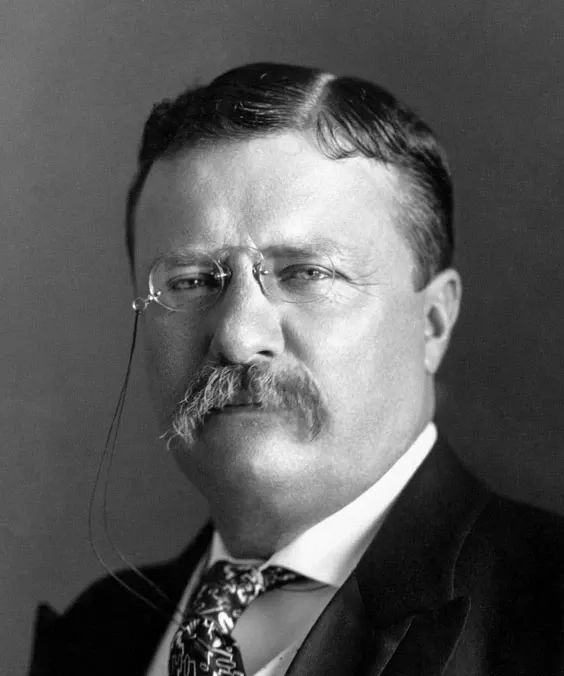
His message caught the inspiration of this fresh and joyous maturity.
De Alexander
The Public Record
De Alva Stanwood Alexander was an American journalist, lawyer, historian, and member of the United States House of Representatives, serving seven terms from 1897 to 1911 as a representative of New York state.
gutenberg.org
Seward's election, therefore, was not only a revolution of parties, but a radical change of policy.
On the contrary, he had a way of speaking out his own honest thoughts, and would have despised himself, as much as would Greeley, if it had been necessary to enjoy any one's friendship on terms of humiliation.
He was satisfied in his own mind that he knew better than any other how to guide his party and govern his followers, and he acted accordingly--dogmatic, overbearing, often far from amiable, sometimes unendurable, to those around him.
He had given eighteen years to the State, he said, the largest portion of an active and vigorous life, and now found himself poorer than when he took office.
As the editor of the Jeffersonian, which now quickly won a multitude of readers, he did his work with marked ability, discussing measures calmly and forcibly, and with an influence that baffled his opponents and surprised his friends.
He lacked judgment, and at times greatly grieved the friends who were willing to follow him through fire and flood; but once his mind was made up he surrendered his understanding, his consciousness of convictions, of duty, and of public…
It is one of the privileges of genius to discern the genius of others; but even Thurlow Weed could not have dreamed that he was giving opportunity to a man whose name was to rank higher than his own in history.
He seemed to have only one ambition--the acquisition of knowledge and the career of a man of letters, and in his efforts to succeed, he ignored forms and social usages, forgot that he had a physical body to care for, and detested…
He cared little for the boys about town and less for the sports of youth; he could dispense with sleep, and wasted no time thinking about what he should eat or wear; but books, and especially newspapers, were read with the avidity that a…
Thank God, I can endure it as long as they, but I am sick of our Whig party.
He hated slavery and all its belongings, though a seeming necessity constrained him to write, in 1838, to this intensely pro-slavery city, a pro-slavery letter, which was at war with his real, or at least with his subsequent convictions.
He asked no office, and he gave only the ripe fruit of his meditative life.
But, at the bottom of his nature, there was bed-rock principle from which no pressure could swerve him.
He believed in taking advantage of every opportunity to strengthen his own party and weaken the adversary, and he troubled himself little about the means employed.
Experience had taught them to act upon their own convictions.
But the suffering people were angry, and, like a whirlwind, the Whigs swept nearly every county in the State.
Thus, the citizens of New York, staggering under a panic common to the whole country, were compelled to suffer the additional hardships of an irredeemable, and, for the most part, worthless currency, known as "shin-plasters.
But, gradually, the country recognised that the prosperity of a nation is not increased in proportion to the quantity of paper money issued, unless such currency be maintained at its full value, convertible, at pleasure, into hard…
The panic of 1837 reached the proportions of a national calamity.
Then confidence gave way, and tens of thousands of people, who had been wealthy or in comfortable circumstances, waked up to the awful realisation of their bankruptcy and ruin.
The beginning of the end of this epoch of insane speculation was felt, early in the spring of 1837, by a money pressure of unexampled severity.
Two per cent. a month did not deter borrowers who expected to make one hundred per cent. before the end of the year.
So wild was the passion for new enterprises, that one had only to announce a scheme to find people ready to take shares in it.
With such a money plethora, schemes and projects expanded and inflated, until success seemed to turn the heads of the whole population.
Politicians like De Alexander