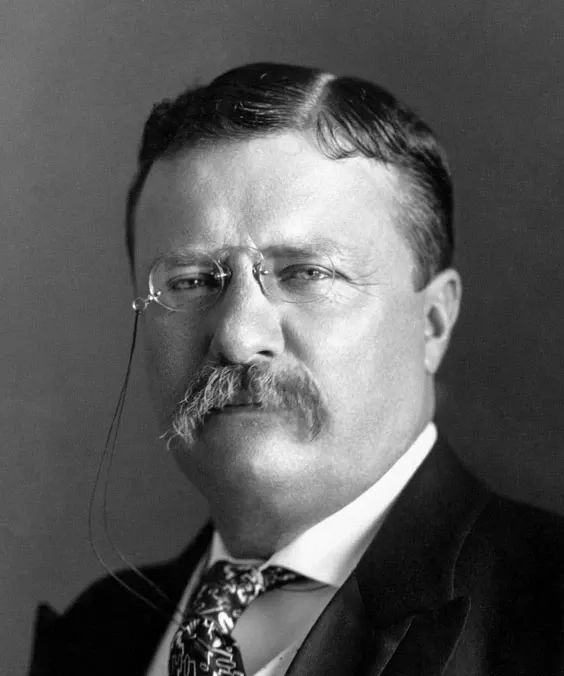
But it was Seymour's firmness of mind, suavity of manner, unwearied patience, and incomparable temper, under a thousand provocations, that made it possible to pass the bill, substantially as he wrote it, by a vote of sixty-seven to…
De Alexander
The Public Record
De Alva Stanwood Alexander was an American journalist, lawyer, historian, and member of the United States House of Representatives, serving seven terms from 1897 to 1911 as a representative of New York state.
gutenberg.org
There is no portion of our citizens who desire to increase our state indebtedness, or to do aught to the detriment of our common interests, when they are shown the evils that inevitably follow in the train of borrowing large sums of money…
The corruptions of extravagance and the bitter consequences of indebtedness, have produced their own correctives, and public opinion, admonished by the past, has returned to its accustomed and healthful channels, from which it will not be…
His handsome face, made more attractive by large, luminous eyes, and a kind, social nature, peculiarly fitted him for public life; and, back of his fascinating manners, lay sound judgment and great familiarity with state affairs.
At such times, his caustic sentences, clear and compact, were rarely conciliatory; but when he turned away from the wheel, achievement had proven his right to leadership.
When he entered the pilot-house of his party, men knew something was going to happen.
There is something grim and pathetic in the picture of the rude awakening of this farmer governor, who, while working in his own weak way for harmony and conciliation, discovered, too late, that partisan rivalries and personal ambition had…
It is not a bad thing to be left out of Congress," he wrote Christopher Morgan, depressed by his defeat.
He had the promise of the future in him, a capacity for action, a ready sympathy with men of all classes, occupations, and interests, and he saw rays of light where others looked only into darkness.
He did not belong in the class with Marcy and Wright, though few New Yorkers showed more indomitable courage than Dickinson--a characteristic that greatly strengthened his influence in the councils of the leaders whose differences were…
A beam of light shot through the darkness, and I began to get glimpses of the question at issue.
My principles are very good and popular ones for a man out of office; they will take care of me, when out of office, as they always have done.
And what have I to lose by withdrawing and leaving the party unembarrassed?
My principles are too liberal, too philanthropic, if it be not vain to say so, for my party," he wrote Christopher Morgan, then a leading member of Congress.
His natural tendencies were toward a government not merely paternal, but prodigal--one which, in its multiform endeavours to make every one prosperous, if not rich, was very likely to whelm all in general embarrassment, if not in general…
He said that he had been opposed, for twenty-five years, to the exercise of such a power, if any such power existed under the Constitution.
Greeley's editorials summed up the long line of mistakes leading to the panic of 1837, and the people understood the situation.
Yet his sub-treasury measure, so beneficent in its aims that its theory was not lost in the necessities growing out of the Civil War, proved the strongest weapon in the armory of his opponents.
Van Buren clearly saw the force and direction of public sentiment.
There was a rugged honesty and ability about Bouck that commended him to the people.
The President, with great moral courage and keen-sighted wisdom, met the crisis of 1837 with an admirable bearing.
We may doubt, and with reason, whether anything he might have said could have strengthened the slight hold which such a theory then had in the minds of the people, but it would have brought the need of reform strikingly before the country…
The Democrats, whose hearts must have rejoiced when they heard his message, declared it the visionary schemes of a theorising politician, the work of a sophomore rather than a statesman; yet, within little more than a decade, most of his…
From the first, Seward was an ardent optimist, and this first message is that of noble youth, delighting in the life and the opportunities that a great office presents to one who is mindful of its harassing duties and its relentless…
It was written, too, in the easy, graceful style, rhythmical and subdued in expression, which afterward contributed to his extreme charm as an orator.
Politicians like De Alexander