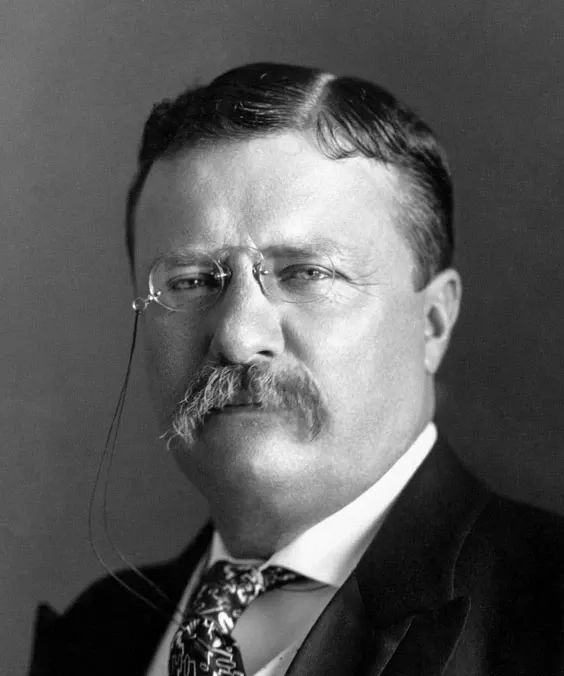
Indeed, it may be said that he was one of those upright judges who contrived to make neither honour nor rectitude seem lovable qualities; yet his abilities finally earned him an enviable reputation as a justice of New York's court of last…
De Alexander
The Public Record
De Alva Stanwood Alexander was an American journalist, lawyer, historian, and member of the United States House of Representatives, serving seven terms from 1897 to 1911 as a representative of New York state.
gutenberg.org
In New York a Democratic victory had come to mean a succession of Democratic defeats.
Gerrit Smith was a noble example of the champions of freedom.
It showed that the smouldering fire, which had suddenly blazed out in the Free-soil campaign of 1848, was not extinguished by the coalition of Barnburners and Hunkers, and the acceptance of the great compromise by the two Baltimore…
The people were not only tired of slavery agitation, but trade was good, the country prosperous, and a reunited Democracy, by unreservedly indorsing the compromise measures of 1850, promised settled conditions.
There were moments when laughter drowned his loudest utterances, when silence made his whispers audible, and when an eloquent epigram moistened the eye.
The country, he declared, was tired of the agitation of slavery, which had ceased to be a political question.
Many thought: the voice is Jacob's voice, but the hands are the hands of Esau.
The drum and cannon did conspicuous work, flags floated, and speakers found ready and patriotic listeners, but the hearts of many people were not enlisted in the discussion of tariffs and public improvements.
Scott's record in the War of 1812 was not less brilliant than Harrison's, and if his Mexican battles were not fought against the overwhelming odds that Taylor met at Buena Vista, he was none the less entitled to the distinction of a…
Like his distinguished father he was a man of pure character, and of singular simplicity and gentleness.
Less electrical than John Van Buren, he was more persuasive; less witty, he was more logical; less sarcastic, he was more candid; less denunciatory of antagonists, he was more convincing to opponents.
He was one of the men who do not lose the character of good fighters because they are excellent negotiators.
He was strictly temperate, industrious, orderly, and of an integrity above suspicion.
Timid, vacillating, credulous, unjustly suspicious when approached by his prejudices, he has allowed the sacrifice of that confiding party which has had no honours too high to confer upon him.
A noble, glorious party has been defeated--destroyed--by its own leaders," he wrote Weed.
Danger to the Union, at least assumed danger, could not in any way soften their hearts or change their purposes.
Fugitives who have lived among us for many years cannot be seized and driven off as if they belonged to the brute creation.
Trustworthy estimates fixed the number of runaways in the free States at fifteen thousand, and a southern United States senator bitterly complained that only four or five had been recaptured since the law's enactment.
Former legislators held the opinion that they were elected to represent and maintain the interests of their constituents--not to withdraw for the sake of indulging some petulant or romantic impulse because they could not have their own way.
People formerly recognised him as an accomplished gentleman, modest in manners and moderate in speech, but his conduct and messages as an executive revealed those higher qualities of statesmanship that ranked him among the wisest public…
Webb's chief title to distinction in political life was allegiance to his own principles regardless of the party with which he happened to be affiliated, and his fidelity to men who had shown him kindness.
But his political instincts, also, were admirable, and his aptness as an unerring counsellor in the conduct of complicated affairs always turned to the advantage of his party.
The unexcelled courtesy and grace of manner with which he dropped the measured and beautiful sentences that made him an orator, undoubtedly aided in obtaining the position to which his genius entitled him.
He was ready in debate, temperate in language, quick in the apprehension of parliamentary rules, and of phenomenal tact.
Politicians like De Alexander