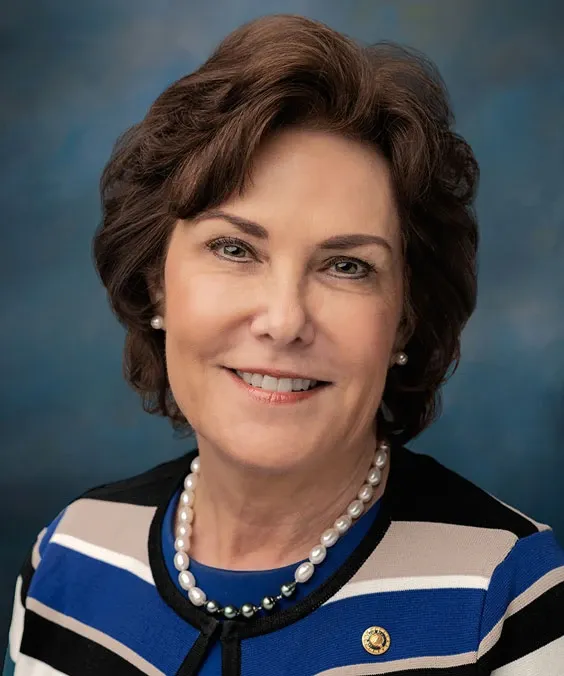
Catherine Cortez Masto
The Public Record
Catherine Cortez Masto is the junior United States senator from Nevada, having taken office on January 3, 2017. A member of the Democratic Party, she made history as the first Latina senator in U.S. history. Before her election to the Senate, Cortez Masto served as the Attorney General of Nevada from 2007 to 2015, where she focused on consumer protection and public safety issues. She has been an advocate for various policies, including healthcare access, immigration reform, and economic development in Nevada.
Jan 29, 2018
These are long-term projects and they require long-term funding, and quite often we here in Congress don't think of funding in a long-term perspective.
Jan 29, 2018
I am wondering if you can elaborate, not only on that, but the importance of your interaction with and partnerships and collaborations that you have going.
Jan 29, 2018
There is a partnership between the University of Nevada, Reno, with the Department of Energy's Berkeley National Lab.
Jan 24, 2018
There are geographic barriers, rural communities, particularly, in Nevada and across the country that are still struggling to have broadband access
Jan 24, 2018
We're still at the stage of encouragement and not necessarily mandated that the use is being implemented.
Jan 24, 2018
I do wish that FEMA had been here. I think they would have been an integral part of this discussion.
Jan 24, 2018
The best practices are there, but there's no guarantee that they're going to be adopted.
Jan 24, 2018
I echo a lot of the concerns from my colleagues that I've heard today and appreciate your candid comments.
Jan 24, 2018
This is just a crisis as well, that they are not connected right now, and it's a focus for many of us.
Jan 24, 2018
In Nevada, particularly in southern Nevada, we have a large Filipino population, and Tagalog is an important language.
Jan 24, 2018
Do you believe CFIUS's current authorities and processes sufficiently address military concerns regarding Chinese investments near military installations?
Jan 24, 2018
I think our concern is how do we ensure that there is that coordination, that collaboration, and that something is not falling through the cracks here?
Jan 24, 2018
I hear this conversation where we need to balance, I believe--and I echo my colleagues--this national security with our economic security.
Jan 24, 2018
I was literally there over the summer, at Creech. We were just having this conversation. And if you know where Creech Air Force Base is, it is in the middle of nowhere. But at the entrance of Creech there was a number of foreign nationals…
Jan 24, 2018
And under FIRRMA, this is covered, this would be covered. You would be able to prevent that type of acquisition. Is that correct?
Jan 24, 2018
One of the things I hear constantly from many there... is the concern, national security concerns.
Jan 23, 2018
Thank you so much for being here. And I am going to start with you, Mr. Borland.
Jan 22, 2018
Is this something you're also looking at to incorporate into your budget, this new technology that you think might be helpful with security?
Jan 22, 2018
I'm wondering if you can talk a little bit about these new technologies that show promise for safety and security.
Politicians like Catherine Cortez Masto