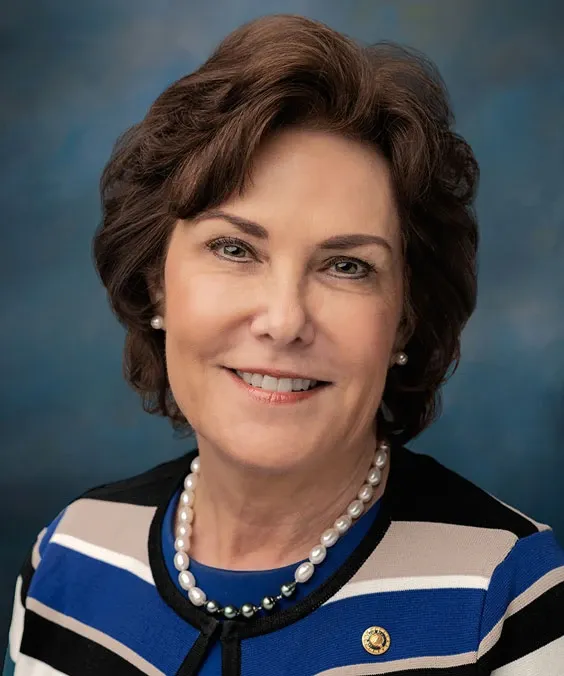
Catherine Cortez Masto
The Public Record
Catherine Cortez Masto is the junior United States senator from Nevada, having taken office on January 3, 2017. A member of the Democratic Party, she made history as the first Latina senator in U.S. history. Before her election to the Senate, Cortez Masto served as the Attorney General of Nevada from 2007 to 2015, where she focused on consumer protection and public safety issues. She has been an advocate for various policies, including healthcare access, immigration reform, and economic development in Nevada.
Mar 13, 2018
Requiring our tribes to work with the States to fight for that money is difficult.
Mar 13, 2018
Don't you think there should be targeted grant funding to address these issues in tribal communities?
Mar 13, 2018
In Nevada, we have already undertaken the kind of revenue generation in recent years to establish a greater availability of funds to help rebuild and expand our local infrastructure in places like Clark and Washoe counties.
Mar 13, 2018
So what you're saying today is it is not shifting funds away from traditional Pell grants.
Mar 13, 2018
What it appears you're doing is shifting money away from low-income students who need the funds to attend college.
Mar 13, 2018
Are you referring to coming to Capitol Hill now and working with us in a bipartisan way?
Mar 13, 2018
I only have 5 minutes. So if you've done the modeling or analysis, just say yes, and if you would send it to my office, that would be great.
Mar 12, 2018
Congress can further facilitate wireless deployments on Federal property by creating a deemed granted remedy for siting applications.
Mar 12, 2018
S. 1988, the Streamlining Permitting to Enable Efficient Deployment of Broadband Infrastructure Act of 2017 or SPEED Act, spearheaded by Subcommittee Chairman Wicker and Senator Cortez Masto will make it easier to deploy small cells by…
Mar 12, 2018
Can I just ask for a commitment that you come back to us and go through this and be willing to talk to us more about what is going on here, because we have not had the opportunity to explore this with you and your staff as well?
Mar 12, 2018
What I am asking for is a commitment from you and DOI to work with the stakeholders, the Governor, and the State of Nevada to address our concerns.
Mar 12, 2018
Energy is core to our economic well-being and, quite frankly, morally, to produce energy in this country is morally right because I don't want to see your kids ever have to go overseas and see what I've seen.
Mar 12, 2018
If this Administration is committed to what I have heard you say time and again, an all-of-the-above energy strategy, then why is renewable energy the only energy program that is proposed to be cut?
Mar 5, 2018
I'm very passionate about education in terms of the STEM activities and would certainly be a very strong supporter of that.
Mar 5, 2018
And as you well know, USGS has well over 200 programs, offices, laboratories, field stations and different facilities across the country with numerous partnerships with universities and other educational institutions.
Mar 5, 2018
Can I get a commitment from you that, once appointed and after you have done your analysis, if there is going to be an impact to Nevada, you will be willing to reach out and work with us and talk with us about the issues?
Mar 5, 2018
The concern with this budget is the cutbacks and the impact it is going to have.
Politicians like Catherine Cortez Masto