Apr 17, 2018
We need senior officials at the Pentagon to help push the Joint Requirements Oversight Council and the military services to recognize the benefit of directed energy weapon systems.
The Public Record
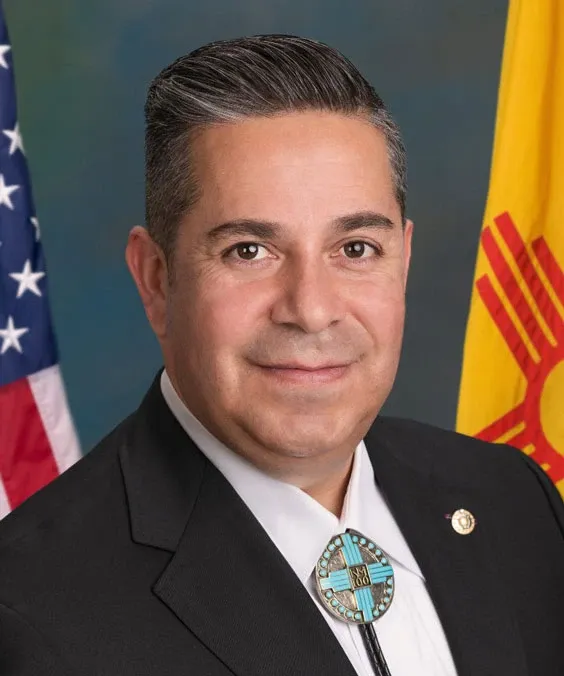
Martin Heinrich is a United States Senator from New Mexico, serving since January 3, 2013. A member of the Democratic Party, Heinrich previously represented New Mexico's 1st congressional district in the U.S. House of Representatives from January 6, 2009, to January 3, 2013. Throughout his political career, he has focused on issues such as renewable energy, healthcare, and economic development, advocating for policies that benefit New Mexico's diverse communities.
We need senior officials at the Pentagon to help push the Joint Requirements Oversight Council and the military services to recognize the benefit of directed energy weapon systems.
We need senior level officials at the Pentagon to identify capability gaps and know where directed energy can be a solution.
Thank you for bringing a sense of urgency to all of this, because I very much agree that has oftentimes been the missing piece to all of this.
I think that the current requirements process is not designed for new ideas or new weapons systems.
To me, directed energy weapons are one of those ways that we do not have to have our guys, our partners, our allies have a fair fight.
I really appreciate your awareness that so many of these challenges are baked into culture as much as anything else.
The powers afforded to you in this new position are more like 'broad and sweeping powers to offer advice.'
Let me start by thanking Senator Ernst for holding this important hearing on technology transfer and the ways that we can move technologies and systems more rapidly into the hands of our operational forces.
Basic research has driven major leaps forward--including mapping of the human genome, vaccines, breakthroughs in cancer research, and energy storage technology and the creation of the internet, laser, MRI and GPS.
The Federal Government plays a key role in this--funding and conducting R&D, investing in the human capital of our people, and ensuring that we are making the necessary investments in STEM.
To lead in the 21st century economy, the United States must remain at the forefront of game-changing discoveries and create an ecosystem that supports innovation across the economy.
Innovation drives economic growth and boosts wages. We need more of it and we need innovation to be more broadly shared across regions.
I just see this as sort of coming right up against our potential for unleashing our economy because we are going to start having workforce shortages.
Higher deficits can cause interest rates to increase, and certainly if we see a $2 trillion increase in the deficit that is not inconsequential.
It seems to me like a balanced budget amendment, it's kind of an abdication of responsibility from Members of Congress
I just find it ironic that, you know, we look back in 2001 and 2003, when you oversaw the CBO, the Bush administration added $1.5 trillion to the deficit. Now my Republican colleagues have added another $1.9 trillion to the deficit. And we…
Dr. Soofer, have you considered the possible impacts on the existing schedule for the ongoing and planned life-extension programs and the additional costs and effort on top of all the other outstanding requirements across the complex?
Dr. Soofer the national labs and sites have said they are as busy as they have ever been when considering the Life Extension Projects that are already underway and the ones planned in the future.
The Nuclear Posture Review reaffirms the military requirements for plutonium pit production of 30 per year by 2026.
Is there value in having three separate laser scaling efforts, or should we be concentrating our resources on two competing lines of effort?
What is your fiscal year 2019 budget request for support of this important program?
I worked last year with your office on legislation in the fiscal year 2018 NDAA to increase the statutory cap.
I strongly support plans to replace these inadequate facilities with a new LEED Gold building.
Politicians like Martin Heinrich