Sep 30, 2009
I would just remind you that we have a certain decorum here, and I would ask that you not refer to any Member of this Committee in the future as a lackey.
The Public Record
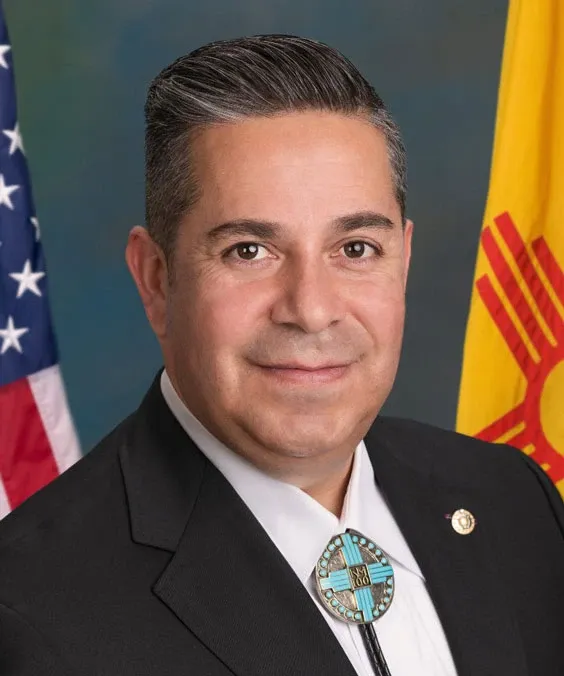
Martin Heinrich is a United States Senator from New Mexico, serving since January 3, 2013. A member of the Democratic Party, Heinrich previously represented New Mexico's 1st congressional district in the U.S. House of Representatives from January 6, 2009, to January 3, 2013. Throughout his political career, he has focused on issues such as renewable energy, healthcare, and economic development, advocating for policies that benefit New Mexico's diverse communities.
I would just remind you that we have a certain decorum here, and I would ask that you not refer to any Member of this Committee in the future as a lackey.
We would also suggest including legislation along the lines of H.R. 2662, introduced by Rep. Heinrich, to dedicate a portion of the fees paid by renewable energy developers back to Interior.
We would respectfully request that you maintain within the new office a separate and adequately sized staff dedicated solely to reviewing and processing renewable energy applications.
A better solution would be to bring wind and solar funding in line with other activities on BLM land.
I would echo your comments, both in terms of the appropriate use of eminent domain.
What exactly is the Federal trust responsibility to the tribes regarding water?
I thank Chairwoman Napolitano, Ranking Member McClintock, members of the Subcommittee on Water and Power...
The Aamodt Litigation Settlement Act would settle an even older water rights lawsuit--in fact, this is the oldest active case in the federal court system.
The Taos Pueblo Indian Water Rights Settlement Act would settle a lawsuit nearly 40 years old and adjudicate water rights for Taos Pueblo, the State of New Mexico, and many non-Indian water users and acequia associations.
I want to commend the local, state, and Pueblo governments for all their dedication to finding a solution that meets each community's needs.
These bills before the Subcommittee today are the result of years of hard work; respectively, 40 and 43 years.
Water is the lifeblood of our communities. Whether you live in downtown Albuquerque or on a ranch or in a pueblo, every New Mexican depends on their community's right to clean, reliable water.
These bills are an example of how we can manage this precious resource without pitting towns against farms, and farms against tribes.
I do not think there is any general question, even among the medical community in New Mexico, that there have been impacts from former activity.
It is easy to paint a broad brush when we are talking about energy independence.
I just think what Ms. Lummis brings up is actually something we should keep in mind.
I actually have a slightly more pro-nuclear approach than many of my Democratic colleagues.
In May 2009, Congressman Heinrich introduced the HEARTH Act, which will offer willing Indian tribes the authority to enact their own tribal leasing regulations.
I have certainly had constituents who have been directly impacted by the challenges that the national wildlife refuges, the parks along the border have imposed on people visiting those facilities.
I don't think that anyone can disagree with the idea that oil production from the OCS is critical to our energy security.
I come from the State of New Mexico and have a bit of a history in water management.
Politicians like Martin Heinrich