Nov 2, 2011
In these tough economic times, we should not be making it harder for business to develop on tribal land.
The Public Record
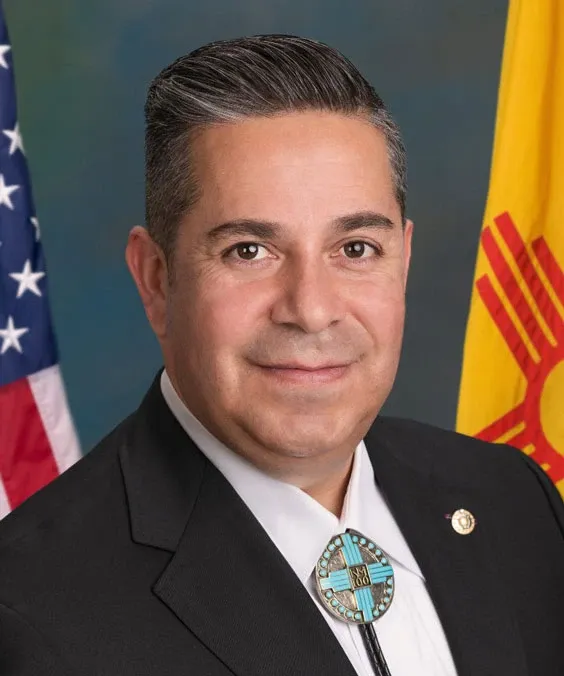
Martin Heinrich is a United States Senator from New Mexico, serving since January 3, 2013. A member of the Democratic Party, Heinrich previously represented New Mexico's 1st congressional district in the U.S. House of Representatives from January 6, 2009, to January 3, 2013. Throughout his political career, he has focused on issues such as renewable energy, healthcare, and economic development, advocating for policies that benefit New Mexico's diverse communities.
In these tough economic times, we should not be making it harder for business to develop on tribal land.
Families shouldn't be forced to make such an important decision based on how many months or years it will take a federal bureaucracy to approve a mortgage on tribal land.
The last thing the federal government should do is stand in the way of families ready and willing to buy a house.
That approval can take between six months and in some cases as long as two years, an intolerable delay for most buyers.
The last thing the Federal Government should do is to stand in the way of families who are ready and willing to buy a house.
I introduced the HEARTH Act after meeting with several housing directors from New Mexico's Pueblos...
This is about keeping our landmark promise to future generations, and I can't say enough about the importance of partnerships between sportsmen and other public land conservationists.
I appreciate the Obama Administration's support for H.R. 1413. And, I look forward to working with you Chairman Bishop and my colleagues on the committee to move this legislation forward.
I think today's hearing provides us an opportunity to both zero in on what happened during New Mexico's recent gas outage crisis but much more importantly to get to some of those answers so that we make sure this never happens again.
I want to thank Representative Martin Heinrich for his leadership in introducing H.R. 205.
Today I am introducing legislation that would add the Crest of Montezuma to the north end of the Cibola National Forest and extend a wilderness designation to the Manzano Wilderness Study Area to the south. To families living near…
If you enter into trying to establish a mortgage for a house, and you can secure financing that is, you know 5 percent or 5.5, and by the time everything has its I's dotted and its T's crossed mortgages are 8.25 percent, that is…
I think that, you know, when that is going well, I think BIA deserves credit for making that a priority.
Would you say that amending how we deal with long-term leasing, particularly with respect to this legislation, would be much more consistent with self-determination as a policy?
It is crucial that any such proposal be entirely optional to Indian tribes, and to determine whether they wish to participate in such an initiative.
In speaking with tribal housing officials from across New Mexico, one concern that they shared with me is that families are having to move off reservations if they want to buy a home because of the difficulty of the process.
One of the issues I wanted to touch on is that for home buyers on non-trust land, buyers can get their title and mortgage documentation finalized oftentimes within about 48 hours.
The HEARTH Act will allow tribes to exercise greater control over their land, and eliminate the bureaucratic delays that stand in the way of homeownership in tribal communities.
Our nation is home to a vast diversity of tribes, and federal policy should reflect that diversity.
Families shouldn't be forced to make such an important decision based on how many months or years it will take the Federal bureaucracy to approve a mortgage on tribal land.
The last thing that the Federal government should do is to stand in the way of families who are ready, willing, and able to buy a home.
I introduced the HEARTH Act after meeting with several housing directors from New Mexico's Pueblos, where I learned about the owner's process for securing a long-term lease on Indian Trust land.
I believe the Agency is actually allowed to maintain those facilities with the least intrusive tool.
Politicians like Martin Heinrich