Senator, if you would yield for a moment. To the Senator from Montana, I notice a very similar dynamic emerging from Montana as it was from New Mexico of being very thoughtful about a response to the virus but also making sure that people…
Martin Heinrich
The Public Record
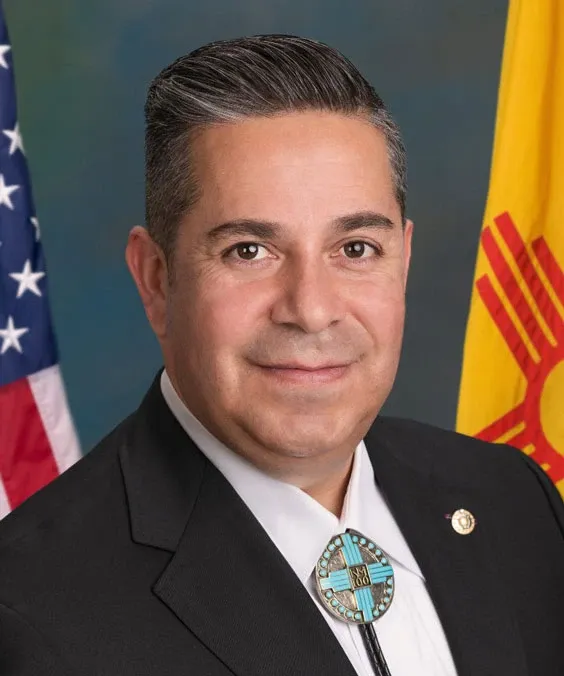
Martin Heinrich is a United States Senator from New Mexico, serving since January 3, 2013. A member of the Democratic Party, Heinrich previously represented New Mexico's 1st congressional district in the U.S. House of Representatives from January 6, 2009, to January 3, 2013. Throughout his political career, he has focused on issues such as renewable energy, healthcare, and economic development, advocating for policies that benefit New Mexico's diverse communities.
It seems, also, that the Chinese model of development in Africa is something that we should be thinking about as an opportunity.
Let's talk about what the opportunities are in Africa that, currently, we are missing.
After squandering $1.9 trillion on the tax bill, the House is preparing to vote on the Republicans' Tax Plan 2.0. This legislation would add $3.2 trillion to deficits from 2029 to 2038, bringing the total cost of their tax bills above $5…
Rather than turning the clock back and again allowing insurance companies to deny coverage to those with pre-existing conditions, as the Trump administration is trying to do, we need to build on recent gains to make health care more…
It was a massive waste of resources when workers could least afford it and when we should have been investing in our people and communities.
Wages are stuck. The typical worker's hourly wages, after adjusting for inflation, were lower in August than a year ago.
But there's a problem. Despite White House promises, working families aren't better off, and another hearing won't change that.
We need to connect our economy and invest in rural areas as opposed to just say to rural people they should move to the cities.
I am still looking for those poor who feel like they have really done great in the last 20 years, but I do appreciate your point.
We do want to measure how these policies are affecting the middle class and the least among us.
I would like to see the government measure how economic growth is distributed across households at different levels in the economy.
Mr. Moore, you stated that CBO estimates show that the tax cuts are paying for themselves, but this is precisely the opposite of what CBO is saying.
But let me suggest that maybe what we should have done here is to actually have a hearing with hourly workers to ask them how they are faring, rather than asking economists how workers are faring.
I don't think we can have a hearing on living standards without asking ourselves what will happen to the quality of life for tens of millions of Americans who count on Social Security, Medicare and Medicaid if Republicans add literally…
Most working Americans have been treading water, with middle-class earnings stalled for years.
When Republicans passed the bill last December, the estimated cost was $1.5 trillion, with a T. Today, it stands at $1.9 trillion.
Despite White House promises, working families aren't better off, and another hearing is not going to change that.
Well, it feels like deja vu all over again. Another hearing on the Republican tax law passed 9 months ago.
I am still looking for the worker. I have been asking people at home, you know, who got that $4,000 wage increase, and I am still looking.
There was a fairly explicit promise made by the President, and some Members of Congress, that this would result in $4,000 worth of additional wages
Hourly workers have been asking, 'Are we there yet?' for 38 years, while their wages have stagnated