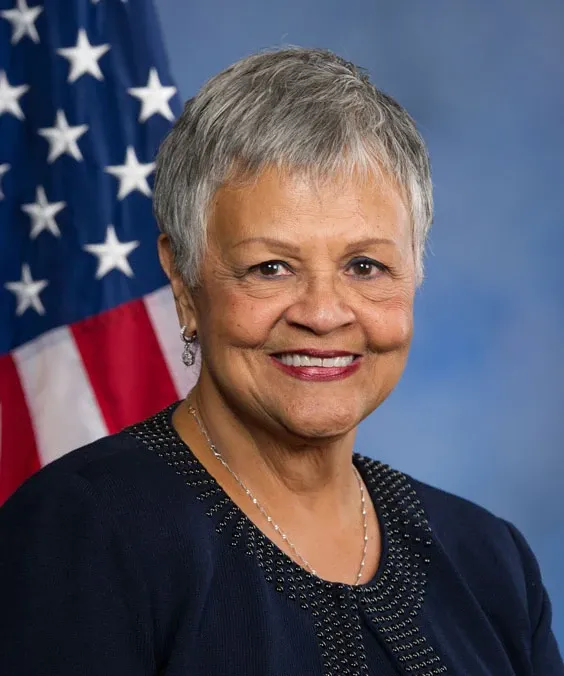
It can be justified only when permanent things are to be accomplished which many generations will certainly benefit by and which it seems hardly fair that a single generation should pay for.
Woodrow Wilson
The Public Record
Woodrow Wilson was the 28th President of the United States, serving from 1913 to 1921. A member of the Democratic Party, he was born in Virginia and raised in Georgia before moving to New Jersey, where he became a prominent political figure. Wilson was a key leader of the Progressive Movement, advocating for reforms such as antitrust legislation and the establishment of the Federal Reserve System. His presidency is also noted for significant events such as the United States' involvement in World War I and his efforts to promote the League of Nations, an international organization aimed at preventing future conflicts.
gutenberg.org
It seems to me a clear dictate of prudent statesmanship and frank finance that in what we are now, I hope, about to undertake we should pay as we go.
The people of the country are entitled to know just what burdens of taxation they are to carry, and to know from the outset, now.
We should be following an almost universal example of modern governments if we were to draw the greater part or even the whole of the revenues we need from the income taxes.
And there are many additional sources of revenue which can justly be resorted to without hampering the industries of the country or putting any too great charge upon individual expenditure.
In a country of great industries like this it ought to be easy to distribute the burdens of taxation without making them anywhere bear too heavily or too exclusively upon any one set of persons or undertakings.
What is clear is, that the industry of this generation should pay the bills of this generation.
I have spoken to you to-day, Gentlemen, upon a single theme, the thorough preparation of the nation to care for its own security and to make sure of entire freedom to play the impartial role in this hemisphere and in the world which we all…
I am sorry to say that the gravest threats against our national peace and safety have been uttered within our own borders.
Because it was incredible we made no preparation for it.
We would have been almost ashamed to prepare for it, as if we were suspicious of ourselves, our own comrades and neighbors!
I urge you to enact such laws at the earliest possible moment and feel that in doing so I am urging you to do nothing less than save the honor and self-respect of the nation.
Such creatures of passion, disloyalty, and anarchy must be crushed out.
They are not many, but they are infinitely malignant, and the hand of our power should close over them at once.
While we speak of the preparation of the nation to make sure of her security and her effective power we must not fall into the patent error of supposing that her real strength comes from armaments and mere safeguards of written law.
We cannot adequately make ready for any trial of our strength unless we wisely and promptly direct the force of our laws into these all-important fields of domestic action.
What is more important is, that the industries and resources of the country should be available and ready for mobilization.
It is obviously a problem that lies at the very foundation of our efficiency as a people.
The regulation of the railways of the country by federal commission has had admirable results and has fully justified the hopes and expectations of those by whom the policy of regulation was originally proposed.
We should formulate a law requiring a Federal license of all corporations engaged in interstate commerce and embodying in the license or in the conditions under which it is to be issued, specific regulations designed to secure competitive…
Such a law would afford a welcome opportunity to effect other much needed reforms in the business of interstate shipment and in the methods of corporations which are engaged in it; but for the moment I confine my recommendations to the…
No one who has observed the march of events in the last year can fail to note the absolute need of a definite programme to bring about an improvement in the conditions of labor.
There can be no settled conditions leading to increased production and a reduction in the cost of living if labor and capital are to be antagonists instead of partners.
For what we are seeking now, what in my mind is the single thought of this message, is national efficiency and security.
It is the genius of common men for self-government, industry, justice, liberty and peace.
Politicians like Woodrow Wilson