Mar 17, 2021
A letter from ERCOT responding to Representative Pallone and others, dated March 18, 2021;
The Public Record
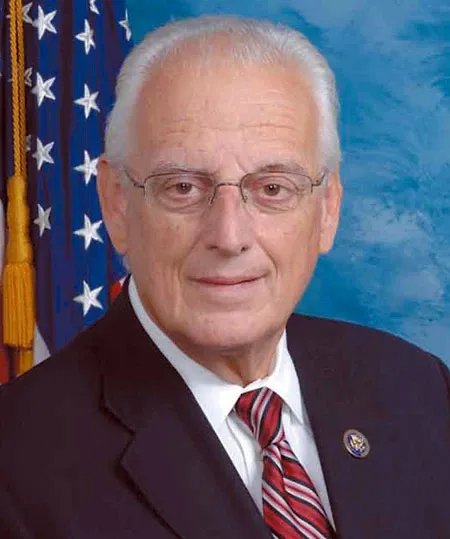
Frank Joseph Pallone is an American politician serving as the U.S. Representative for New Jersey's 6th congressional district since 1993. A member of the Democratic Party, Pallone has been a prominent advocate for health care reform, environmental protection, and consumer rights. He has played a key role in shaping legislation related to public health and climate change, often speaking out against policies he views as detrimental to these areas.
A letter from ERCOT responding to Representative Pallone and others, dated March 18, 2021;
I understand what you are saying, Mr. McKinley. I don't disagree with a lot of the things you say, but let's think of ways that we can do this together, which is, I think, our common goal.
As Chairman Pallone reminded us, this bill sets a national target of 50 percent reduction of greenhouse gas emissions by 2030 and 100 percent by 2050.
Energy efficiency is crucial as part of a decarbonization strategy, and this Energy Star industrial program will help us reach our clean economy goals.
Finally, the Worker and Community Transition title ensures every worker and community has Federal-level support and resources during the Nation's transition to a clean economy.
This innovative program leverages government funding and procurement power to fundamentally transform and strengthen the competitiveness of the U.S. manufacturing sector.
The climate crisis presents one of our greatest challenges, but it also presents one of our greatest opportunities.
At the heart of our bill is the commitment to achieving net-zero greenhouse gas pollution no later than 2050, with an interim goal of reducing pollution by 50 percent from 2005 levels by 2030.
But I am just so afraid that, if we don't innovate, if we don't think about the future, if we don't think of what is going to happen in 10 or 20 years, that China is going to eat our lunch, and they are going to take our jobs, and they are…
We obviously want to do things on a bipartisan basis. I will keep repeating that over and over again.
I just don't want to do this. I don't want to keep kicking this can down the road because the way we do this Medicaid in the territories is fundamentally broken, and now is the time to fix it.
I mean, the concern that I have, obviously, is that, if Congress fails to act and the territories go over the Medicaid fiscal cliff, the consequences are devastating.
Thank you, Chairwoman Eshoo, and thanks for emphasizing the bipartisan nature of the bills, because we have approached this in a bipartisan way in the past and will continue to.
We know that Medicaid in the territories has been chronically underfunded for decades.
I really appreciate the input from all the Congresspeople that represent the territories.
Hearing directly from the territories, through both their elected representatives and their local health officials, is an important part of this process; and we should make sure their voices are heard.
The territories need a permanent solution to their Medicaid funding shortfalls.
It is quite clear, when you are dealing with the Biden administration, that they see this as a national strategy.
I really felt that they did not see this as a national strategy, that they felt that the States were on their own.
Politicians like Frank Pallone