Jan 10, 2017
You do not need a lobbying disclosure form to simply seek information and clarification about a bill.
The Public Record
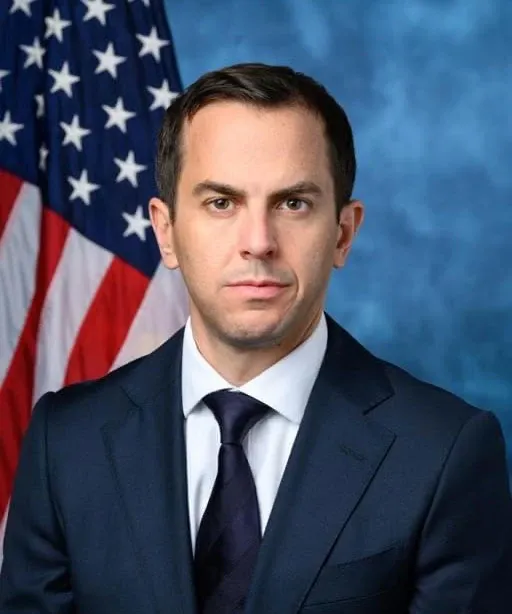
Robert Menendez Jr. is an American politician serving as the U.S. representative for New Jersey's 8th congressional district since January 3, 2023. A member of the Democratic Party, he succeeded his father, Robert Menendez Sr., who has had a long career in politics. Menendez Jr. focuses on issues such as healthcare, education, and economic development, reflecting the needs of his constituents in New Jersey. He has been vocal about political integrity and has made statements regarding the need for reform within the political system.
You do not need a lobbying disclosure form to simply seek information and clarification about a bill.
I appreciate that. I would just say that in the public forum that you could read or any other citizen could read, it is pretty definitive by all of the intelligence agencies of what they did.
I do not think it is to disrupt American business. I think it is to disrupt the economies of those countries.
I would hope you would do so, and I would be willing to hear your response for the record, because I think it is important.
The Developing World Will Have Fewer American Engineers, Economists, Teachers, and Health Workers to Help Prepare for the Future.
Do you believe that Palestinians ultimately have a right in some form and fashion to self-governing themselves?
do you believe these efforts at reconciliation--Russia with Japan--or having a more strategic relationship between Japan and Russia is in the national interests and security of the United States?
Do you believe the dignity of a Palestinian woman is the same as the dignity of a Jewish woman?
Strong protection and enforcement of intellectual property rights is essential to incentivizing and compensating American artists.
If confirmed, I will encourage the administration to look closely at all of the tools at its disposal to shape China's troubling behavior in the South China Sea.
There is a real genuine desire to work with this committee, members of Congress, to further the missions of the United States in the countries that you represent.
Do you believe that the life of a Palestinian child is of the same value as the life of a Jewish child?
I appreciate the chairman who has been supportive of some of my efforts when we were marking up here on USAID.
One of the key elements of countering violent extremism in the homeland is making sure that the ideology never has real purchase or longevity in the homeland.
I have, and always will, support the tenant-based voucher programs but I know a lot of parts of this country where that voucher does not go very far.
Based upon what has happened to the stock for your shareholders, it definitely was a material event that should have come forward.
Let me give you a real-life example. We are talking about people whose credit scores were hurt.
If you for years--years--pay your flood insurance policy, meet your obligations, and then, God forbid, when the moment comes, the disaster comes, and you find yourself being arbitrarily and capriciously lowballed, contractors arranging to…
I want to thank the panel. This is an incredibly important topic, but I want to focus my comments elsewhere.
But I want to focus on the present rather than the past and get New Jerseyans the funds they need to rebuild as quickly as possible.
If it taking so long to conclude the neutral hearings, why not pay the undisputed amount up front and let people get going?
Politicians like Bob Menendez Jr.