May 5, 2009
I want to welcome you all here today and I'm honored to be joined by the ranking member of this Subcommittee, Senator Jim DeMint.
The Public Record
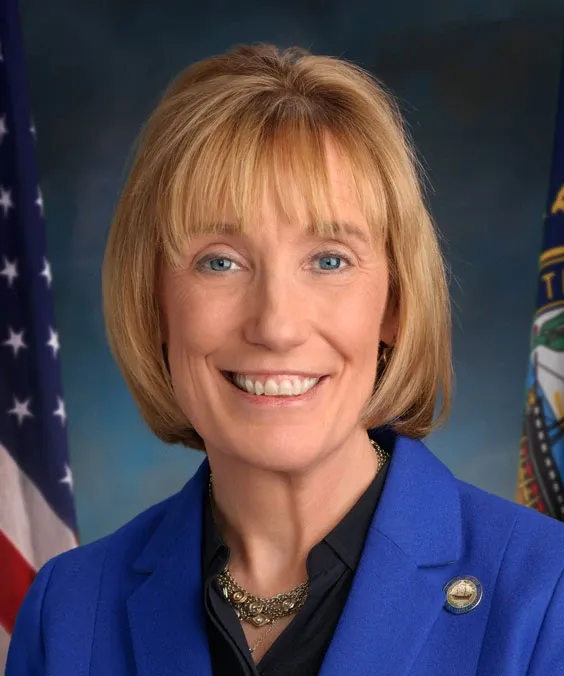
Jeanne Shaheen is an American politician serving as the senior United States senator from New Hampshire, a position she has held since January 3, 2009. A member of the Democratic Party, she is the first woman to be elected governor of New Hampshire, serving from 1997 to 2003. During her tenure in the Senate, Shaheen has focused on issues such as healthcare, education, and national security, often advocating for policies that support working families and promote economic growth.
I want to welcome you all here today and I'm honored to be joined by the ranking member of this Subcommittee, Senator Jim DeMint.
I think it's important to point out, as I'm sure everyone here knows, that last month, NATO members converged on France and Germany to celebrate the alliance's 60th anniversary.
I just want to follow up on Senator Kerry's question about what more can be done to close the loopholes that exist.
There's been a lot of discussion about the conduct of the war in Afghanistan, but I guess the real alternative is United States withdrawal.
I do want to thank you for being here, for your insights, and for your sacrifices for our country.
It's going to be very important to have a position that Congress and the United States have taken to go to Copenhagen.
We have to deal with climate change, that we are experiencing now in New Hampshire.
It's not just to put a price on fossil fuels, but it's really to try and put a price on carbon.
We look forward to significantly increasing our energy efficiency investments in the state.
Now, I know that back in 1980, President Jimmy Carter actually directed the SBA to provide liquidity to auto dealers to meet a similar credit crisis.
As Senator Snowe said earlier relative to some of the stresses that small businesses are facing, this is an area that is quickly rising to a level of a crisis if we can't provide some help to some of these auto dealers.
I certainly want to commend the President for your nomination and for elevating the SBA to a cabinet-level position.
I do echo Senator Casey's comments about the importance of being clear with the American people about what our strategy is there and what we hope to accomplish.
Shouldn't the goal of our oversight of markets be to avoid or prevent the kind of manipulation that we saw over the last year, regardless of whether there was intent involved or not?
One of the things that I think drove up the cost of Seabrook was the fact that Three Mile Island happened in the middle of that construction.
How many reactors do you think it would take to get to those economies of scale?
New Hampshire, as you may know, is home to the Seabrook nuclear power plant, which I believe was the last power plant licensed in the United States and actually constructed and operating.
As you know the Energy Policy Act of 2005 authorized the Secretary of Energy to guarantee loans of up to 80 percent of construction costs for energy projects that reduce greenhouse gas emissions, including nuclear power.
The $5 billion that was included in the Economic Recovery and Reinvestment Act for weatherization, I think is a very important investment.
I certainly agree with several of you who have talked about the need to move this country in a new energy direction that uses more clean energy technologies and that that's not only an environmental imperative and a national security…
Now, one of the reasons that we require competitive suppliers to do it is because, when I was Governor, New Hampshire restructured its electric industry to make generation of power a competitive function.
I think that a renewable portfolio standard could be essential to doing that.
Politicians like Jeanne Shaheen