Jul 14, 2009
I'm proud to be an original co-sponsor of the Upper Connecticut River Partnership Act along with Senator Leahy, Senator Gregg and Senator Sanders.
The Public Record
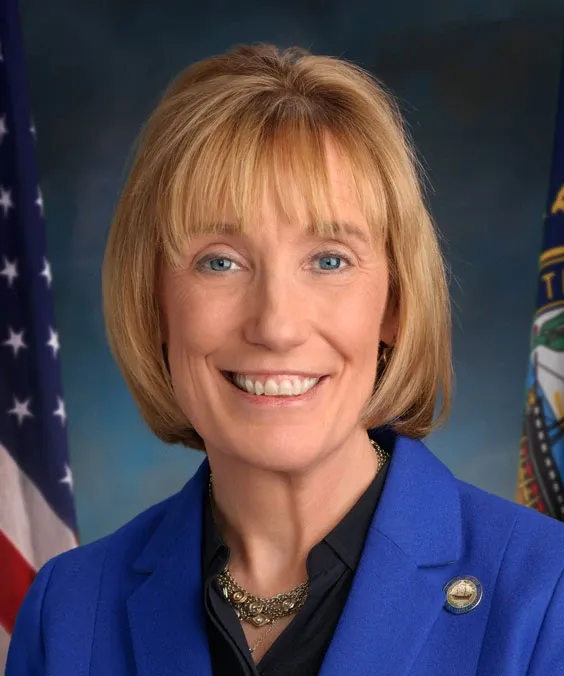
Jeanne Shaheen is an American politician serving as the senior United States senator from New Hampshire, a position she has held since January 3, 2009. A member of the Democratic Party, she is the first woman to be elected governor of New Hampshire, serving from 1997 to 2003. During her tenure in the Senate, Shaheen has focused on issues such as healthcare, education, and national security, often advocating for policies that support working families and promote economic growth.
I'm proud to be an original co-sponsor of the Upper Connecticut River Partnership Act along with Senator Leahy, Senator Gregg and Senator Sanders.
Unfortunately the local efforts and the State involvement has not been able to deal with the long term needs that exist.
I have to say I do disagree with you, however, with respect to S. 1117 which would address the Connecticut River Watershed.
We have to support research. We have to make sure that help is there to find this cure.
I have long supported the importance of research to find cures for diabetes and other diseases.
What's it going to take to do that, and is there any reason to believe that there is an interest or a willingness on their part to come back to the table?
As a Senator from New Hampshire, I take particular pride in the SBIR program.
Small businesses employ about one-third of America's scientists and engineers and produce more patents than large businesses and universities.
Many New Hampshire small businesses have successfully competed for SBIR funding over these past 27 years.
I appreciate, as Senator McCain said there has been a change relative to storage of nuclear waste.
I would like to pick up on Senator Udall's comment about the importance of small business.
I certainly agree with you that energy efficiency is the fastest, cheapest way for us to address our energy needs.
We're going to introduce the nominees briefly. Then I'm going to ask Senator Murkowski if she would like to make a statement.
Good afternoon everyone. For those of you who follow the Energy Committee, you know that I'm not the person who usually sits here.
I would hope that we would take every opportunity available to us to raise the issue of what is happening there and loudly demand that the world not allow this to continue.
I would hope that all of us--those of you who are headed to this part of the world would raise that issue whenever we have the opportunity.
I don't really have any more questions except to pick up on what you just said, Senator Corker.
What a difference it would make to our foreign policy if we are successful again in aggressively moving toward energy independence.
I mean, I guess, as I read this definition, it would address the concerns that you all were raising.
You're are absolutely correct. It does not need to be broader to increase the protections.
However, it was also a time to take stock of NATO's long-term future, which we intend to discuss today.
Though Afghanistan--NATO's first 'out of area' military commitment--remains the most pressing issue for the Alliance, we are here today to consider those institutional questions which will define NATO's composition, scope, relationships…
I think you've all talked about the other threats that our NATO is facing and Europe and the United States are facing: cyber security, energy security, others.
Politicians like Jeanne Shaheen