Apr 17, 2018
I urge my colleagues to work together to get this important legislation to the President's desk.
The Public Record
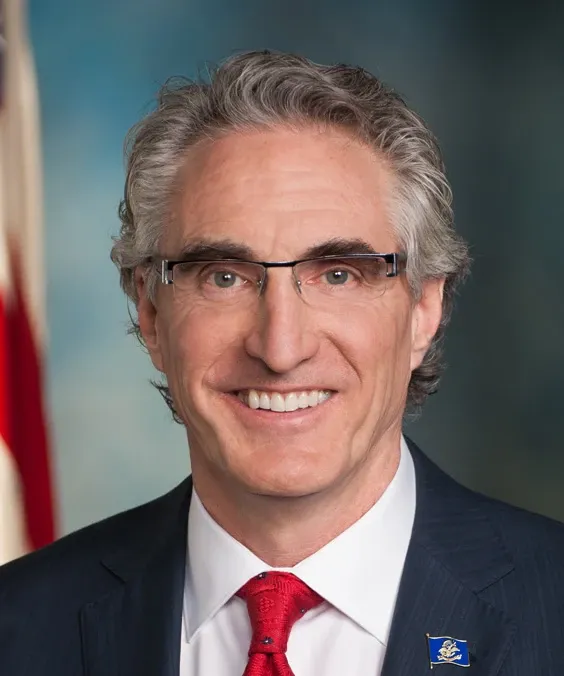
John Hoeven is an American politician serving as the junior United States senator from North Dakota since January 2011. A member of the Republican Party, he previously held the position of Governor of North Dakota from 2000 to 2010. During his tenure in the Senate, Hoeven has focused on issues such as agriculture, energy, and infrastructure, advocating for policies that support North Dakota's economy and rural communities.
I urge my colleagues to work together to get this important legislation to the President's desk.
I worry that many communities in North Dakota and across the nation that rely on CDBG will be losing a valuable tool.
I want to commend you for moving authority for Section 408 request to the district level.
I have a bill in with Senator Cory Booker, so it is a bipartisan bill on WIFIA.
We need to do that on the scoring. That will absolutely bring resources to you, help get projects done.
I sponsored legislation, of course, the bison is now our national mammal and they roam free and wild there in the park.
We are writing to you regarding the actions the Environmental Protection Agency (EPA) has taken to undermine commitments President Trump made on the Renewable Fuel Standard (RFS) to our constituents.
Our farmers and ranchers provide the highest quality, lowest cost food supply in the world that every American benefits from every single day, and we need good farm policy to support their efforts that are so important to us.
We want to again emphasize crop insurance as an absolute number-one priority for our producers out there.
I appreciate that. And you have put some of them out. For example, drought funding is an area where you have put it out there. I want to acknowledge that and thank you for that.
The CBO estimates that the Farm Bill, over a 10-year scoring period, saves $104 billion.
We cannot put the burden of balancing the budget solely on the backs of our farmers.
We need to get you out to North Dakota to see some of the really innovative stuff that we are doing.
It is a win for the Federal Government because of the incredible amount of co-investment that comes from the state and the local level.
[w]ithout accurate data, Congress, the Administration and tribes are limited in their ability to allocate resources to the area of greatest need.
I am also mindful that when Congress does appropriate funding to combat this epidemic, it is important that Indian Country receives an adequate share of the funding and receives this funding in a manner that will ensure maximized impact to…
Congress must ensure that Tribes receive direct funding, and are included any type of national-level opioid legislation moving forward.
The roundtable highlighted how the opioid abuse epidemic is particularly complex in tribal communities given the lack of access to medical care, shortage of law enforcement and insufficient data on substance abuse.
Politicians like John Hoeven