Oct 2, 2026
The people of America don’t want socialism, and that’s what the Democrats want.
The Public Record
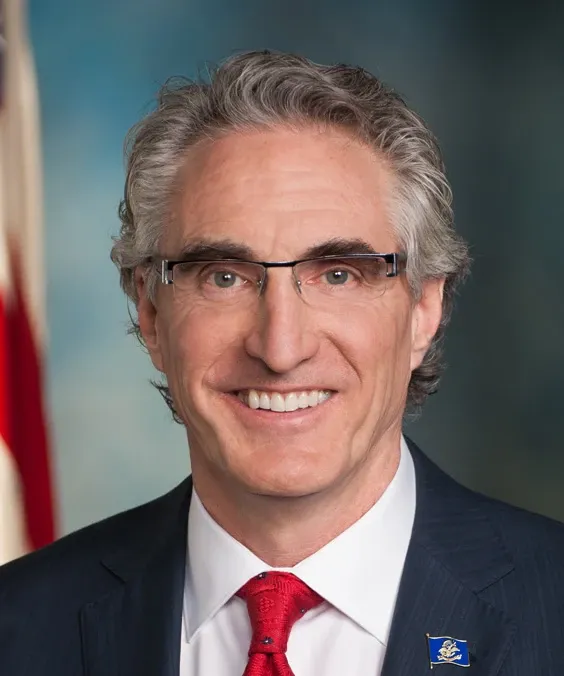
John Hoeven is an American politician serving as the junior United States senator from North Dakota since January 2011. A member of the Republican Party, he previously held the position of Governor of North Dakota from 2000 to 2010. During his tenure in the Senate, Hoeven has focused on issues such as agriculture, energy, and infrastructure, advocating for policies that support North Dakota's economy and rural communities.
The people of America don’t want socialism, and that’s what the Democrats want.
We’re putting the right, long-term solutions on the table. We just need to get out and tell that story.
This legislation passed the House with almost unanimous support, and we’ll continue working to get Senate Democrats on board with this common-sense legislation.
Instead of passing on higher energy costs to families and small businesses, the Ratepayer Protection Act will help ensure that the data center is responsible for paying for the infrastructure upgrades as well as fixed costs as a result of…
Our legislation would protect consumers from these rate increases resulting from data center construction.
American families shouldn’t have to pay higher energy costs if a data center is built in their community.
These two priorities have strong support from the American people, and we should pass this legislation.
At the same time, I’ve authored a measure that’s in the Senate Farm Bill to tackle the issue of prairie dogs on federal lands.
This includes improving livestock disaster programs like LIP, ELAP and LFP. We’re working to expand the coverage provided by these programs and making reforms to ensure they work for our producers.
Our cattle producers have faced a range of challenges in recent years, including diminished herd sizes and natural disasters. We’re working to ensure the Farm Bill builds on the improvements we passed in the Working Families Tax Cut Act…
“The Senate passed this legislation with a big, bipartisan vote and we’re hopeful the House will do the same,” said Hoeven.
“The bill treats student athletes fairly – whether they’re one of the few who will go pro, or one of the 500,000 other student athletes competing while earning their degree.
“Our legislation is designed to improve fairness and restore stability to college athletics.
“It’s become the Wild, Wild West in college sports with unlimited transfers and more and more programs being eliminated,” said Hoeven.
We’re already testing unmanned cargo and logistics flights between Grand Forks Air Force Base and Cavalier and now we’ll be able to add flights between the base and Camp Grafton, a priority that will enhance the effectiveness and…
That’s an essential step for making this technology work in the real world, so we can effectively protect against the misuse of drones.
This $5.5 million award will enable the creation of a cUAS testbed, where private sector partners can work to integrate their technology with air traffic management systems.
Task Order 4 is a critical milestone for not only Project ULTRA but our efforts to advance North Dakota as a leader in counter-drone technology development.
Our nation faces a severe shortage of qualified pilots and air traffic controllers, while bureaucratic delays and outdated processes at the FAA keep these professionals from working for prolonged periods when they seek mental health care.
Critical Access Hospitals play a key role in ensuring that North Dakotans, regardless of their zip code, have improved access and better health care services. Our bicameral legislation extends this demonstration program for five years to…
Let’s go to the floor, offer up amendments, have robust debate, and get this done for our farmers and ranchers.
Not only will these efforts increase domestic production of vital resources like fertilizer and critical minerals, but they will help generate the CO2 we need to increase oil production in the Bakken.
With electricity demand surging, the affordable and reliable power provided by coal is more important than ever, making our Crack the Code 2.0 initiative a critical priority for the future of U.S. energy production.
Fundamentally, we want to work with our ranchers to grow our herds.
Politicians like John Hoeven