Jul 21, 2009
Let me work with you to identify some other areas that potentially might have an interest in funding some of this preservation.
The Public Record
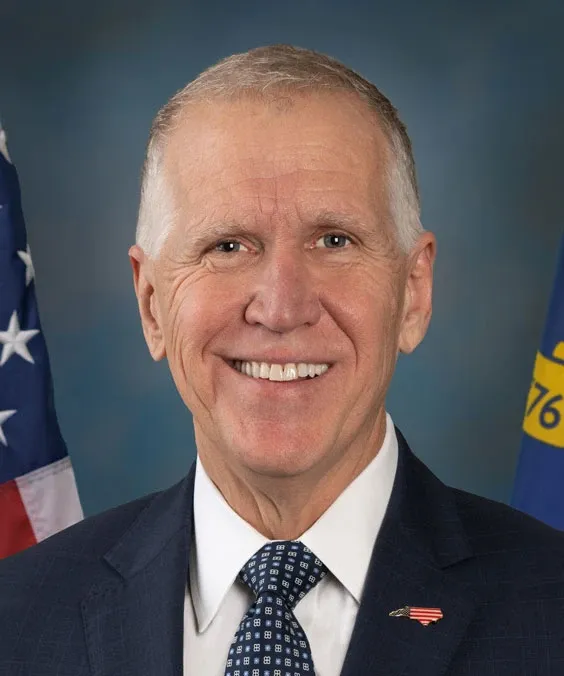
Richard Burr is an American politician serving as the senior United States senator from North Carolina since 2005. A member of the Republican Party, Burr has focused on issues such as veterans' health care and the relationship between the Department of Veterans Affairs and academic institutions. Throughout his tenure, he has been involved in various legislative efforts aimed at improving services for veterans and enhancing the efficiency of government programs.
Let me work with you to identify some other areas that potentially might have an interest in funding some of this preservation.
I think you and I totally agree with that, and the likelihood is that as they prioritize the needs in that local community, lighthouses are going to be on that second half of that list.
I understand the tremendous tourism benefit that these lighthouses provide in addition to the pride of a community at preservation of a historic structure.
Let me, if I could, recap what the bill does. It creates a 3-year pilot program.
There was a tremendous lack of confidence as to whether the Federal Government would do anything other than stand by and watch these historic landmarks disintegrate and deteriorate.
I value the Michigan lighthouses, value the North Carolina lighthouses. I have a real problem anytime we look back at things that we did and forget the reasons that we did them.
But, in fact, this new grant program would be inconsistent with what I think the original intent was of the legislation.
There would be a great inconsistency in us offering preservation or maintenance dollars to some and not all.
Thank you for convening this hearing before the National Parks Subcommittee.
The report's recommendations, I think, have been well-received throughout the veterans' community.
Well, do you agree with the statement that I made that we've actually had a decrease in the number of women seeking gender-specific health care services at the VA from last year to this year?
The VA plans to have gynecologists available at each of the VA's 144 health care systems by 2012.
The statistics do not lie. In 1990, there were 1.2 million women veterans. Today, there are 1.8 million.
The Philadelphia VAMC's brachytherapy program has been suspended since June 2008.
I can go to your charts because you should be proud of the lack of MRSA infections within the system.
I would gather that if multiple veterans who tested positive had this procedure performed at the same hospital on the same day, then there is a fairly good chance that the VA caused at least one of those infections.
You read an independent review of the Pennsylvania facility on the brachy treatment. If an independent facility went and assessed all of the facilities relative to reprocessing devices, would the report be as glowing today?
At what point would you determine it is appropriate for the IG to release something versus for this to be internal?
How about from a standpoint of infection? How many Hepatitis B or HIV before this is a medical problem?
Politicians like Richard Burr