Apr 23, 2013
Let me ask on behalf of the Committee if you would provide those numbers for us and as well the metrics that you discussed in your opening statement that you have created to monitor it.
The Public Record
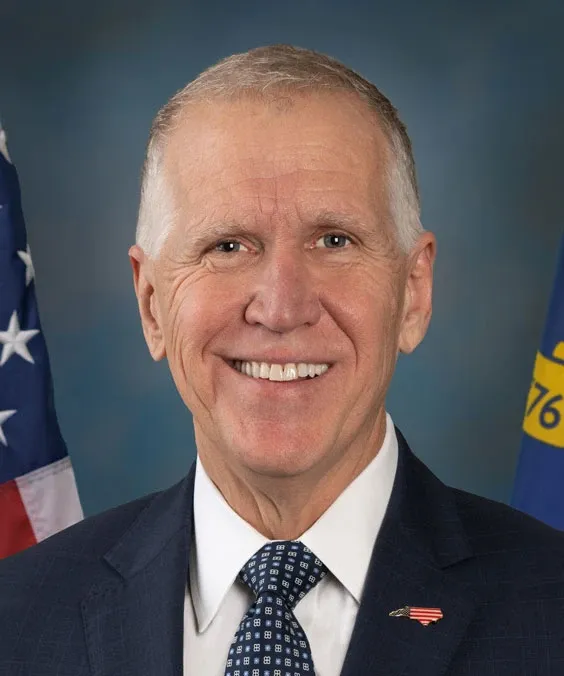
Richard Burr is an American politician serving as the senior United States senator from North Carolina since 2005. A member of the Republican Party, Burr has focused on issues such as veterans' health care and the relationship between the Department of Veterans Affairs and academic institutions. Throughout his tenure, he has been involved in various legislative efforts aimed at improving services for veterans and enhancing the efficiency of government programs.
Let me ask on behalf of the Committee if you would provide those numbers for us and as well the metrics that you discussed in your opening statement that you have created to monitor it.
It is actually the private sector risk-takers today that are actually investing their own dollars to bring clinicians in to work with chronically ill patients.
It is about whether a person is in an un-served or underserved area, urban, maybe it is in one of the best health care delivery markets in the country.
I think it is very dangerous that Congress look at ways that we can manipulate more primary care doctors.
Should we find it odd that the largest system that we have, Medicare, pays on a per incident basis?
I find it a great loss that Ms. Spitzgo did not stick around to hear these witnesses because, I think, this is a fascinating opportunity to hear how different areas are succeeding, growing, exploring new areas that, I think, are absolutely…
I am going to ask you, if you will, to provide for the committee, the comprehensive list of those Work Force programs and their stated objectives, if you will.
I appreciate the chance to discuss today the primary care workforce challenges that we are facing, and the possible solutions to addressing such critical issues.
The AAMC applauds subcommittee Chair Bernie Sanders and Ranking Member Richard Burr for continuing their attention to the gaps in access.
Your testimony states that HRSA has done research and found that more than 55 percent of clinicians continue to practice in the communities that need them the most 10 years after completing their service commitment.
I think we need to better understand it, if, in fact, we provide fair but effective oversight to an IT program of this size.
Secretary, you said earlier that we will move out of the rescue phase on homelessness.
Currently, nearly 70 percent of the claims are backlogged, meaning that they have been waiting for a decision for more than 125 days.
The VA backlog reduction plan shows that in order to eliminate the backlog by 2015 VA will need to decide 1.2 million claims this year, 1.6 million claims next year, and 1.9 million claims in 2015.
In the budget submission, you do say that you will decide 335,000 fewer claims in 2013 and 2014, right?
The lack of consistent predictions and a lack of transparency lead me to question if VA's stewardship of the taxpayers' money is leading to better outcomes.
It's important that we provide adequate funding for the VA so that all veterans receive the benefits and care that they have earned and deserve.
We must conduct vigorous oversight to make sure programs which benefit veterans are working properly and lead to better outcomes for veterans, their families, and their survivors.
One thing that I have learned in health care is, for everything that you require, health care is going to have a reaction to that, and usually it is an increasing cost.
I am not that confident about the Affordable Care Act and its implementation being seamless and its costs being predictable.
I think one of the problems that we have with the Affordable Care Act is that nobody really understands what the costs, not just of implementation, but of running the Affordable Care Act, will be.
Politicians like Richard Burr