May 23, 2021
There are 10 million U.S. citizens eligible to vote who do not speak English well.
The Public Record
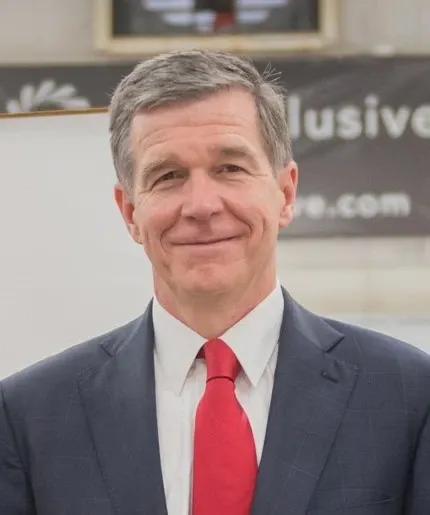
G. K. Butterfield is a Democratic politician from North Carolina, born on April 27, 1946. He served as a member of the U.S. House of Representatives, representing North Carolina's 1st congressional district from 2004 until 2022. During his tenure, Butterfield focused on issues such as healthcare, education, and civil rights, advocating for policies that support underserved communities. He has been a prominent voice for African American representation in Congress and has served in various leadership roles within the Democratic Party. Butterfield's career in public service also includes time as a judge and a member of the North Carolina Utilities Commission.
There are 10 million U.S. citizens eligible to vote who do not speak English well.
These burdens fall disproportionately on Black, Latino, and immigrant communities.
Black, Latino, and immigrant communities are statistically less likely to have a valid ID for purposes of voting as compared to White, non-Hispanic populations.
We should not erect more barriers for just some citizens. Americans who are eligible to vote should be able to register and cast their ballot without undue obstacles and burdens.
It was Mr. Sensenbrenner and President Bush and others who embraced the 2006 reauthorization.
These laws do, in fact, pose a disproportionate, negative, strong, consistent depreciation of minority votes.
It has been demonstrated time and time again that voter ID laws disproportionately impact racial minorities.
It was supported and demanded, actually, by President Lyndon B. Johnson at the time, right after the Selma to Montgomery massacre.
I remember it so very well. I had just finished high school a few weeks before the VRA was passed.
We must do that. We should be making it easier for all citizens to vote, not leaving State and local governments with unchecked authority to enact legislation that imposes discriminatory barriers to the ballot.
In my State of North Carolina, a Federal court found that our voter ID law in particular targeted African-American voters with almost surgical precision.
Secretary Granholm is leading our country, she is leading the Department in the right direction.
I introduced H.R. 1730, the Speeding Therapy Access Today, or the STAT Act, with my Rare Disease Caucus cochair and good friend, G.K. Butterfield.
For decades, publicly funded research has laid the foundation for the treatments and cures patients use today.
My priority would be for us to work to find ways to really improve the confidence in our elections by working to appropriately clean up the lists.
I am concerned that, when it comes to electric vehicle charging, rural communities may again be left behind.
95 percent of rare diseases will not have a treatment. Colleagues, let's redouble our efforts.
It isn't right that someone in our country should have to choose between food and medicine.
I could guarantee passage if my Republican friends would just work with us, not just throw one-liners at us but just work with us.
The Congressional Black Caucus has said to you over and over again we need greater diversity among your workforce from the top to the bottom, and we need for you to publish the data so the world can see it.
Politicians like G. K. Butterfield