May 11, 2016
I appreciate the opportunity to be here before the Committee to discuss H.R. 5015, which is the Combat Injured Veterans Tax Fairness Act.
The Public Record
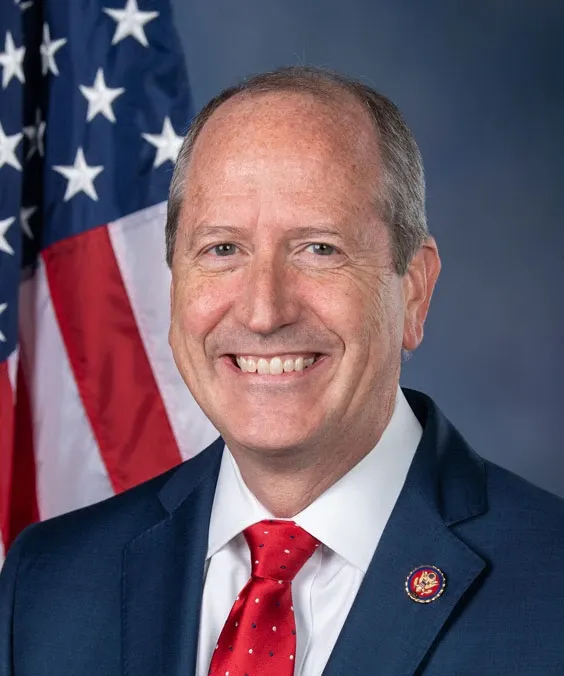
David Cheston Rouzer is an American politician serving as the U.S. Representative for North Carolina's 7th congressional district since January 3, 2014. A member of the Republican Party, Rouzer has focused on issues such as agriculture, veterans' affairs, and economic development during his time in office. He has been active in promoting policies that support the agricultural sector, which is vital to North Carolina's economy. Rouzer has also served on various committees, contributing to legislative discussions on a range of topics affecting his constituents.
I appreciate the opportunity to be here before the Committee to discuss H.R. 5015, which is the Combat Injured Veterans Tax Fairness Act.
I think this is good common-sense legislation that would be one more win, one more thing that we can do to help our veterans who are in need.
I thank my colleague and friend from North Carolina (Mr. Holding) for yielding time to discuss this bill. Mr. Speaker, I filed this bill, H.R. 1206, the No Hires for the Delinquent IRS Act, in response to reading news reports of more than…
I have listened to this debate today and the discussion about inversions. There is a broader point that is missed here. Inversions aren't even an issue if America is the most attractive place to do business. Capital investment goes where…
This bill is about accountability. Every Member of this Congress is held accountable every 2 years. The SPEAKER pro tempore. The time of the gentleman has again expired.
There are several things that come to mind here. Number one, each Member of Congress is held accountable every 2 years by the voters of their respective district. The last time I checked, this is referred to as the people's House. We are…
I read somewhere not long ago that rules and regulations of the IRS and elsewhere have cost this economy $2 trillion in the last fiscal year--$2 trillion. If we got rid of the rules and regulations that are harming the economy and that are…
I appreciate you being here today and your willingness to have this discourse with us.
I want to get some clarification and explore a little more on this issue related to the pork trademark.
I want to follow up, too, on a couple of the comments that you had made before the House Appropriations Subcommittee.
The Secretary has often said that agriculture on its own might not be able to pass an agreement, but it certainly can prevent one from passing Congress.
By gosh, this is not the Soviet Union, or I hope that we are not becoming the Soviet Union.
Tobacco would be very, very supportive of TPP if one simple thing happened, and that was it was no longer excluded from the investor-state dispute settlement.
If we are going to get that habitat back, we have to incentivize restoration, and so voluntary conservation becomes very, very important.
What is your greatest challenge, and how can we, as a Committee, be helpful to you?
USDA has recently indicated recently plans to revisit proposed GIPSA regulations that for years have been repeatedly prohibited by Congress.
By investing in collaboration--which you all did as part of the farm bill when you did the insect and disease language, that requires collaboration--that type of approach, over the long-term, will win.
What areas in particular do you think we need a real shot in the arm? Is there a specific area of research in terms of priorities and prioritizing funding where you think we really need to focus?
I grew up in the shadow of the Cold War as a kid, and I always thought Armageddon was going to be nuclear weapons and missiles, et cetera. I have come to believe it is going to be every individual is suing every other individual.
Tell me where we are with our research programs, any highlights that we have.
This hearing is the third in a series of hearings highlighting the crucial intersection of agriculture and our national security.
Congress has a role to play in ensuring that the agencies have the tools they need to do this important work.
We face tremendous pest and disease pressures, which are being effectively managed by the hardworking men and women of USDA and DHS.
Politicians like David Rouzer