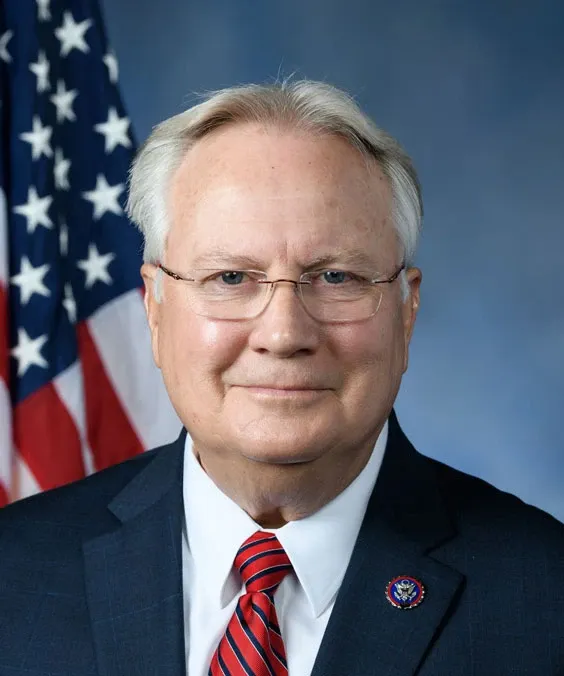
Roger Wicker
The Public Record
Roger Wicker is an American politician serving as the senior United States senator from Mississippi since 2008. A member of the Republican Party, Wicker previously served as a United States Representative from 1995 to 2008. Throughout his tenure, he has focused on issues such as national defense, economic development, and healthcare. Wicker has been involved in various legislative efforts and has held significant positions on committees, including the Senate Armed Services Committee.
Feb 3, 2010
This eight- to ten-year process that it can take to do a rule, I think really what you're saying is you don't even try now to do rules.
Feb 3, 2010
Under the APA the burden would simply be that you not be arbitrary and capricious, that would be the burden.
Feb 3, 2010
It was my understanding that in order for you to pursue civil damages there was merely a 45 day window.
Feb 1, 2010
Knowing that a key component of the COIN model is the reintegrating of the Taliban into Afghanistan society, do you see the future rights of women as a cause for concern?
Feb 1, 2010
Tajikistan could be a possible refuge for Taliban fighters and possibly other terrorist elements?
Feb 1, 2010
Most outside observers... described the election as 'failing on many basic democratic standards.'
Feb 1, 2010
Tajikistan recently held parliamentary elections in which the ruling party won almost 72 percent of the vote.
Feb 1, 2010
I do want to ask it. It's been said in this committee, and it's been said on the floor, we should be showing our moral support for the reformers in Iran, for the people who are willing to take to the street and stand up and risk their…
Feb 1, 2010
Will France's efforts to increase their own national defense challenge NATO's relevance?
Feb 1, 2010
As France grows as a security leader in Europe, urging countries to be more involved in European security, does this come at the detriment to NATO's strength?
Feb 1, 2010
What is the risk of going below 33 and are you willing to take issue publicly with the possibility in the QDR of 29, 30, 31, or 32?
Feb 1, 2010
Indeed, and other members of the panel have been interested in MRAP vehicles.
Feb 1, 2010
I understand we're transitioning from the MRAP vehicle to the MATV. Are we going to be building any more MRAP vehicles or are we going to start making MATVs exclusively, at this point?
Feb 1, 2010
Will some of these be left in control of the Iraqis? Are we going to bring them all back?
Feb 1, 2010
We have received our orders from the Commander in Chief and we are moving out accordingly.
Feb 1, 2010
I appreciate the situation that our two witnesses find themselves in and I look forward to the debate and hope that the policy remains.
Feb 1, 2010
There was a term that we came back with from our Congressional Delegation with Leader McConnell, and that was a 'deficit of trust.'
Politicians like Roger Wicker