Jun 10, 2013
I hope today's discussion facilitates a constructive dialogue among ocean explorers, scientists, and policymakers about the future of ocean observation infrastructure, research, and education.
The Public Record
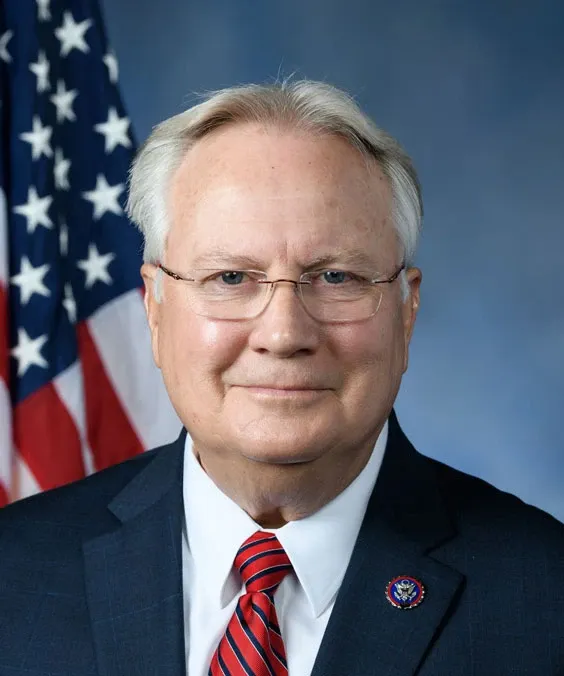
Roger Wicker is an American politician serving as the senior United States senator from Mississippi since 2008. A member of the Republican Party, Wicker previously served as a United States Representative from 1995 to 2008. Throughout his tenure, he has focused on issues such as national defense, economic development, and healthcare. Wicker has been involved in various legislative efforts and has held significant positions on committees, including the Senate Armed Services Committee.
I hope today's discussion facilitates a constructive dialogue among ocean explorers, scientists, and policymakers about the future of ocean observation infrastructure, research, and education.
One way to optimize Federal investment in ocean exploration and research is through the expansion and leveraging of public and private partnerships.
I have been an ardent champion of U.S. defense exports to our allies, friends, and partners abroad.
I have a great deal of confidence that this is going to be administered by some very talented and thoughtful public servants.
Let me just ask that you work with the states, and if they are non-selected for certain projects, get back to them.
Mississippi has organized state efforts by creating GoCoast 2020 to serve as the official advisory body for the allocation of funds under the RESTORE Act.
The importance that Senator Landrieu pointed out of this issue across the country and around the world is one of the reasons... why we had such great support from California, from the East Coast, and from all over the great heartland of…
The Gulf Coast region is vital to our Nation and our economy, providing valuable resources, including abundant seafood, and recreational activities.
The ability to communicate with others and to get online without being tethered by a cord is no longer a luxury for many people; it is a necessity.
The FCC began using spectrum auctions because we recognized that the free market is more effective at allocating spectrum than relying on the opinions and predictions of unelected bureaucrats.
We must make it a priority to increase the availability of spectrum for commercial use, both licensed and unlicensed, as quickly as possible.
Unfortunately, some voices, including the Department of Justice, are calling for the Federal Communications Commission to micromanage the allocation of spectrum among wireless carriers.
I believe the Commission should not pick winners or losers among individual companies, but, instead, let all interested participants freely compete against one another in the open market.
One of the key issues for Congress to consider is how to maximize commercial access to spectrum.
The rapid migration to wireless raises a number of critical issues for policymakers.
Today, our focus is on the state of wireless communications in the United States.
This band was identified in the FCC's National Broadband Plan for its commercial potential.
The prominent theme of this hearing... was the need to continue to shape the culture of the military into one in which all servicemembers are treated with respect and dignity.
In my opinion, that shows the importance of the role of the commander and why we want him in the system.
When will it ever be less fast-moving than it is now? And when will we ever not be in a transition era?
Senator Wicker noted, reminding us of broadcasters' important role as first informers.
Politicians like Roger Wicker