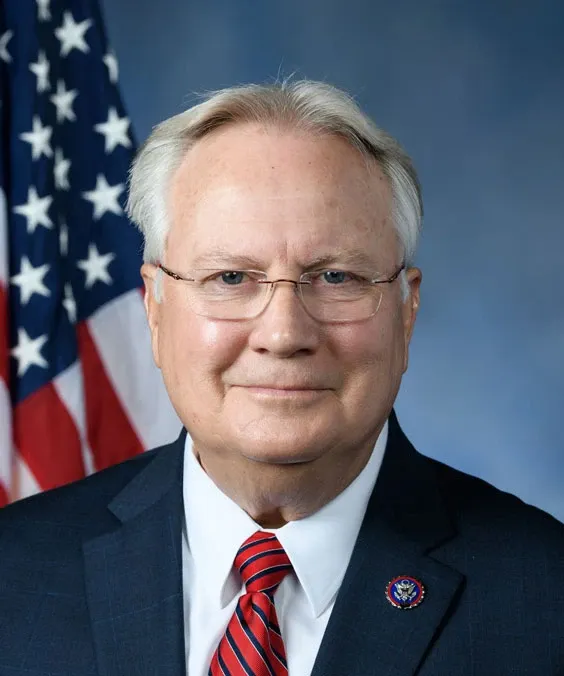
Roger Wicker
The Public Record
Roger Wicker is an American politician serving as the senior United States senator from Mississippi since 2008. A member of the Republican Party, Wicker previously served as a United States Representative from 1995 to 2008. Throughout his tenure, he has focused on issues such as national defense, economic development, and healthcare. Wicker has been involved in various legislative efforts and has held significant positions on committees, including the Senate Armed Services Committee.
Feb 26, 2014
Will the new 913th Airlift Group require the movement or hiring of additional military and civilian employees?
Feb 26, 2014
Will it be more cost-efficient to maintain the two C-310J squadrons at Keesler Air Force Base?
Feb 26, 2014
Do you believe the value of the RCTA program warrants authorization by Congress?
Feb 26, 2014
It would be fair to say that a relatively modest investment will keep these invaluable programs open and available for these hundreds of thousands of participants?
Feb 26, 2014
I was disappointed to learn that President Obama's budget request contains zero funding for these schools.
Feb 26, 2014
Experience over the past decade demonstrates that the demand for amphibious warships will not decrease.
Feb 26, 2014
It just concerns me a bit, as I look at what is going on now with some of our European allies, countries that have relied, to their detriment, on promises that we have made about the integrity of their territory.
Feb 26, 2014
Deterrence is intrinsically linked to readiness. To provide deterrence, our military's capability must be tangible and demonstrable.
Feb 26, 2014
I am deeply concerned about the administration's budget request that it may not provide the full range of equipment and ready forces necessary to our national security strategy in the Asia-Pacific region.
Feb 26, 2014
But that does not give them any right whatsoever to occupy that part of the Crimean peninsula that is not on the base.
Feb 26, 2014
The Russian position, no one in the world believes it, is that these are not Russian troops which have occupied Crimea.
Feb 19, 2014
There's been some publicity about a letter that Senator Ayotte and I wrote to you on February 20, 2014.
Feb 11, 2014
We have an obligation to the users who are paying the fee, an obligation to ensure the revenues are going to their intended purpose; namely, building and maintaining our Nation's roads and highways.
Feb 11, 2014
Bipartisanship is breaking out all over in the Congress. It continues today and as we debate Federal transportation reauthorization, I hope we can build on this success.
Feb 11, 2014
Funding transportation infrastructure is a combined Federal and State responsibility. We need to do better, because the Nation deserves better, as Senator Merkley said.
Feb 11, 2014
We need to ensure that all users shoulder an equitable burden for the wear and tear on our Nation's roads.
Feb 10, 2014
The key thing we're interested in and most concerned about is the more highly enriched uranium--the 20 percent enriched uranium.
Feb 10, 2014
Would you agree that economic sanctions imposed by the United States played a major role in driving Iran to the negotiating table and agreeing to the JPA?
Feb 10, 2014
Is Iran negotiating in large part because it desperately needs sanctions relief?
Feb 3, 2014
What alternatives do they have? And what could tip the balance away from them choosing to invest further in United States securities?
Feb 3, 2014
If the economy improves as you expect it to, the $221 billion we pay each year in interest on the national debt, that will double.
Politicians like Roger Wicker