Apr 7, 2014
Italy is committed to buying airplanes, but they reduced their buy from 130 to 90 2 years ago.
The Public Record
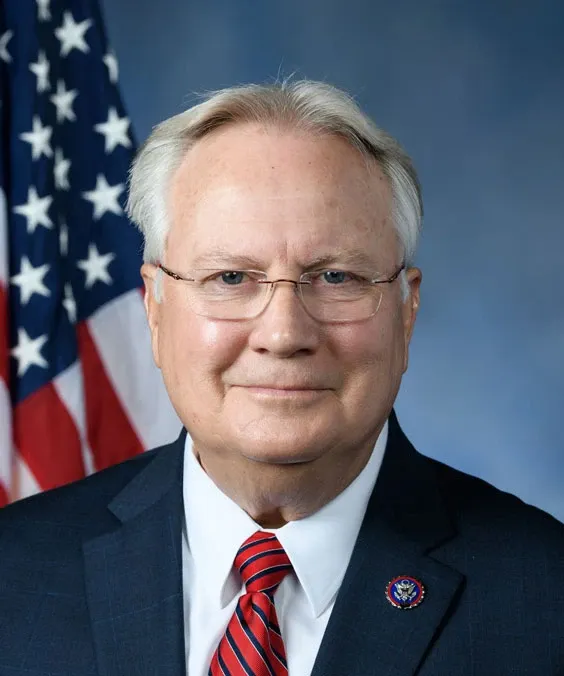
Roger Wicker is an American politician serving as the senior United States senator from Mississippi since 2008. A member of the Republican Party, Wicker previously served as a United States Representative from 1995 to 2008. Throughout his tenure, he has focused on issues such as national defense, economic development, and healthcare. Wicker has been involved in various legislative efforts and has held significant positions on committees, including the Senate Armed Services Committee.
Italy is committed to buying airplanes, but they reduced their buy from 130 to 90 2 years ago.
Congratulations on your first hearing as chair of this distinguished subcommittee.
Thank you for holding the hearing and I thank the witnesses for their attendance today.
What is your assessment of the risk to the Marine Corps' ability to execute its objectives, for example, in the Asia Pacific, if we do not provide you with the right number of ready, capable amphibious ships?
We're nowhere near the 50-plus that we would need for the steady state; is that correct?
Last week, in answer to questions, General James F. Amos, Commandant of the Marine Corps, and Admiral Jonathan W. Greenert, Chief of Naval Operations, testified they would need 50-plus amphibious ships to meet the needs of the combatant…
This hearing is timely considering recent action at both ends of the Capitol.
Thank you, Chairman Pryor, for holding this hearing on reauthorization of the Satellite Television Extension and Localism Act, better known as 'STELA.'
I would be interested in your supplying to the committee any scientific basis for the statement that increased average temperatures actually increase respiratory disease among children.
I believe, of wasted money. In 2008, after a process that took 8 years, EPA tightened significantly the ozone standard.
Every agency has to watch its spending, and Congress has a clear duty to monitor spending.
CO2 is an odorless, tasteless gas we emit when we breathe, and plants all breathe it in and grow faster when there is more CO2, a fact which cannot be denied.
I believe you mentioned in your testimony that this is a feeling of Afghan Government officials, civil leaders, and that there's a growing appreciation of the coalition's efforts; is that correct?
I don't think we should forget what happened in 2001. We went into Afghanistan by a virtually unanimous vote of this Congress.
There's a frustration on the part of our chairman that the American people haven't been given a balanced view about the success we've had in Afghanistan.
I think it's remarkable, and I hope people listening today in the United States... are listening to the chairman of this committee, who made a profoundly remarkable opening statement.
As DOD will have to make financially tough choices and continue to scrutinize its finite resources, will DOD commit to funding the TDAI?
I believe the Air Force must make force structure decisions based on long-term global force requirements, as well as concrete and defensible data.
Politicians like Roger Wicker