Sep 4, 2018
We want to make sure the veterans don't get infections because instruments aren't cleaned.
The Public Record
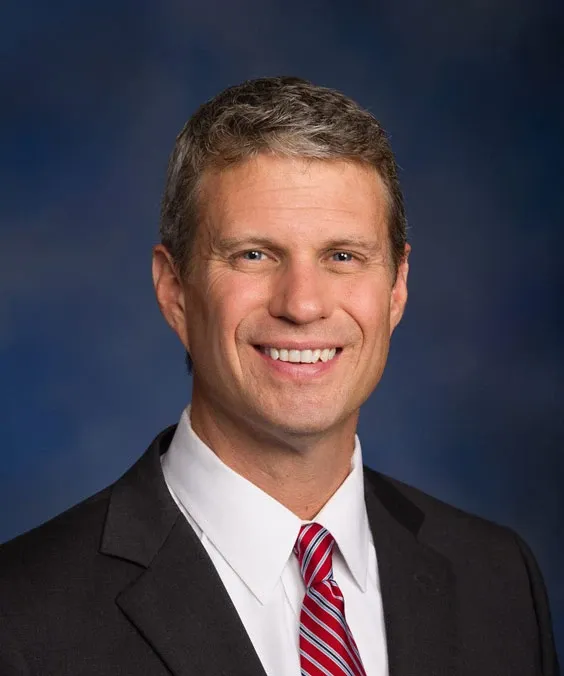
Jack Warren Bergman is an American politician and retired United States Marine Corps officer currently serving as the U.S. Representative for Michigan's 1st congressional district since January 3, 2017. A member of the Republican Party, Bergman has focused on issues such as veterans' affairs, economic development, and natural resources during his time in office. He has been an advocate for policies that support the military and promote job growth in his district.
We want to make sure the veterans don't get infections because instruments aren't cleaned.
When you have a veteran who's getting a procedure done today, and if they have to think that they're assuming risk--that's shameful.
Are you saying that outside the VA system there's not enough data, not enough standardization procedures that we can just take what's working in another hospital somewhere--are we reinventing the wheel here?
So then what I hear, the VISN is part of the problem, not part of the solution.
So then if you're the captain of that ship, if you will, you're the director of that medical center, and you know that to eliminate that infection rate because of the use of a dirty instrument is going to ensure better outcomes for your VA…
If you don't assume the mission and take control of it and take responsibility for it, we're going to be having hearings like this again.
The need for government-wide verification of SDVOSBs is a perennial issue that has existed since the SDVOSBs preferences were created.
It is unfair that companies that cannot pass muster move on to operate in less strict areas of the contracting world.
The service disabled veteran-owned small business, or SDVOSB, contracting preference program is a crucial element of the commitment of this country, of our country, and its government that we make to our veterans.
Well, given that bit of data, Mr. Chairman, I am going to reflect to you a bit of change that occurred about, oh, 18 to 20 years ago...
We must take these tools, we must put them into play, and with the hope and the knowledge that our operating environment is going to be stabilized in 2020 so the 10-year rising average doesn't keep eating into that piece of the pie.
This has probably been one of the more focused and direct Subcommittee meetings and hearings that we have had.
Shame on anyone, especially in the VA or on this Committee, who doesn't have that same sense of urgency.
I appreciate VA's willingness to consider the ultimate objectives of today's legislation; improve efficiency, reduce waste, and provide better outcomes for veterans.
The testimony provided today is an important contribution as we move forward with the legislation, particularly the two draft bills.
I would argue an admonishment is not even a real penalty, it is kind of like being grounded without having your allowance taken away.
In Michigan's First District, we pride ourselves on being responsible stewards of all our natural resources.
I support the underlying basis of the Migratory Bird Treaty Act, and I understand there is a value in protecting this species.
For this reason, I introduced the Cormorant Control Act, to rescind the court order and reinstate the double-crested cormorant depredation orders.
H.R. 4429 recognizes how important it is for states to have proper management plans for controlling this bird population.
Without the ability to effectively manage cormorant populations, the livelihood of our recreational and commercial fishing industries is threatened--which is critical to our local economies.
I want to thank the Chairman and the Committee for holding this hearing today to consider my bill--H.R. 4429, the Cormorant Control Act--to address a growing problem in the Great Lakes region.
I want to thank the Committee for holding the hearing today to consider my bill, H.R. 4429, the Cormorant Control Act.
Politicians like Jack Bergman