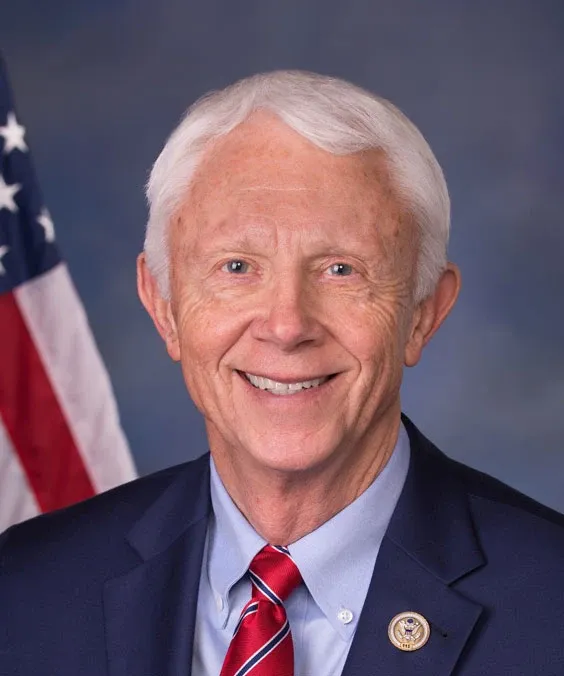
Gerald Ford
The Public Record
Gerald Rudolph Ford was the 38th President of the United States, serving from August 9, 1974, to January 20, 1977. A member of the Republican Party, Ford was born in Michigan and previously served as the U.S. House of Representatives member from 1949 to 1973. He also held the position of House Minority Leader from 1965 until he became President. Ford is particularly known for his efforts to heal the nation following the Watergate scandal and for his controversial decision to pardon former President Richard Nixon.
Oct 21, 1976
You and the entire Federal Aviation Administration are to be commended for your dedicated service on the aircraft noise problem.
Oct 21, 1976
Although the first Federal forester had been hired just 100 years ago in 1876, it was the establishment of the forest reserves in 1891 which sped the development and practice of professional scientific forestry.
Oct 21, 1976
This concept of managing lands on a multiple-use, sustained-yield basis has always been a challenge.
Oct 21, 1976
I AM pleased to sign into law H.R. 2735, the Veterans Omnibus Health Care Act of 1976.
Oct 21, 1976
This act is another important milestone in the evolution of forest policy and conservation law.
Oct 21, 1976
I am pleased today to sign S. 3521, the Alaska Natural Gas Transportation Act of 1976.
Oct 21, 1976
I am very pleased to sign into law S. 3091, the National Forest Management Act of 1976.
Oct 21, 1976
I firmly believe that it's important to get people back to work again.
Oct 21, 1976
Emphasis throughout the act is on a balanced consideration of all resources in the land management process.
Oct 21, 1976
H.R. 2735 significantly improves the scope of medical care services available to our Nation's disabled veterans and their families.
Oct 21, 1976
The legislation also provides sound State and local programs to deal with ever increasing amounts of municipal solid wastes generated in this country.
Oct 21, 1976
In this modern world, where private citizens increasingly come into contact with foreign government activities, it is important to know when the courts are available to redress legal grievances.
Oct 21, 1976
I think it's unwise for a President to signal in advance what options he might exercise if any international problem arose.
Oct 21, 1976
That's the direction we want to go, and that's what is going to win November 2.
Oct 21, 1976
This legislation is another step forward in improving the quality of the environment.
Oct 21, 1976
The Foreign Sovereign Immunities Act of 1976, which I sign today, is such a step.
Oct 21, 1976
The American people will be called upon to tighten their belts a bit in meeting some of the problems that we face domestically.
Oct 21, 1976
I believe H.R. 2735 can aid the administration in continuing to provide high quality medical care for our Nation's veterans.
Oct 21, 1976
I have indicated to General Brown that the words that he used in that interview were very ill-advised.
Oct 21, 1976
I believe that the American people in the next 4 years, under a Ford administration, will be called upon to make those necessary sacrifices to preserve the peace.
Oct 20, 1976
The bill I have signed will save the U.S. Treasury $42 million in unnecessary interest subsidies in the 5-year, fiscal 1977-1981 period.
Oct 20, 1976
The fact that only $44,000 has been written off over these four decades is indicative of the conscientious effort not only to administer the program soundly but to assure that the taxpayer's money is secure.
Politicians like Gerald Ford