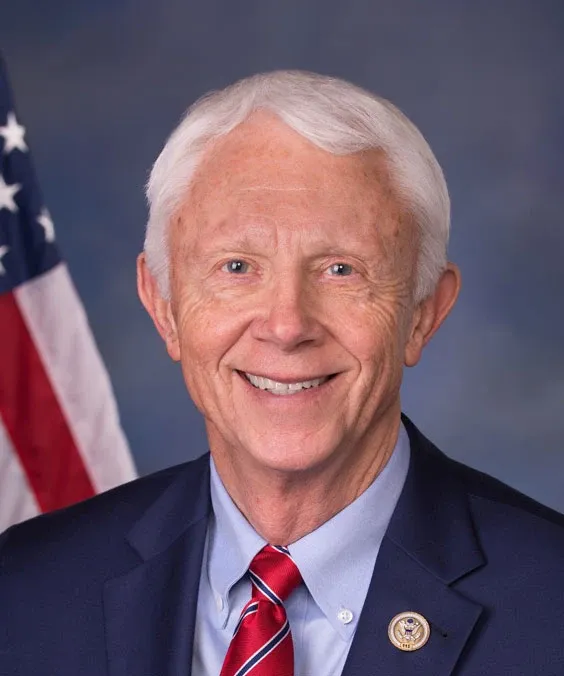
Gerald Ford
The Public Record
Gerald Rudolph Ford was the 38th President of the United States, serving from August 9, 1974, to January 20, 1977. A member of the Republican Party, Ford was born in Michigan and previously served as the U.S. House of Representatives member from 1949 to 1973. He also held the position of House Minority Leader from 1965 until he became President. Ford is particularly known for his efforts to heal the nation following the Watergate scandal and for his controversial decision to pardon former President Richard Nixon.
May 13, 1975
In view of the foregoing considerations, I must deny your request for support of your Federal Legislative proposal.
May 13, 1975
I was deeply impressed with the problems you and the City Council must face in the next few weeks in meeting the financial problems of the great City of New York.
May 13, 1975
The Institute is now well advanced in its program directed toward specific and pressing educational problems.
May 13, 1975
I remain committed to a strong Federal role in research and development in education.
May 13, 1975
Fiscal responsibility is essential for cities, states and the Federal Government.
May 13, 1975
I have no doubt that the adoption of sound budget policies would have a substantial and beneficial effect in both short and long term credit of the City of New York.
May 13, 1975
I know that the Congress will join with the Administration in supporting and strengthening the National Institute of Education.
May 13, 1975
As soon as you issue a statement that you are prepared to release the crew members you hold unconditionally and immediately, we will promptly cease military operations.
May 12, 1975
I COMMEND the House of Representatives' action in sustaining, by a comfortable margin, my veto of the Emergency Agricultural Act of 1975.
May 12, 1975
The bill would have retired inflation and set back the recent progress made in freeing farmers from Federal controls.
May 12, 1975
The American farmer does a terrific job and will do a better job without the restraints this bill would have imposed.
May 12, 1975
I will continue to fight for Federal fiscal responsibility and welcome this show of support.
May 9, 1975
We recognize that every State has the right to adopt its own system of government and its own economic and social organization.
May 9, 1975
There is no reason we cannot conquer the last vestiges of poverty in a hemisphere which is so richly endowed.
May 9, 1975
The durability of our inter-American system rests on its ability to adapt to changing hemispheric and world conditions.
May 9, 1975
The world we now live in is increasingly fluid and complex, containing many new centers of power.
May 9, 1975
Strength and progress come from cooperation rather than from conflict.
May 9, 1975
International cooperation that assures mutual respect among nations is more essential than ever.
May 8, 1975
I am delighted to welcome all of you in the Rose Garden at the White House.
May 8, 1975
The knowledge you bring to this country as you study in our universities and colleges gives us the benefit of your unique backgrounds.
Politicians like Gerald Ford