Apr 9, 2013
I want to particularly thank Chairman Whitfield for his tireless efforts, Lee Terry and the other cosponsors on both sides of the aisle.
The Public Record
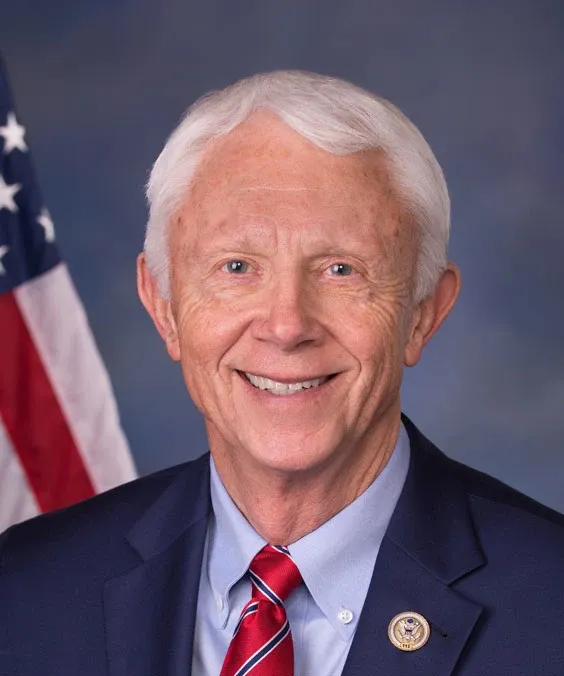
Fred Upton is a former U.S. Representative from Michigan, serving in the House of Representatives from 1987 to 2021. A member of the Republican Party, Upton represented Michigan's 6th congressional district. During his tenure, he was known for his work on issues related to healthcare, energy, and technology. He played a significant role in the passage of the Affordable Care Act's repeal and was involved in various bipartisan efforts, particularly in the areas of public health and environmental policy.
I want to particularly thank Chairman Whitfield for his tireless efforts, Lee Terry and the other cosponsors on both sides of the aisle.
This important bill takes the lessons that we learned from the trans-Alaskan pipeline when it was met with unnecessary roadblocks.
The President said last year that he would do whatever it takes to create U.S. jobs. Well, here is a $7 billion construction project with more than 20,000 direct jobs and 100,000 indirect jobs.
Today, we take an important step in support of the Keystone XL pipeline. It is called jobs and affordable energy.
The emergency alert and 9-1-1 systems are pivotal links when the unfortunate happens.
To do so, however, the FCC must refrain from excluding potential bidders and maximize the amount of spectrum it auctions...
The law could raise as much as $7 billion for first responders, help build out the communications system...
Today's hearing is going to examine how we communicate in times of emergency.
Uncertainty stemming from the health care law is a leading concern for American businesses large and small.
At a time when our unemployment rate is still much too high, the Affordable Care Act is making it harder for our nation's employers to hire new workers.
The law is hurting our Nation's economy, and those Americans are trying to find work.
Millions of Americans are still struggling to find jobs, and is this committee's main priority to get them back to work.
Safety and performance go hand-in-hand. This is the lesson we've learned from the civilian nuclear industry.
Today's hearing represents another important step in this committee's ongoing oversight to ensure that the Department of Energy's management of nuclear security enterprise can successfully protect taxpayer dollars.
We know, though, from past experience and the Y-12 breach that strong and consistent federal management, bolstered by truly independent oversight, is necessary.
We know from our past work, as well as from the recent and very troubling security failures at Y-12, that management reform is necessary to ensure safe and secure operations.
The response came off as dismissive, even contradicting the Japanese Diet report's own conclusion.
This sends a mixed message to the community--does Palisades belong in Column 1 or not.
I would like to echo the disappointment expressed by Chairman Shimkus regarding the NRC's response to our January letter.
However, when the NRC made the determination to move Palisades back into column 1, the agency did so begrudgingly, I believe, and qualified the rating.
Entergy needed to do better, and they outlined their comprehensive and methodical plans for returning Palisades to the high level of safety that all plants should have.
Politicians like Fred Upton