There was a wide-spread opposition among the strongest advocates of the war, to all measures which would, at an early stage, render the contest pecuniarily oppressive, and hence make it unpopular.
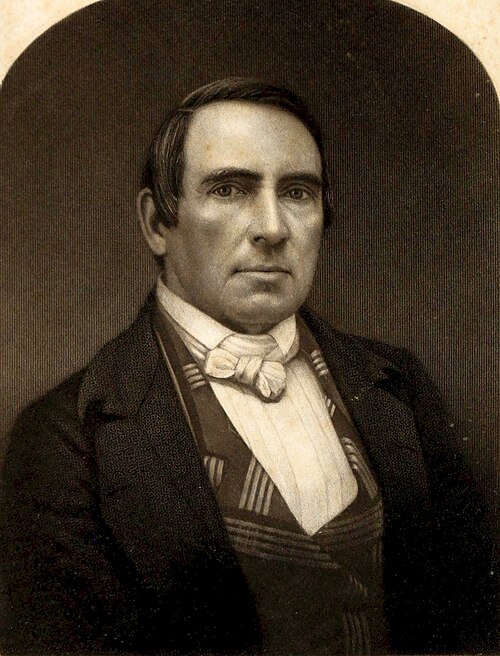
James Blaine
The Public Record
James Gillespie Blaine was an American statesman and Republican politician who represented Maine in the United States House of Representatives from 1863 to 1876, served as Speaker of the House from 1869 to 1875, and was a United States senator from 1876 to 1881. He served twice as Secretary of State, under presidents James A. Garfield and Chester A. Arthur in 1881, and under Benjamin Harrison from 1889 to 1892. He sought the Republican presidential nomination in 1876 and 1880, and received the nomination in 1884, narrowly losing the general election to Democratic nominee Grover Cleveland. Blaine was a prominent figure in the moderate faction of the Republican Party, known as the "Half-Breeds".
gutenberg.org
The plea may perhaps be pressed in defense of Congress, that financial legislation, laggard as it was, ran before popular readiness to raise money by taxes.
The aim had been to see with how small an amount the National Government could be supported, not how large an amount might be collected.
This measure indicated the disposition to provide for pressing exigencies by devices which covered only the present hour, and left heavier responsibilities to the future.
We are so familiar with the vast sums which the war against the Rebellion caused the National Government to disburse, that it is difficult to appreciate the spirit with which the legislators of 1861 approached the impending burdens.
It is no disparagement to the leading statesmen of that era, that they did not at first propose measures adequate to the emergency, because no standards existed by which the magnitude of that emergency could be estimated.
The task of Congress might well strike some thoughtful legislators as that of making bricks without straw.
With unblemished credit at the opening of the war, the government could have used its military power with greater confidence, and consequently with greater effectiveness.
There was embarrassment when there should have been security; there was scarcity when the most ordinary prudence would have insured plenty.
But there had been such gross mismanagement of the Treasury, either from incompetency or design, under the administration of Howell Cobb, that the credit of the government was injured.
His case will stand as a warning against future violations of the liberty which is the birthright of every American, and against the danger of appeasing popular clamor by the sacrifice of an innocent man.
Too often the object of popular vengeance is hurried to his fate, and placed beyond the pale of that reparation which returning reason is eager to extend.
The instances in which this disposition of the public mind works cruel injury are innumerable, and only time, and not always time, seems able to render justice.
A soldier who will betray his command belongs by the code of all nations to the most infamous class--his death but feebly atoning for the injury he has inflicted upon his country.
The responsibility for the arrest and imprisonment of General Stone must, according to the official record of the case, rest on Secretary Stanton, Major-General McClellan, and the Committee on the Conduct of the War.
I know I should claim that power if any man under my command were arrested.
The eight days within which he should be notified of the charges against him had been long passed; the ten days had certainly expired; but by the construction of the War Department the victim was still in the power that wronged him for…
With manly dignity he declared, "I am utterly unconscious of any act, word, or design which should make me less eligible to an honorable place among the soldiers of the Republic than upon any day of my past life.
And now I will swear that this government has not a more faithful soldier, of poor capacity it may be, but not a more faithful soldier from the day I was called into service to this minute.
This is the doctrine of despotism, better becoming that empire which they are attempting to establish in the South.
To be President, to be king, to be victor, has happened to many; to be embalmed in the hearts of mankind through all generations as liberator and emancipator has been vouchsafed to few.
Why not send them with our army so that the power of Congress may be felt in battle as well as in the halls of legislation?
In military matters he would "rather trust the commanding general of the army than a committee of the House.
Lincoln would have been glad to confine its application to slave property, and he felt moreover that he could deal with that subject without the co-operation of Congress.
By the initiation of emancipation all possible desire or tendency in that direction would be removed, and thus a severe blow be given to the Rebellion.
Politicians like James Blaine