Mar 20, 2012
I was honored to preside over the passage of the Affordable Care Act in the House and filled with pride actually to witness President Obama sign the landmark bill into law.
The Public Record
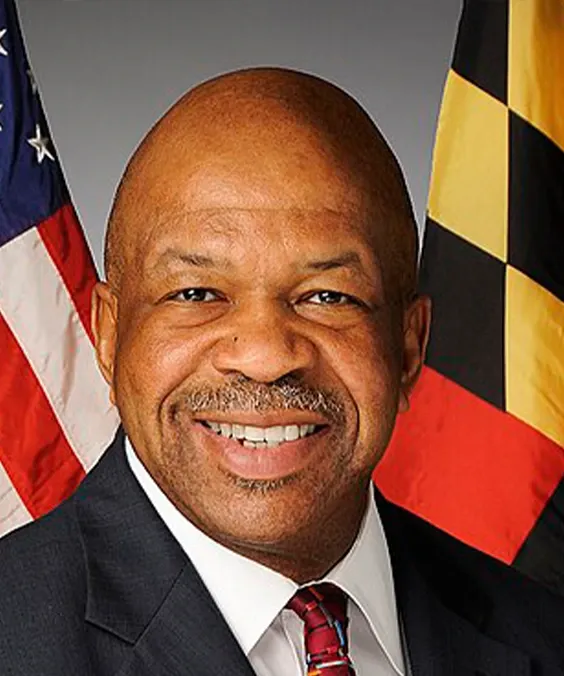
Donna Edwards is a Democratic politician from Maryland who served as a member of the U.S. House of Representatives from 2008 to 2017. She represented Maryland's 4th congressional district, where she focused on issues such as women's rights, healthcare, and economic justice. Edwards was the first African American woman to represent Maryland in Congress, and her tenure was marked by her advocacy for progressive policies and her commitment to her constituents. After leaving Congress, she has remained active in public life and has been involved in various initiatives and organizations.
I was honored to preside over the passage of the Affordable Care Act in the House and filled with pride actually to witness President Obama sign the landmark bill into law.
The creation of the Independent Payment Advisory Board, the IPAB, has been met with universal distain by the medical community and our seniors.
The countless pages of regulations, rules and requirements for Obamacare have been incredibly confusing.
I really do see a value in James Webb as does my friend over in the Senate who breathed life into the James Webb Space Telescope in the appropriations process when some on the other side frankly wanted to zero it out entirely.
I am concerned when I look at the budget and it proposes increased funding for ground support systems without a completed design for a commercial vehicle.
I applaud the strategic initiative outlined in NIST's budget proposal and look forward to hearing how this initiative will strengthen forensic science.
I am troubled by the void that will be left by the termination of TIP and am interested in exploring with the Chairman and Under Secretary Gallagher the possibility of establishing a new program, or even reconstituting a previous one, at…
Thank you very much, Mr. Chairman, and thank you, Dr. Gallagher, for your testimony.
Although NIST is a relatively small agency, it is an extremely important player in federal efforts to spur innovation and economic prosperity in this country.
We have a very successful standards development system in this country. It has been, and continues to be, the envy of the world.
It is critical that we preserve the ability of our companies--big and small alike--to export their products to markets throughout the world.
Standards can open up new or expanding markets to a U.S. company. However, standards can also serve as a barrier to trade, keeping U.S. companies out and sending profits elsewhere.
Although issues surrounding standards do not often get attention in Congress, they have an incredibly significant impact on the ability of U.S. companies to innovate and compete in the global market.
Thank you, Chairman Quayle. And thank you for calling this important hearing on standards development and the role of standards in global competition.
The first requirement in siting is to--obviously to demonstrate adequate protection for public health, safety, and environment.
Thank you, Mr. Howard, and you can count on me and I am sure others of our colleagues taking notes about those particular of the milestones that you have outlined for this next year and asking you about them, keeping track of them, and I…
I am sure you have pointed out in your testimony and response to questions that other than about 100 of those, they are private-sector jobs.
I am just a little confused as to why, over this long period of years...there isn't some more comprehensive single point of authority.
I think it means for us, as taxpayers--that we also share a responsibility for what happens along that river.
But not because you have gotten an explicit commitment from the Administration?
When I hear your testimony and I see you, what I see is a person of science who has real enthusiasm for the work that you are doing.
The publicly-available budget guidelines that have been provided to NASA by the Office of Management and Budget are sufficient to allow the Agency to carry out the Mars sample return collection and caching mission.
Over the past 15 years, NASA has carried out a systematic exploration of Mars using orbiting spacecraft, landers, and rovers.
What we don't know is whether or how that story of success will continue, and especially whether the U.S. will retain its leadership role.
Politicians like Donna Edwards