Feb 27, 2012
Thank you Mr. Chairman. I want to join the chairman in welcoming our two witnesses today.
The Public Record
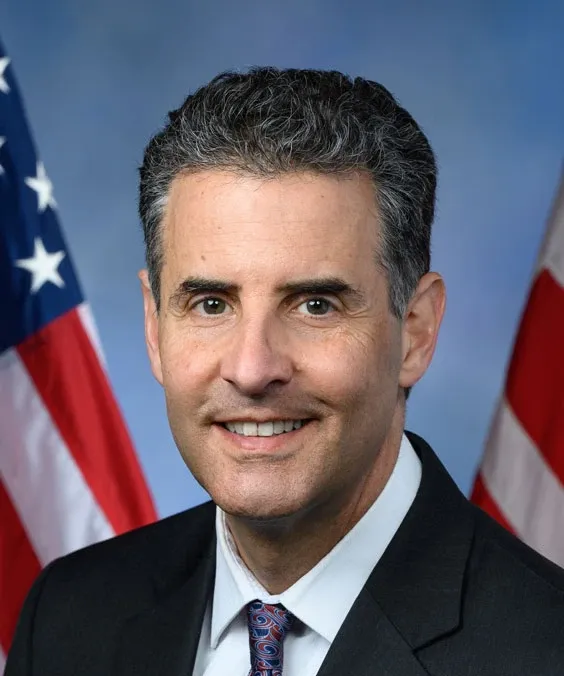
Chris Van Hollen is an American politician serving as the junior United States senator from Maryland since January 3, 2017. A member of the Democratic Party, he previously represented Maryland's 8th congressional district in the U.S. House of Representatives from January 3, 2003, to January 3, 2017. Throughout his career, Van Hollen has focused on issues such as economic policy, healthcare, and education reform.
Thank you Mr. Chairman. I want to join the chairman in welcoming our two witnesses today.
Thank you very much Mr. Chairman, I just wanted to add my word of welcome to our newest member...
Mr. Chairman, if I could just take 5 seconds, as part of it, I think we should remember that some the adjustments he made was to tax capital gains and dividends at the 28 percent level, the same rate that the bugs driver was paying there…
That is not what the Ryan budget proposes, I would point out, although there are some people who have suggested that we need to cut faster now.
I would suggest that if we could have a partner in coming to that balanced approach that we talked about, we would be able to tackle some of these things.
Again, welcome, Mr. Secretary. Having participated in some of those rounds, my sense was they basically collapsed because of the fundamental issue that we are debating right here in this committee, which is whether or not to take a…
This budget represents a plan. It represents a responsible plan, a good plan.
Fundamentally we have got to figure out a way to come together to resolve these issues.
What you see here is after the 1993 budget agreement when the top marginal rate was raised to 39.6 percent, you saw over 20 million jobs created during that period after the 2001-2003 tax cuts, so-called Bush tax cuts, where they reduced…
This is not about the politics of envy or class warfare, this about how do we solve a deficit problem in a way that asks for shared responsibility.
I think what the president has proposed is that we want to achieve a net of $1.5 trillion in additional revenue, and doing it in a way that protects middle income taxpayers, but does ask the folks at the very top to pay more.
Closing the door on that slush fund, I believe, will achieve real savings as we move into the out years.
I dare say that Republicans and Democrats alike agree that the sequester is not the best way to achieve that deficit reduction.
It seems perfectly reasonable, and I think an ordinary American watching this proceeding would agree that you should be able to count the effort we made already toward the $4 trillion.
The Simpson-Bowles commission, the bipartisan commission, set $4 trillion in deficit reduction as their 10 year window.
This isn't just my opinion and that of these bipartisan groups--economists like Federal Reserve Chairman Ben Bernanke have also argued against immediate spending cuts that will jeopardize our economic recovery.
Ninety-eight percent of our Republican colleagues have signed a pledge saying they won't close one special interest tax loophole for the purpose of deficit reduction.
I think after your testimony in the Senate yesterday that you are already battle-tested.
I think what we see here in the president's budget is a responsible approach
The question is not whether to reduce the deficits, the question has been how do we reduce the deficit
This is a responsible budget that begins to turn the corner in terms of the deficits and is very important in terms of job creation.
I was actually reading from the original document, ``Reforming Credit Reform,'' by Marvin Phaup and Deborah Lucas, where they say straight- out here that including a risk premium in subsidy costs produces a cost estimate that, on average…
I am pleased to yield 3 minutes to my colleague from Maryland, the distinguished Democratic whip, Mr. Hoyer.
Politicians like Chris Van Hollen