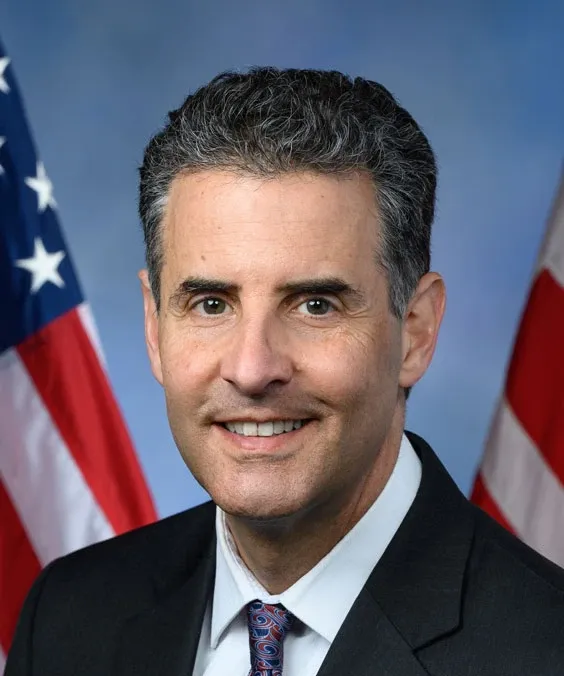
Ben Cardin
The Public Record
Ben Cardin is a United States Senator from Maryland, serving since January 4, 2007. A member of the Democratic Party, he has focused on issues such as healthcare, education, and civil rights throughout his political career. Prior to his tenure in the Senate, Cardin served in the U.S. House of Representatives from January 3, 1987, to January 3, 2007, where he was known for his work on tax policy and social security reform.
Jul 29, 2009
That is why we have made it clear that that is an unacceptable outcome, for Iran to become a nuclear weapons power.
Jul 29, 2009
I think the science information is clear that carbon emissions, greenhouse gases, have a significant impact on global climate change and that we have the technology to do something about that, that we can reverse that.
Jul 29, 2009
It should not drive the Senate's decisionmaking on what is one of the most important foreign policy issues of our time.
Jul 29, 2009
Research has shown an interesting correlation between traumatic climate events and political strife around the world.
Jul 29, 2009
The consequences of failure to deal with these issues will fall squarely on the national security costs to our country.
Jul 28, 2009
Would it be a preferred route for the United States policy to strengthen the international presence within Pakistan rather than trying to do this on a bilateral basis?
Jul 28, 2009
The internally displaced persons in Pakistan represent a real challenge for the stability of the Pakistani Government, and it is of great interest to the United States.
Jul 28, 2009
Well, I thank you for the response. I'm still not particularly clear as to the effectiveness of the international commitment to Pakistan.
Jul 27, 2009
I think it is clear that we can safely detain and incarcerate these individuals here in the United States.
Jul 27, 2009
I generally support sunset provisions, but it seems to me that we do want to get a process for military commissions in place with some degree of confidence and predictability.
Jul 27, 2009
First, in regards to use of Article III courts with terrorists in the United States, there was no effort made by the previous administration to prosecute detainees at Guantanamo Bay under Article III courts.
Jul 27, 2009
We are not going to be able to get other countries to handle all the people at Guantanamo Bay.
Jul 27, 2009
I share Senator Durbin's confidence that our Article III courts can handle the prosecution of those that we intend to hold criminally responsible for their actions.
Jul 27, 2009
I think the immigration laws are such that there is no responsibility for them to be allowed to remain in the United States.
Jul 27, 2009
As a Member of the House of Representatives in 2006, I voted against the Military Commissions Act.
Jul 27, 2009
Let me make this very clear. I want the U.S. Government to bring terrorist suspects to justice quickly and effectively.
Jul 27, 2009
I think there is no opposition at all in Congress to making the laws as clear as can be that terrorists are not going to be released in the United States.
Jul 27, 2009
I think it is important to keep in mind that one of the challenges of reducing the Guantanamo population has been finding countries willing to take these people.
Jul 27, 2009
President Obama is sending a clear message to the world that we are reestablishing the rule of law in the United States.
Jul 27, 2009
I commended President Obama at the time for ordering the closure of the detention center.
Jul 27, 2009
I have talked to representatives from other countries concerning this issue, and one of the points they raise to me frequently is that, fine, we are willing to do our part, but is the United States willing to take on a responsibility…
Politicians like Ben Cardin