Aug 2, 2009
And we would put into this reauthorization the fairness as to how the moneys are going to be used.
The Public Record
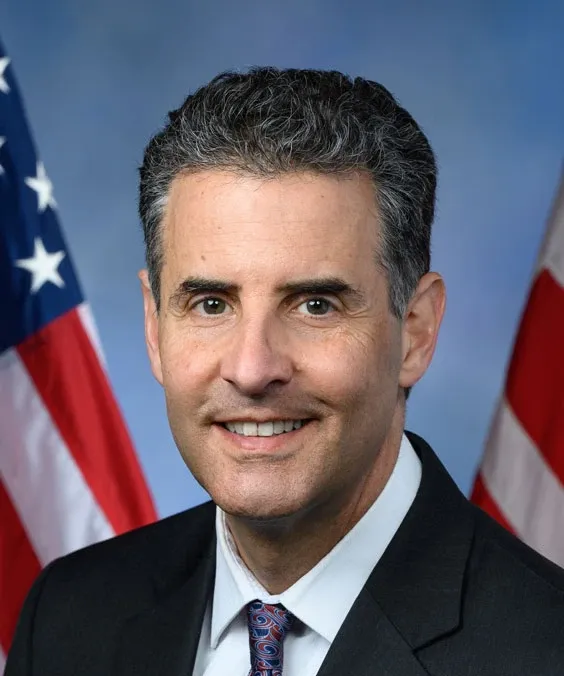
Ben Cardin is a United States Senator from Maryland, serving since January 4, 2007. A member of the Democratic Party, he has focused on issues such as healthcare, education, and civil rights throughout his political career. Prior to his tenure in the Senate, Cardin served in the U.S. House of Representatives from January 3, 1987, to January 3, 2007, where he was known for his work on tax policy and social security reform.
And we would put into this reauthorization the fairness as to how the moneys are going to be used.
I think the way you said it, that they want sensible regulations, they want predictable regulations, achievable standards.
If we are going to be looking at hard standards on the Bay, then as we look at the non-point sources and are starting to have some stricter requirements on development, which I think most are understanding, you need to make a good faith…
We do have some concrete streams still remaining and there is some work being done to try to correct that.
As we look at smart growth, we are trying to affect where development will take place.
The Clean Water Act set the objective--restore and maintain the chemical and physical and biological integrity of the Nation's waters.
This has truly been a commitment in which the States and the District of Columbia have taken on the real responsibility and have brought in the Federal Government as a partner.
I was a little bit reluctant when I was told that were going to have seven people on the first panel. I was happy because it means that there are seven jurisdictions that are part of the Chesapeake Bay effort, which gives us a lot of power…
I think Director Hawkins raises a very valid point about having uniform standards of expectation using best science so that deals with the non-point sources.
We are moving in that direction at the Federal level also. I think it makes sense.
It is a challenge in the Chesapeake Bay how we get a handle on non-point sources.
I do not think nutrient trading programs, like any trading program, work unless you have an effective cap.
I think, though, that we want to have the numbers make good science that is achievable.
I want to talk about one additional tool that we are looking into, and that is a nutrient trading program to provide ways in which you can reach the levels by basically underwriting the costs of nutrient reductions in other segments.
I think that point is very well made, and on enforcement we would have to include non-point sources.
We are set to finish approximately 90 to 95 percent of our reductions under the TMDL by 2014.
We are in danger of not getting that bill moving forward, and we could use all of your help in talking to your Senators.
Politicians like Ben Cardin