Sep 21, 2009
These labs, they do extremely important work and we want to make sure there's a working ability to get the job done, but with maximum protection to the public and the security of our country.
The Public Record
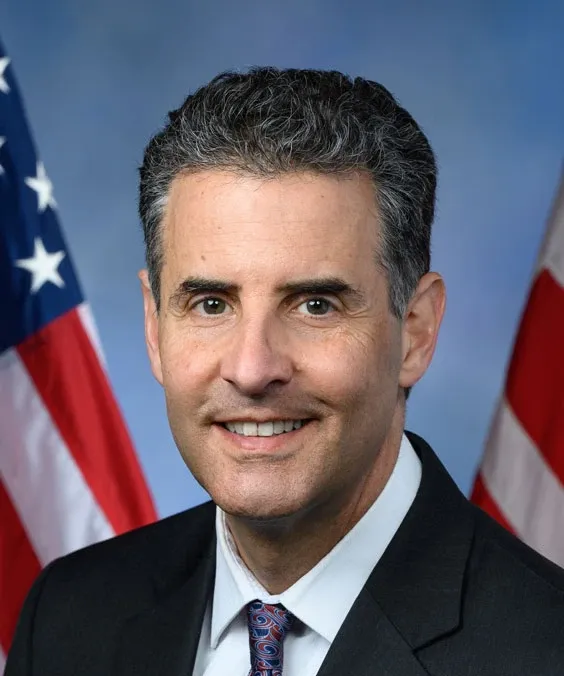
Ben Cardin is a United States Senator from Maryland, serving since January 4, 2007. A member of the Democratic Party, he has focused on issues such as healthcare, education, and civil rights throughout his political career. Prior to his tenure in the Senate, Cardin served in the U.S. House of Representatives from January 3, 1987, to January 3, 2007, where he was known for his work on tax policy and social security reform.
These labs, they do extremely important work and we want to make sure there's a working ability to get the job done, but with maximum protection to the public and the security of our country.
Is there a uniform protocol for perimeter security if you're dealing with the Level IV labs?
I think that's very--that's the types of observations I think we need to take a look at.
As you know, we also manage the firearms check program for the FBI as well, and that is also a prohibiting factor for purchasing firearms.
The Commission to prevent the proliferation of weapons of mass destruction has suggested a tier approach.
I understand that the authority is not there. The question is, should you have the authority?
Well, once again, let me thank all three of you for being here and the work that each of your agencies do.
I think that the National Science Advisory Board on Biology... has to be fine-tuned.
I think what Professor Greenberger is saying is that we might be able to get savings by doing this more efficiently than we we're doing it today.
I think, anecdotally, many of us have had the experience of people being disqualified from national security clearances for unknown reasons.
I think the two principal agencies that have had regulatory responsibility... are CDC and the Department of Agriculture for plants and animals.
I also think we need to know, of all the people who registered, how many would have had to have registered for tier one if we had a different registration system.
And I want to point out, I think we need protection on all of the pathogens because it could be extremely dangerous for those who are handling it.
Does that make it easier for you to be able to really track those agents that are of the most concern?
I guess my concern is, I don't know who to ask the question for in the Federal Government as to, where are the labs? Are we satisfied they're properly secure, that are dealing with agents that we have concerns about?
The question is, Who supplies the security? I understand the United States and international community have a responsibility for training, but ultimately, the security has to be provided by the Afghans.
I'm not sure I agree that it's all or nothing. We do have combat troops there now.
I agree with what you're saying, but I think the weakness of your position is that it appears to say that we're going to have a large international, primarily United States, military combat mission for a long time and, ultimately, the…
Well, part of Senator Levin's point is that we need to significantly increase--and I think the administration has agreed on this--significantly increase the security forces, both military and police, in Afghanistan.
I think we'd just--Mr. Chairman--I think we'd be interested in finding out as much information as we can as to Syria's role in regards to Iraq.
The United States is very much engaged in helping refugees throughout the world, and we expect our partners to be similarly engaged in this.
Politicians like Ben Cardin