Sep 2, 2013
But looking at the 2011-2012 Bay barometer, which noticed improvement on the oxygen levels and the reduction of dead zones, it also points out that we have challenges to meeting the overall goals.
The Public Record
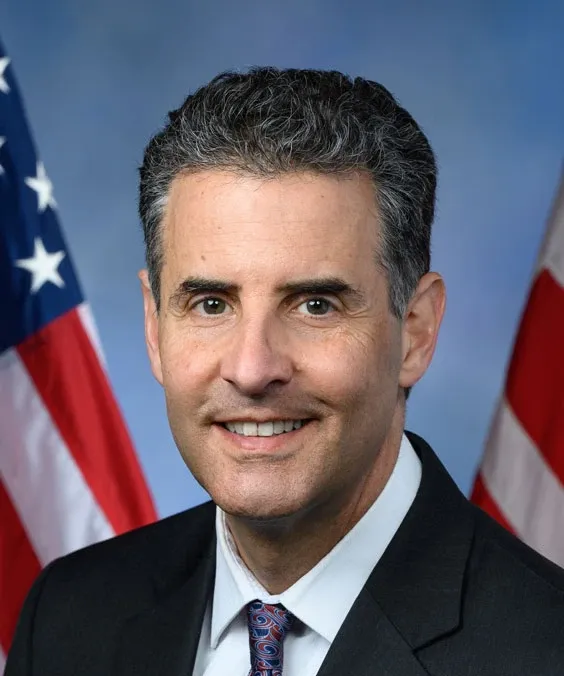
Ben Cardin is a United States Senator from Maryland, serving since January 4, 2007. A member of the Democratic Party, he has focused on issues such as healthcare, education, and civil rights throughout his political career. Prior to his tenure in the Senate, Cardin served in the U.S. House of Representatives from January 3, 1987, to January 3, 2007, where he was known for his work on tax policy and social security reform.
But looking at the 2011-2012 Bay barometer, which noticed improvement on the oxygen levels and the reduction of dead zones, it also points out that we have challenges to meeting the overall goals.
There is no question that there is a commitment in this country to clean water.
I think you summarized it well about how success depends upon all being in and everyone doing their share because we cannot just do it alone.
Of course, it cuts both ways. It can be used to strengthen, but it also can be used to give more leeway and perhaps weaken. And so it is of concern.
If we are all going to work together, then we have to have an aggressive policy to deal with the realities of construction.
The Obama administration in 2009, by Executive order, really elevated the Federal Government's commitment and partnership to the Chesapeake Bay.
I firmly believe the Federal Government has an important role in ensuring that local governments can continue to provide clean and safe water.
There are critical areas of this country of great interest to the entire country.
It is very clear from all of your testimony that, first, the public wants a clean Chesapeake Bay.
We all acknowledge that. As I said earlier, I remember days that you did not even want to go near the water in some parts of some coasts.
The Chesapeake Bay is critically important to the State of Maryland, particularly important to our region.
Let me welcome you all to the field hearing of the Environment and Public Works Committee's Subcommittee on Water and Wildlife.
I particularly want to thank Senator Boxer and Senator Vitter and Senator Boozman for their help in arranging this hearing.
I would urge you to do this in a very open, transparent manner, as you are already suggesting, so the confidence this program has enjoyed for 30 years is maintained.
What is the timeframe for trying to get the parties together on the updated agreement?
What brings our Committee together, Democrats and Republicans, are ways that we can leverage investment, whether it is roads, bridges, transit systems or whether it is water infrastructure.
We understand that population growth will continue. People want to live in this area. That means there is more pressure on construction.
Today is an opportunity to celebrate those successes and to highlight the strong efforts of all stakeholders.
We are going to see some significant improvement, for example, in stormwater controls.
This hearing is going to concentrate on how far we have come and how far we still need to go.
Politicians like Ben Cardin