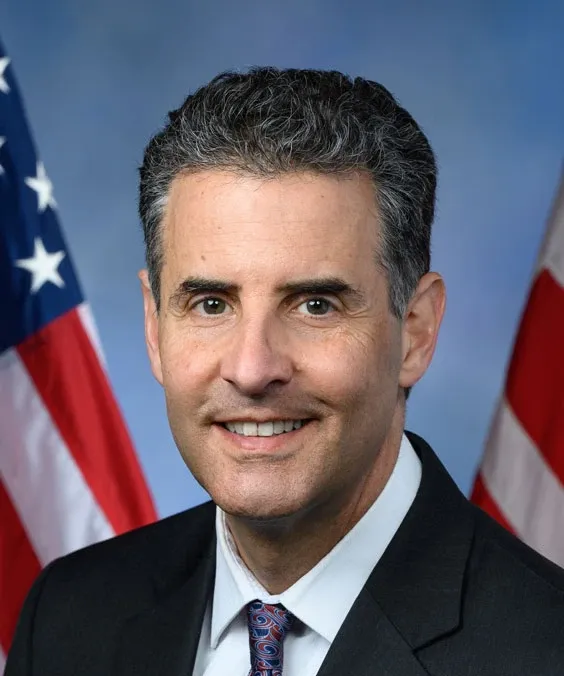
Ben Cardin
The Public Record
Ben Cardin is a United States Senator from Maryland, serving since January 4, 2007. A member of the Democratic Party, he has focused on issues such as healthcare, education, and civil rights throughout his political career. Prior to his tenure in the Senate, Cardin served in the U.S. House of Representatives from January 3, 1987, to January 3, 2007, where he was known for his work on tax policy and social security reform.
Sep 24, 2013
Traffic congestion across the region hurts my State's economy, the quality of life of my constituents and the public's health.
Sep 24, 2013
But politically, at the end of the day I think it will be rewarded when we give the communities the type of transportation they need.
Sep 24, 2013
I want to thank all the witnesses that are here today to help us deal with the funding of our transportation priorities here at the Federal level.
Sep 24, 2013
The best way to reduce long term congestion is by having fewer vehicles on the road.
Sep 24, 2013
It is just unacceptable that it takes a couple of hours to get into the Nation's capital.
Sep 24, 2013
We couldn't get that, because we didn't have the revenue to deal with the longer term.
Sep 24, 2013
I want to thank Senator Menendez for allowing me to chair today's hearing as we consider four nominees for ambassadorships.
Sep 17, 2013
But for the process, and we slowed it down a little bit, we got the right outcome, we did get the right outcome here?
Sep 17, 2013
I want to start off by giving an example of how I think we got it right because of NEPA.
Sep 17, 2013
I would just challenge one statement. You are familiar, I am familiar with this project.
Sep 17, 2013
It was the wrong site and the community had an opportunity under NEPA to make that case.
Sep 10, 2013
It is a pleasure to be back before the Senate Judiciary Committee, where I have very fond memories.
Sep 2, 2013
Well, let me thank all three of our witnesses. I think this has been extremely helpful.
Sep 2, 2013
I do object to using the Chesapeake Bay and its clean up as a way to tell people that what is being asked is impractical and impossible to achieve.
Sep 2, 2013
It is not up to the farmers, it is not up to developers, it is not up to local government.
Sep 2, 2013
If you are talking to the farmers, they think the farmers are the ones who are being picked on the most as far as dealing with the clean up of the Bay.
Sep 2, 2013
It was the Congress, not the Environmental Protection Agency, that passed the Clean Water Act.
Sep 2, 2013
We need to look at trends over a longer period of time, and that is why I think the Hopkins and the University of Maryland study is instructive in that regard.
Sep 2, 2013
We have enjoyed support not just from Virginia and Maryland and Delaware and the Nation's capital but also from the people of Pennsylvania and the people of New York and people of West Virginia who are in the watershed but do not see it…
Sep 2, 2013
This has got to be done in a way the public will accept. Otherwise, we cannot sustain this.
Politicians like Ben Cardin