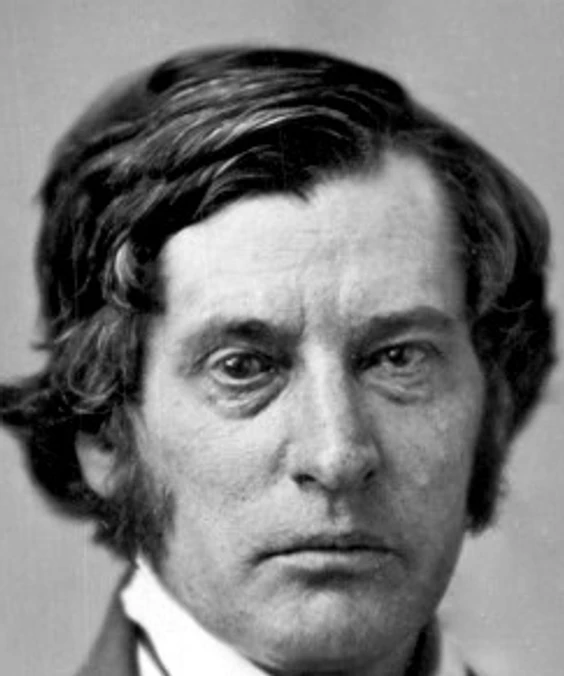
The ultimate design was to incorporate in our own institutions that portion of them which could be converted to the state of civilization.
John Quincy Adams
The Public Record
John Quincy Adams was an American statesman and diplomat who served as the sixth President of the United States from 1825 to 1829. A member of the Democratic-Republican Party, he was born on July 11, 1767, in Braintree, Massachusetts. Adams was a strong advocate for modernization and education, and he played a significant role in shaping American foreign policy during his tenure as Secretary of State from 1817 to 1825, where he was instrumental in formulating the Monroe Doctrine.
gutenberg.org
In the practice of European States, before our Revolution, they had been considered as children to be governed; as tenants at discretion, to be dispossessed as occasion might require; as hunters to be indemnified by trifling concessions…
We have been far more successful in the acquisition of their lands than in imparting to them the principles or inspiring them with the spirit of civilization.
This state of things requires that a remedy should be provided--a remedy which, while it shall do justice to those unfortunate children of nature, may secure to the members of our confederation their rights of sovereignty and of soil.
Of these great national under-takings the Academy at West Point is among the most important in itself and the most comprehensive in its consequences.
In that institution a part of the revenue of the nation is applied to defray the expense of educating a competent portion of her youth chiefly to the knowledge and the duties of military life.
Its beneficial results are already experienced in the composition of the Army, and their influence is felt in the intellectual progress of society.
The appearance of new squadrons in the Mediterranean and the blockade of the Dardanelles indicate the danger of other obstacles to the freedom of commerce and the necessity of keeping our naval force in those seas.
Every section of that statute contains a distinct provision looking to the great object of the whole--the gradual improvement of the Navy.
The domestic manufacturer supplies the same or a kindred article at a diminished price, and the consumer pays the same tribute to the labor of his own country-man which he must otherwise have paid to foreign industry and toil.
In the American hemisphere the cause of freedom and independence has continued to prevail, and if signalized by none of those splendid triumphs which had crowned with glory some of the preceding years it has only been from the banishment…
There has, indeed, rarely been a period in the history of civilized man in which the general condition of the Christian nations has been marked so extensively by peace and prosperity.
Were the demands of nations upon the justice of each other susceptible of adjudication by the sentence of an impartial tribunal, those to which I now refer would long since have been settled and adequate indemnity would have been obtained.
The basis of them all, as proposed by the United States, has been laid in two principles--the one of entire and unqualified reciprocity, the other the mutual obligation of the parties to place each other permanently upon the footing of the…
To conciliate the claim of the individual citizen to the enjoyment of personal liberty, with the effective obligation of private contracts, is the difficult problem to be solved by a law of bankruptcy.
These are objects of the deepest interest to society, affecting all that is precious in the existence of multitudes of persons, many of them in the classes essentially dependent and helpless, of the age requiring nurture, and of the sex…
It is only by an effective militia that we can at once enjoy the repose of peace and bid defiance to foreign aggression; it is by the militia that we are constituted an armed nation, standing in perpetual panoply of defense in the presence…
But it is a body of dislocated members, without the vigor of unity and having little of uniformity but the name.
To infuse into this most important institution the power of which it is susceptible and to make it available for the defense of the Union at the shortest notice and at the smallest expense possible of time, of life, and of treasure are…
The purchasers of public lands are among the most useful of our fellow citizens, and since the system of sales for cash alone has been introduced great indulgence has been justly extended to those who had previously purchased upon credit.
They comprise large and valuable acquisitions of territory, and they secure an adjustment of boundaries and give pledges of permanent peace between several tribes which had been long waging bloody wars against each other.
May not the want in most instances be inferred from the demand when the service can be proved, and may not the last days of human infirmity be spared the mortification of purchasing a pittance of relief only by the exposure of its own…
I submit to Congress the expediency of providing for individual cases of this description by special enactment, or of revising the act of May 1st, 1820, with a view to mitigate the rigor of its exclusions in favor of persons to whom…
It will form here-after a pleasing incident in the annals of our Union, giving to real history the intense interest of romance and signally marking the unpurchasable tribute of a great nation's social affections to the disinterested…
The constant maintenance of a small squadron in the Mediterranean is a necessary substitute for the humiliating alternative of paying tribute for the security of our commerce in that sea, and for a precarious peace, at the mercy of every…
Politicians like John Quincy Adams